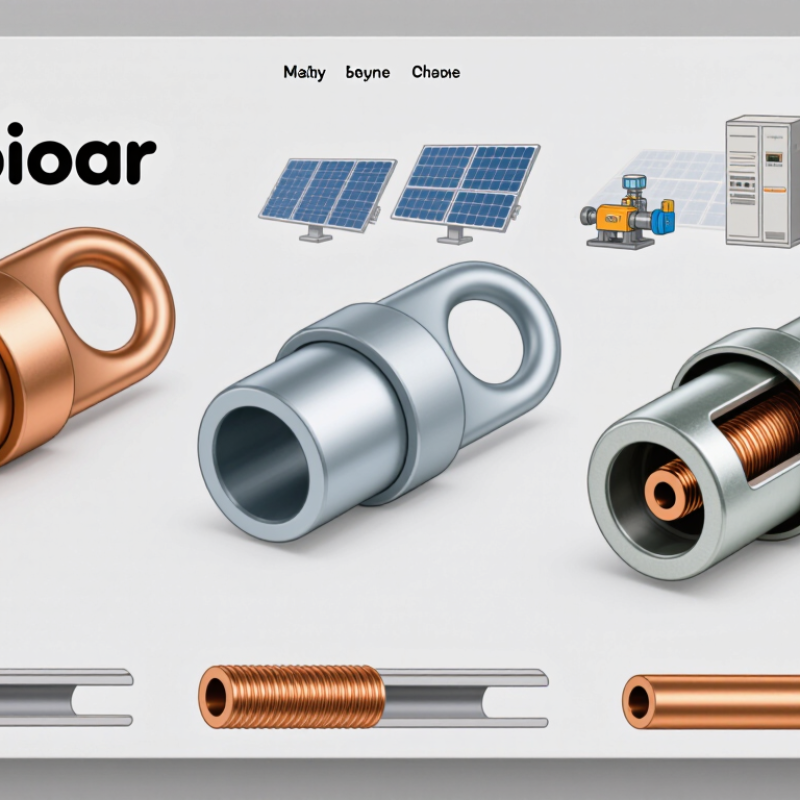
| Compression Lug | Copper or aluminum stranded conductors; select the lug for the conductor size and class. | Tinned or bare copper; aluminum for aluminum conductors. | Permanent crimping with a matched die and approved crimping tool. | Low contact resistance, strong pull-out performance, vibration resistance, and consistent installation when correctly crimped. | Requires the correct die, number of crimps, conductor preparation, and installation procedure. | Switchboards, distribution panels, transformers, motor connections, and renewable-energy systems. |
| Mechanical Lug | Solid or stranded copper and aluminum conductors, depending on the product design. | Copper alloy, aluminum alloy, or plated conductive alloy. | Bolts, set screws, or shear-head screws apply mechanical pressure to the conductor. | Removable, reusable in some designs, and convenient where crimping equipment is unavailable. | Torque must be controlled; periodic inspection may be needed in high-vibration or thermal-cycling environments. | Service connections, switchgear, retrofit work, and maintenance installations. |
| Bimetallic Lug | Aluminum conductor to copper busbar, terminal, or equipment connection. | Aluminum barrel with a copper palm, normally joined by a friction-welded or equivalent transition. | Crimped or mechanically secured according to the lug design. | Helps reduce galvanic corrosion and supports reliable aluminum-to-copper transitions. | Correct orientation, surface preparation, oxide control, and compatibility with the conductor are essential. | Power distribution, utility equipment, transformers, and aluminum cable terminations. |
| Pin Lug | Flexible stranded copper conductors, especially in screw-clamp terminals. | Copper or tinned copper. | A tubular barrel is crimped onto the conductor; the pin enters the terminal clamp. | Prevents strand spreading and simplifies insertion into narrow terminal blocks. | Pin diameter and length must match the terminal; it is not a substitute for a ring connection where pull-out security is required. | Control cabinets, terminal blocks, circuit protection devices, and industrial automation wiring. |
| Ring Terminal Lug | Single or stranded copper conductors, depending on the barrel design. | Copper, tinned copper, or nickel-plated copper for selected environments. | Crimped barrel with a circular mounting hole secured by a bolt or stud. | The closed ring helps prevent accidental disconnection when the fastener loosens slightly. | Hole diameter, stud size, palm width, insulation clearance, and current rating must be checked. | Batteries, grounding points, control panels, automotive wiring, and general equipment connections. |
| Fork or Spade Lug | Small and medium copper conductors used with screw terminals. | Tinned copper or copper alloy. | Crimped barrel with an open-ended mounting slot. | Fast installation without fully removing the terminal screw. | Less resistant to pull-out than a closed ring; the terminal screw must provide adequate clamping. | Control wiring, instrumentation, low-voltage panels, and maintenance work. |
| Butt Connector | Two copper conductors of the same or compatible size, depending on the connector specification. | Copper or tinned copper; insulated versions may use polymer sleeves. | Compression joins two conductor ends inside a single barrel. | Provides an in-line cable splice without a terminal stud or busbar. | The joint requires suitable insulation and environmental sealing where exposed to moisture, chemicals, or movement. | Cable repair, harness assembly, vehicle wiring, control circuits, and in-line extensions. |
| 90-Degree or Angled Lug | Copper or aluminum conductors where cable routing space is limited. | Tinned copper, bare copper, aluminum, or bimetallic construction. | Compression or mechanical termination with an angled palm or barrel. | Improves cable routing and can reduce bending stress near equipment terminals. | Confirm bend radius, palm orientation, clearance, and terminal accessibility before ordering. | Compact switchgear, motor terminals, battery banks, and densely arranged electrical cabinets. |
| Long-Barrel Lug | Flexible, stranded, or fine-stranded conductors when additional crimp length is required. | Tinned copper or aluminum. | Multiple compression points along an extended barrel. | Provides increased mechanical grip and can improve resistance to vibration and pull-out. | Requires sufficient installation space and the correct multi-crimp sequence. | Industrial power cables, mobile equipment, high-vibration installations, and large conductor terminations. |
| Solder-Type Lug | Selected copper conductors and specialized wiring assemblies. | Copper, tinned copper, or plated copper. | Conductor is inserted and secured using solder, sometimes with additional mechanical support. | Useful for certain electronics and legacy assembly processes where soldering is controlled. | Solder can soften under heat and may be vulnerable to mechanical fatigue; it is not suitable for every power application. | Electronics, instrumentation, communications assemblies, and specialized low-current wiring. |

.svg)