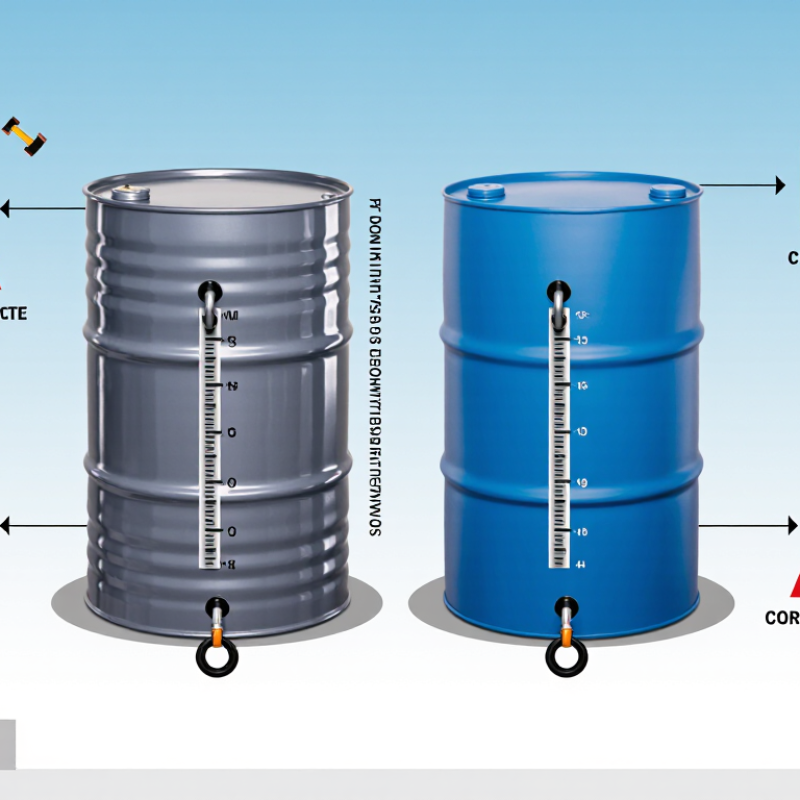
| Open-Head Steel Drum | Carbon steel body with removable lid and gasket | 20 L, 30 L, 60 L, 114 L, 208 L, and 210 L | For a 208 L drum: approximately 585 mm diameter × 880 mm height; dimensions vary by manufacturer | Diesel, kerosene, heating oil, lubricating oil, and many non-corrosive petroleum products | Wide opening for filling, cleaning, and solid or viscous products; strong stacking performance when designed for stacking | Can corrode when exposed to water, salt, or damaged coatings; heavier than plastic; not suitable for every corrosive liquid | Industrial oil distribution, maintenance workshops, agricultural fuel handling, and products requiring easy access | Choose an interior lining and gasket that are chemically compatible with the exact fuel or oil. Confirm the drum’s UN performance rating when regulated transport is required. |
| Closed-Head Steel Drum | Carbon steel body with permanently formed top and two threaded openings | 20 L, 60 L, 114 L, 208 L, and 210 L | For a 208 L drum: approximately 585 mm diameter × 880 mm height; bung configuration affects top clearance | Diesel, kerosene, heating oil, hydraulic oil, engine oil, and other compatible liquid petroleum products | Reduced spill exposure, good mechanical strength, efficient handling with drum equipment, and common global availability | Small bung openings make cleaning more difficult; corrosion protection is needed in wet or coastal environments | Bulk liquid fuel storage, export shipments, warehouses, service stations, and industrial oil supply | Use a compatible bung seal, vented cap where appropriate, and an external coating suitable for the storage environment. |
| High-Density Polyethylene (HDPE) Drum | UV-stabilized high-density polyethylene, often with plastic or metal closures | 20 L, 25 L, 30 L, 60 L, 120 L, and 220 L | For a 220 L drum: commonly about 580–600 mm diameter × 900–980 mm height; design varies considerably | Diesel and selected lubricants; fuel compatibility must be verified with the resin, additives, temperature, and storage duration | Does not rust, is lighter than steel, and can offer good resistance to moisture and many chemicals | Gasoline and certain additives may permeate or degrade some plastics; prolonged sunlight and high temperature can reduce service life | Outdoor or humid environments, agricultural operations, water-sensitive locations, and applications needing low handling weight | Request a chemical-compatibility statement and confirm whether the drum is approved for the intended fuel and transport mode. |
| UN-Rated Steel Fuel Drum | Steel drum tested and marked under applicable UN packaging requirements | Commonly 60 L, 114 L, 208 L, and 210 L | Dimensions depend on capacity, head style, closure system, and test configuration | Regulated flammable or combustible liquids when the specific drum rating matches the product | Provides documented performance testing for packaging strength, leakage, stacking, and pressure where applicable | A UN mark alone does not prove compatibility with every fuel; certification, closure instructions, and filling limits must be followed | International and domestic transport of regulated petroleum products | Check the complete UN marking, packing group, maximum permitted capacity, closure instructions, and destination-country transport rules. |
| UN-Rated HDPE Fuel Drum | High-density polyethylene manufactured and tested for the stated UN packaging specification | Commonly 20 L, 30 L, 60 L, 120 L, and 220 L | Capacity and wall construction determine the final dimensions; molded handles and ribs may increase overall width | Selected fuels and petroleum products only when the chemical compatibility and UN specification both apply | Lower tare weight than steel and resistance to external rust; useful where manual handling is frequent | Permeation, UV exposure, temperature, and fuel additives require careful evaluation; not all plastic drums are suitable for flammable liquids | Approved transport and storage applications where weight reduction and corrosion resistance are priorities | Verify the exact UN rating, plastic resin type, service temperature, fuel formulation, and maximum storage period. |
| Lever-Lock Salvage Drum | Heavy-gauge steel or HDPE body with removable cover and lever-lock ring | Typically 60 L, 114 L, 208 L, and 210 L | Usually similar to the corresponding nominal drum capacity, with additional lid and ring clearance | Compatible packaged fuels, oily materials, contaminated absorbents, or damaged containers; not automatically suitable as a primary fuel package | Large opening, secure removable cover, and useful containment capacity for emergency handling | A salvage drum is generally a containment solution, not a substitute for a correctly rated primary fuel container | Emergency response, damaged-package containment, spill control, and temporary overpacking | Use only according to applicable dangerous-goods rules and the salvage drum’s stated capacity and performance limits. |
| Small Portable Fuel Canister | Approved steel or HDPE construction with screw cap, spout, or integrated closure | 5 L, 10 L, 20 L, and 25 L | Compact rectangular or jerry-can style; exact dimensions depend on handle and spout design | Portable quantities of gasoline, diesel, kerosene, or other fuels only when the container is specifically approved for that fuel | Easy manual carrying, controlled dispensing, and convenient use for maintenance or emergency reserves | Lower capacity than industrial drums; greater exposure to handling damage and accidental tipping; storage regulations still apply | Small equipment, field maintenance, generators, agricultural machinery, and emergency fuel supply | Prioritize a secure cap, flame-arresting or approved closure where required, stable base, and clear fuel identification. |
| Reconditioned Steel Drum | Previously used steel drum that has been inspected, cleaned, tested, and reconditioned | Commonly 60 L, 114 L, 208 L, and 210 L | Usually follows the original drum’s nominal dimensions, but dents and coating condition may affect usability | Only the fuel or oil types permitted by the reconditioner and the drum’s current lining and closure condition | Potentially lower purchase cost and reduced material demand compared with new packaging | Previous contents, residual contamination, corrosion, and weakened seams must be investigated before reuse | Non-critical industrial storage, compatible oil products, and applications with documented inspection procedures | Require cleaning records, inspection results, closure replacement, compatibility confirmation, and current transport approval where applicable. |

.svg)