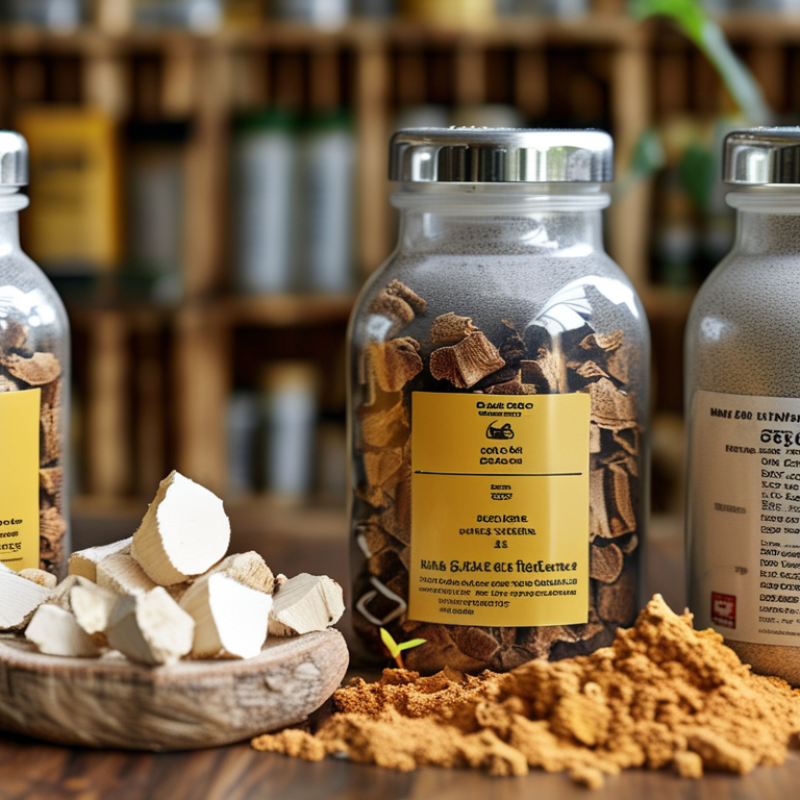
| Botanical Identity | Confirm that the material is Chaga mushroom, scientifically identified as Inonotus obliquus, rather than a visually similar fungus or mixed mushroom powder. | 100% single-species raw material unless a blend is expressly specified. | Scientific name, part used, country and region of harvest, authenticated reference sample, macroscopic or microscopic identification, and a validated DNA test when appropriate. | Approve the supplier only after the production sample matches the agreed reference sample. |
| Material Form and Composition | Determine whether the product is fruiting-body powder, sclerotium powder, mycelium powder, extract, or a blend with carriers. | The product description, extraction ratio, carrier content, and processing method should be clearly stated and consistent with the purchase specification. | Product specification sheet, process flow, ingredient declaration, certificate of analysis, and representative sample. | Do not compare prices until powder and extract specifications have been separated. |
| Appearance and Sensory Profile | Check color, odor, flavor, foreign matter, visible mold, clumping, and particle uniformity. | Uniform brown to dark-brown powder; characteristic earthy odor; no musty odor, visible mold, insects, or extraneous matter. | Approved sample, sensory inspection record, sieve or particle-size result, and foreign-matter inspection. | Use a sealed control sample for every lot comparison. |
| Moisture and Water Activity | Excess moisture can accelerate microbial growth, caking, oxidation, and loss of shelf stability. | A practical purchasing target is moisture ≤8%; set water activity, commonly aw ≤0.60 for a shelf-stable dry powder, according to the validated product specification. | Lot-specific moisture result, water-activity result, test method, instrument calibration status, and sampling plan. | Reject or investigate lots outside the agreed limits; do not rely on appearance alone. |
| Microbiological Safety | Assess total microbial load and key pathogens relevant to the destination market and intended use. | Define limits for total aerobic count, yeast and mold, Escherichia coli, and Salmonella in the purchase specification; pathogen limits must comply with destination regulations. | Independent laboratory report, analytical methods, sample date, lot number, and laboratory accreditation or competence information. | Test every incoming lot initially; reduce frequency only after a documented supplier history supports a risk-based plan. |
| Heavy Metals | Chaga may accumulate environmental contaminants, especially when harvested near polluted soil, roads, or industrial areas. | Test lead, cadmium, arsenic, and mercury; acceptance limits must follow the importing country, product category, and intended use. | ICP-MS or equivalent validated test report, sampling location, harvest area, and chain-of-custody information. | Use a risk-based sampling plan by harvest region and lot, with additional testing after any source change. |
| Pesticides and Environmental Contaminants | Wild-harvested material can be exposed to agricultural drift, contaminated soil, or nearby industrial emissions. | Screen against the pesticide residue list and maximum residue limits applicable to the destination market; add dioxins or other contaminants when the risk assessment requires it. | Multi-residue pesticide report, geographic harvest records, environmental risk assessment, and supplier declaration. | Do not accept a generic “pesticide-free” statement without analytical or traceability support. |
| Oxalate and Product-Specific Risk | Chaga naturally contains oxalates, and the level can vary with material source and processing. | Set an oxalate specification when required by the intended application, customer policy, or regulatory risk assessment. | Validated oxalate analysis, product-use statement, and documented risk assessment. | Include appropriate consumer or regulatory review before making health-related claims. |
| Active or Marker Compounds | A marker value is meaningful only when the analytical method and product type are defined. | For powder, report validated marker compounds or beta-glucan using a defined method; do not treat a single marker as proof of species identity or overall quality. | Method description, reference standard, result on an as-is or dry basis, and laboratory report linked to the lot. | Compare suppliers only when the same test method and reporting basis are used. |
| Packaging Configuration | Powder is sensitive to humidity, oxygen, light, odor transfer, and packaging damage during international transport. | Use food-contact packaging with a high moisture and oxygen barrier, heat-sealed inner liner, tamper evidence, and an outer carton or drum suitable for transport. | Packaging specification, food-contact declaration, seal-integrity check, pallet configuration, net weight, and gross weight. | Agree on pack sizes such as 5–25 kg only after storage, handling, and customer requirements are confirmed. |
| Labeling and Traceability | Each unit must be traceable from harvest and processing through shipment and final customer receipt. | Label should include product name, scientific name where required, lot number, net weight, production date, best-before date, storage conditions, country of origin, and allergen statement where applicable. | Lot coding procedure, traceability exercise, packing record, invoice, packing list, and certificate of origin when required. | Require one-step-back and one-step-forward traceability before placing a bulk order. |
| Shelf Life and Storage | Shelf life depends on moisture, water activity, packaging, oxygen exposure, temperature, light, and validated stability data. | A commonly used commercial period is 24 months for properly dried and sealed powder, but the supplier must substantiate the period with stability evidence. | Real-time or accelerated stability data, retain-sample results, packaging study, and storage recommendation such as cool, dry, dark conditions. | Set a minimum remaining shelf life at delivery, for example 75% of the labeled shelf life. |
| Supplier and Factory Audit | Verify harvesting controls, segregation, cleaning, foreign-material prevention, pest control, batch records, and complaint handling. | Documented food-safety system, trained personnel, calibrated equipment, controlled suppliers, and written recall procedures. | Audit checklist, corrective-action report, manufacturing license where required, quality manual, sanitation records, and recall test. | Conduct a remote or on-site audit before the first large-scale shipment and after significant process changes. |
| Import and Commercial Documents | Confirm that the shipment can legally enter the destination market and that product claims match the regulatory category. | Commercial invoice, packing list, transport document, certificate of origin when applicable, COA, product specification, and any required import or phytosanitary documents. | Document checklist approved by the importer, customs broker, and destination-market regulatory adviser. | Finalize regulatory review before paying the balance or releasing the shipment. |

.svg)