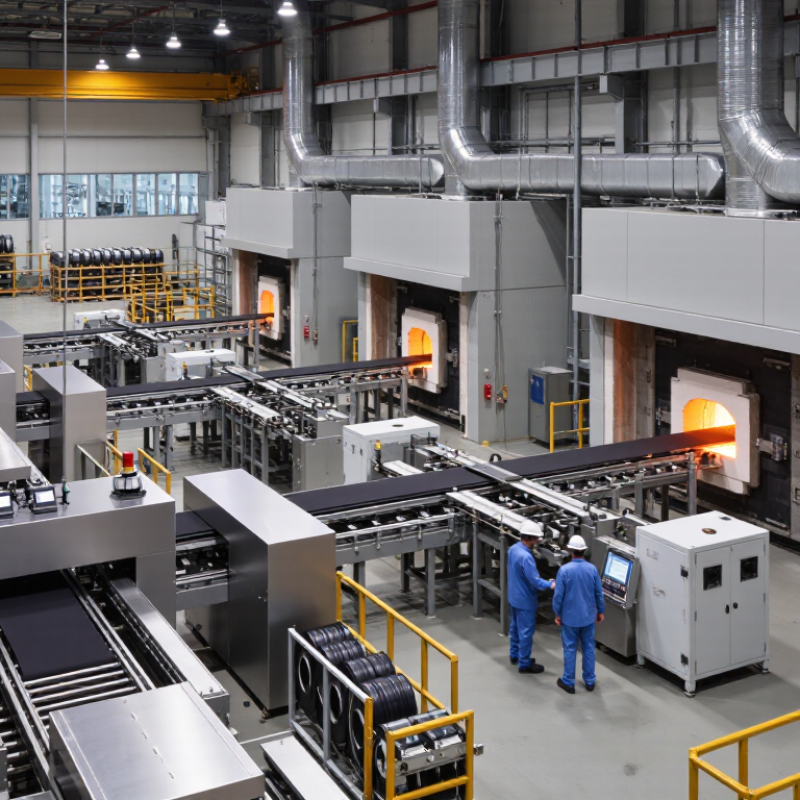
| Large-scale PAN-based line builders | Polyacrylonitrile (PAN) | 1K–50K, depending on application | Precursor spinning, stabilization, carbonization, surface treatment, sizing, winding | Stabilization commonly about 200–300°C; carbonization commonly about 1,000–1,600°C | Aerospace, automotive, pressure vessels, wind-energy components | Line uptime, energy consumption, tension control, fiber consistency, scale-up experience |
| High-performance aerospace line specialists | High-quality PAN precursor | 1K, 3K, 6K, 12K and selected 24K formats | Precision spinning, multi-zone stabilization, controlled carbonization, graphitization, surface finishing | Carbonization up to approximately 1,600°C; optional graphitization commonly 2,000–3,000°C | High tensile strength and high modulus composite reinforcement | Mechanical-property repeatability, traceability, aerospace qualification support, defect reduction |
| Large-tow industrial line integrators | PAN, commonly optimized for large-tow conversion | 24K, 48K and 50K-class formats | Precursor conversion, stabilization, high-throughput carbonization, sizing and automated packaging | Moderate-to-high temperature continuous processing with strict residence-time control | Automotive structures, construction reinforcement, wind blades and industrial laminates | Throughput per furnace, cost per kilogram, tow spreading, automation and material utilization |
| Low-cost industrialization line developers | PAN with cost-optimized precursor chemistry | 12K–50K formats | Continuous oxidation, carbonization, surface treatment, sizing and inline inspection | Process windows are optimized for stable throughput and lower energy use rather than maximum modulus | Mass transportation, consumer products, building materials and general industrial composites | Capital cost, operating cost, yield, furnace efficiency, maintenance access and local service capability |
| Pitch-based carbon fiber line specialists | Petroleum or coal-tar pitch | Fine tow and specialty formats | Pitch preparation, melt spinning, stabilization, carbonization and optional graphitization | High-temperature treatment is often used to obtain very high modulus and thermal conductivity | Thermal management, satellite structures, electrodes and specialty high-modulus parts | Pitch purity, melt-spinning stability, graphitization uniformity and specialty-market qualification |
| Pilot and demonstration line suppliers | PAN, pitch and emerging precursor systems | Laboratory tow through small commercial tow | Modular spinning, oxidation, carbonization, surface treatment and testing | Flexible temperature and residence-time settings for process development | New precursor research, recycled carbon fiber, university projects and qualification trials | Modularity, data collection, recipe flexibility, rapid changeover and future scale-up compatibility |
| Recycled carbon fiber processing line providers | Recovered carbon fiber from composite waste or production scrap | Chopped fiber, milled fiber, reclaimed tow and nonwoven feedstock | Collection, contaminant removal, thermal or mechanical recovery, opening, classification and packaging | Thermal recovery conditions are selected to remove resin while limiting fiber damage | Automotive parts, nonwoven mats, compression molding and secondary composite applications | Fiber length retention, surface cleanliness, energy use, recycled content verification and supply-chain traceability |
| Turnkey automation and furnace suppliers | Compatible with PAN and pitch-based lines | Configured to the purchaser’s tow-size and production targets | Furnaces, drives, tension control, gas management, exhaust treatment, PLC/SCADA and quality monitoring | Continuous atmosphere control with oxygen exclusion during carbonization and graphitization | New plants, capacity expansion, modernization and process-control upgrades | Energy recovery, emissions control, cybersecurity, remote diagnostics and commissioning support |

.svg)