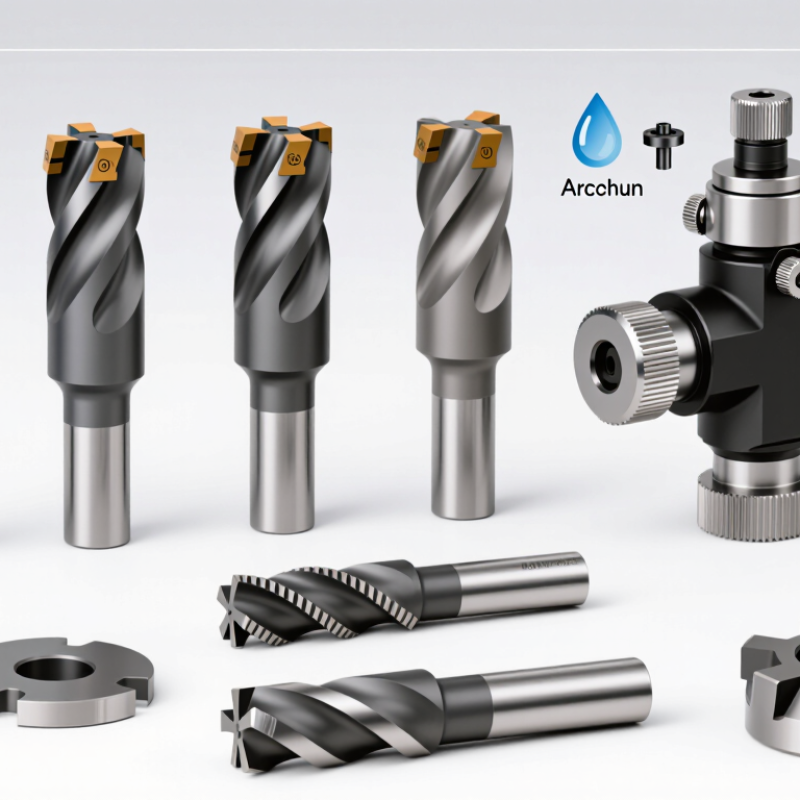
| Single-Angle Chamfer Mill | A conical milling cutter with one primary cutting angle for producing a straight chamfer along an edge. | Commonly 30°, 45° or 60° | Aluminum, steel, stainless steel, brass, plastics and composites | Edge breaking, deburring, weld preparation and general chamfer milling | CNC machining centers, milling machines and some routers | Simple setup, broad application range and easy toolpath programming | Select the angle, cutting diameter, flute count, coating and shank size for the material and machine |
| Double-Angle Chamfer Mill | A cutter with cutting edges on both sides of the body, allowing two chamfer orientations or V-shaped machining. | Often 60°, 90° or 120° included forms | Carbon steel, alloy steel, cast iron, aluminum and non-ferrous alloys | V-grooves, countersinking, edge chamfers and angled features | CNC mills and conventional milling machines | Can perform more than one angled operation and may reduce tool changes | Check the included angle, usable cutting length, clearance and programming requirements |
| Countersink Cutter | A conical cutting tool designed to create a tapered seat around a drilled hole. | Commonly 60°, 82°, 90° or 100° | Aluminum, mild steel, stainless steel, brass and engineering plastics | Flush-fitting flat-head screws, hole deburring and screw-seat preparation | Drill presses, CNC mills, machining centers and hand-held drills for light work | Combines hole deburring with a controlled tapered seat | Match the angle and major diameter to the fastener standard and required screw head |
| Back-Chamfer Cutter | A specialized tool that machines a chamfer on the rear side of a through-hole or inaccessible edge. | Frequently 45°; other angles are available | Aluminum, steel, stainless steel, titanium and other machined alloys | Rear-edge deburring, back chamfering and preparation of cross-holes | CNC machining centers with suitable axial or radial tool access | Reaches features that standard chamfer mills cannot access from the front | Verify minimum hole diameter, tool reach, retraction clearance and spindle orientation |
| Indexable Chamfer Mill | A cutter body fitted with replaceable carbide inserts rather than permanently ground cutting edges. | Commonly 45° or 60°; configuration-dependent | Steel, stainless steel, cast iron, aluminum and nickel-based alloys | High-volume edge chamfering, heavy stock removal and repeat production | CNC machining centers and production milling machines | Replaceable inserts reduce regrinding needs and can lower downtime in production | Compare insert availability, insert grade, body diameter, runout and replacement cost |
| Solid Carbide Chamfer Mill | A one-piece cutter made from cemented carbide, usually ground with two or more flutes. | Commonly 30°, 45°, 60° or 90° | Hardened steels, tool steels, aluminum alloys, brass, plastics and composites | Precision chamfering, small-diameter features, engraving-style work and finishing | High-speed CNC mills and compact machining centers | High stiffness, good dimensional accuracy and strong wear resistance | Use correct cutting data, adequate runout control and suitable coolant or air blast |
| High-Speed Steel Chamfer Cutter | A cutter manufactured from high-speed steel, valued for toughness and relatively easy resharpening. | Commonly 45°, 60° or 90° | Mild steel, low-alloy steel, aluminum, brass and general workshop materials | Maintenance work, low-to-medium production and general-purpose machining | Drill presses, manual mills, lathes with driven tooling and CNC machines | Tougher than carbide in interrupted cuts and often economical for moderate speeds | Expect lower cutting speeds than carbide and select a suitable rake, relief and coating |
| Multi-Flute Deburring Chamfer Tool | A fine-edge tool optimized for removing burrs and producing a small, consistent edge break. | Usually 45° or 90° | Aluminum, copper alloys, plastics, mild steel and small machined parts | Hole deburring, edge conditioning and secondary finishing operations | CNC mills, drilling systems, machining centers and automated deburring cells | Smooth cutting action and efficient removal of light burrs | Avoid excessive radial engagement; confirm flute geometry and chip evacuation for the material |
| Adjustable or Modular Chamfer Tool | A tool system using adjustable blades, heads or interchangeable components to cover multiple diameters or profiles. | Typically 30°, 45° or 60° depending on the head | Steel, cast iron, aluminum and other industrial alloys | Flexible production, large parts and jobs requiring different chamfer sizes | CNC machining centers and specialized production equipment | One tool platform can support multiple applications and reduce inventory variety | Check adjustment accuracy, balancing, maximum speed, spare-part supply and setup repeatability |

.svg)