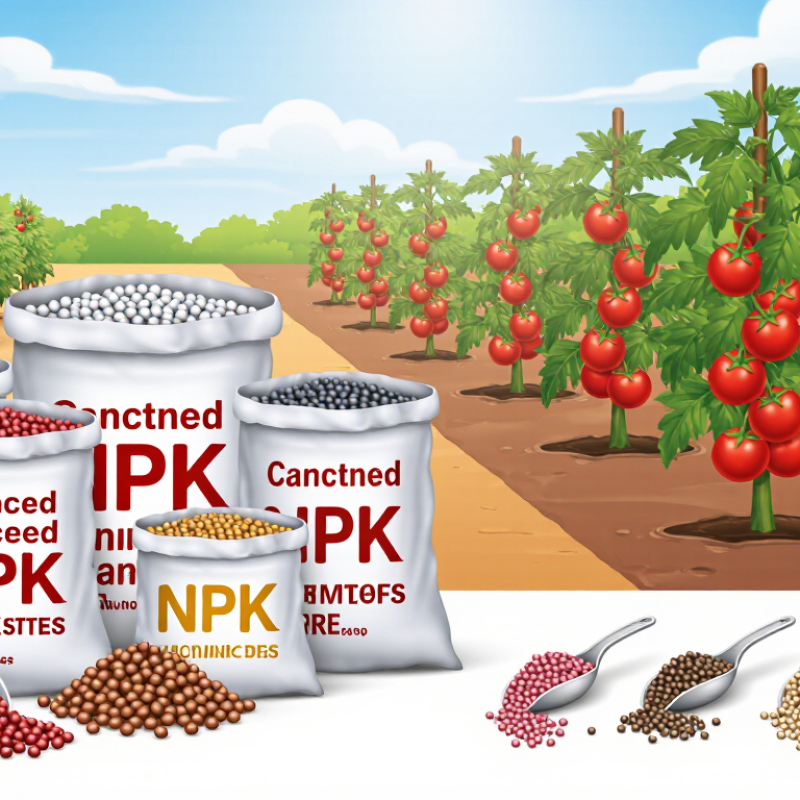
| Balanced General-Purpose Granule | 10-10-10 | Equal nitrogen, phosphate, and potash percentages. Micronutrients are usually absent unless specifically listed on the label. | Mostly quick-release, water-soluble salts. | Pre-plant soil preparation where a soil test shows broadly balanced fertility. | Simple to compare, widely available, and suitable for correcting moderate nutrient removal. | Repeated use can supply more phosphorus than needed in soils already high in phosphorus. Confirm local phosphorus regulations and soil-test results. |
| High-Phosphorus Starter Granule | 8-16-16 | Higher phosphate than nitrogen, with moderate potassium. Often supplemented with sulfur, calcium, or zinc, but these nutrients are not guaranteed unless declared. | Quick-release; phosphate is less mobile in soil than nitrate nitrogen. | Transplant establishment in soils testing low in phosphorus or with cool early-season conditions. | Supports early root development and provides moderate potassium for initial plant establishment. | Extra phosphate does not improve tomatoes when soil phosphorus is already adequate. Avoid routine use without a soil test. |
| High-Potassium Fruiting Granule | 5-10-20 | Lower nitrogen with elevated potassium; may include magnesium and sulfur in specialty formulations. | Generally quick-release, with some products using coated granules for slower nitrogen delivery. | Flowering and fruit-fill stages when nitrogen is adequate and potassium demand is rising. | Helps maintain a lower nitrogen-to-potassium supply during fruit production and reduces the risk of excessive leafy growth. | High potassium can interfere with magnesium or calcium uptake if applied excessively. Check the potassium source and chloride level. |
| Potassium-Magnesium Compound Granule | 12-12-17 + approximately 2% MgO | Moderate nitrogen and phosphate, higher potassium, and magnesium. Sulfur may also be present depending on the raw materials. | Usually quick-release; compound granules provide relatively uniform nutrient distribution. | Open-field and protected-crop production where potassium and magnesium removal is significant. | Supplies two important secondary nutrients together and can help reduce the risk of magnesium deficiency on light or sandy soils. | Verify whether magnesium is water-soluble and whether the product contains chloride. Do not treat blossom-end rot as a simple fertilizer shortage. |
| Low-Chloride Greenhouse Granule | 15-5-20 + approximately 2% MgO | Relatively high nitrogen and potassium, moderate phosphate, magnesium, and commonly added boron, iron, manganese, or zinc in chelated or soluble form. | Quick-release or partially coated, depending on the product. | Greenhouse or fertigation-support programs using low-chloride irrigation water and a controlled nutrient plan. | Provides a fruiting-oriented N:K balance and can be useful where chloride-sensitive crops are grown under protected conditions. | Confirm the chloride percentage, electrical conductivity contribution, micronutrient forms, and compatibility with the crop water and substrate. |
| Controlled-Release Coated Granule | 14-14-14 or 18-6-12 | Nutrients are enclosed in a polymer or resin coating. Some products include magnesium and a complete micronutrient package. | Gradual release commonly specified for approximately 8-12, 3-4, or 5-6 months; actual duration depends on temperature, moisture, coating, and irrigation. | Containers, raised beds, landscaping-scale tomato production, and labor-limited field programs. | Reduces application frequency and can lower the risk of large soluble-salt flushes when applied correctly. | Release periods are not universal. Request release-temperature data, coating type, recommended incorporation depth, and minimum application interval. |
| Organic-Matter-Based Granule | Commonly 5-3-4 to 8-4-6 | Nitrogen is partly or largely organic; products may provide calcium, sulfur, and small amounts of micronutrients. Nutrient availability depends on mineralization. | Slow and biologically mediated; release depends on moisture, temperature, microbial activity, and carbon-to-nitrogen balance. | Soil-building programs and production systems seeking a gradual nutrient supply. | Adds organic material or organic-derived nutrients and generally has a lower immediate salt effect than highly soluble mineral fertilizers. | Compare guaranteed analysis, source materials, pathogen controls, salinity, moisture content, and certification requirements. Lower analysis may require larger application volumes. |
| Calcium- and Nitrate-Focused Granule | 15.5-0-0 + approximately 19% Ca | Supplies nitrate nitrogen and calcium without phosphate or potassium. It is commonly used as a targeted supplement rather than a complete tomato fertilizer. | Fast-release and readily soluble. | Corrective or supplemental applications when soil or irrigation testing indicates low available nitrogen or calcium. | Allows nitrogen and calcium to be adjusted independently without adding more phosphorus or potassium. | Calcium applications do not automatically prevent blossom-end rot; consistent soil moisture and balanced root-zone nutrition are also essential. Avoid mixing concentrated calcium nitrate directly with phosphate or sulfate fertilizers. |
| Micronutrient-Enriched Complete Granule | 12-8-16 + declared micronutrients | May include boron, iron, manganese, zinc, copper, and molybdenum. Prefer labels that state each nutrient percentage and its chemical form. | Usually quick-release; micronutrient release depends on whether nutrients are sulfates, oxides, or chelates. | Soils with confirmed micronutrient deficiencies, high-pH conditions, or intensive production with frequent nutrient removal. | Provides a broader nutrient package and can reduce the need for several separate applications when the analysis matches the soil test. | Micronutrients have narrow safety margins. Avoid routine high-rate use, especially of boron and copper, without soil or tissue analysis. |
| Comparison notes: N-P-K values are shown as the conventional fertilizer-label analysis: total nitrogen (N), available phosphate (P2O5), and soluble potash (K2O). Actual tomato requirements vary with cultivar, yield target, soil texture, irrigation water, climate, and production system. Global buyers should request the guaranteed analysis, chloride content, moisture level, particle-size distribution, bulk density, release-temperature profile, safety documentation, and country-specific registration or organic-compliance documents before purchasing. |

.svg)