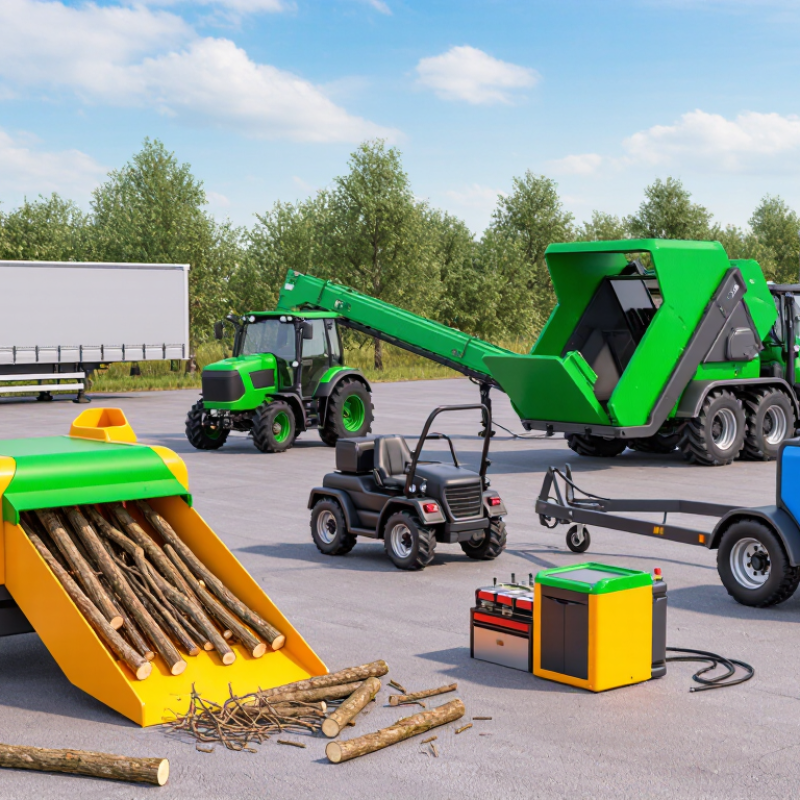
| Definition | Movable, mobile, or towable wood chipper | A wood-processing machine designed to be moved between work locations rather than permanently installed. | Suitable for contractors, municipal crews, farms, landscape maintenance teams, and forestry operations working at multiple sites. |
| Primary Material | Branches, logs, brush, pruning waste, and woody garden debris | The machine reduces long or bulky woody material into smaller wood chips. | Confirm the machine is rated for the material diameter, moisture level, hardness, and contamination expected at the job site. |
| Mobility Type | Wheeled, trailer-mounted, skid-mounted, or self-propelled | The chassis and transport system determine how easily the chipper can be relocated. | Wheeled and trailer-mounted units are practical for road or site-to-site movement; tracked or self-propelled units are better for uneven ground. |
| Power Source | Electric motor, gasoline engine, or diesel engine | The power system drives the cutting drum or disc and the feed mechanism. | Electric models can work well where a suitable power supply is available; engine-powered models are more independent for remote locations. |
| Typical Power Range | Approximately 4–15 kW for light-duty units; 15–75 kW for medium-duty units; above 75 kW for heavy-duty units | Power capacity generally affects feed performance, cutting speed, and the size of material the machine can process. | Choose power together with feed opening, cutting system, and rated capacity rather than using engine power alone. |
| Maximum Branch Diameter | Approximately 50–100 mm for compact units; 100–250 mm for medium units; 250–400 mm or more for heavy units | This is the approximate maximum diameter of wood that the machine is designed to accept. | Select a rated capacity above the normal branch size to reduce blockages and excessive wear. Actual capacity varies with wood species and moisture. |
| Feed Opening | Commonly about 100 × 150 mm to 400 × 600 mm, depending on machine class | The feed opening limits the size and shape of branches that can enter the cutting chamber. | A wider opening improves handling of forked branches and brush, but may increase machine size, weight, and power requirements. |
| Cutting System | Disc chipper, drum chipper, or knife-and-flywheel system | The cutting design affects chip consistency, throughput, energy use, and maintenance requirements. | Disc systems are common for uniform branch feeding; drum systems can handle varied material efficiently but may require careful knife adjustment. |
| Typical Production Capacity | Approximately 1–5 m³/h for compact units; 5–20 m³/h for medium units; more than 20 m³/h for heavy units | Production depends on material type, operator feeding rate, chip size, moisture, and machine configuration. | Use realistic site conditions when comparing capacity figures because laboratory or maximum ratings may exceed everyday production. |
| Chip Size Adjustment | Usually controlled by knife setting, screen size, or anvil clearance | Adjustment determines the approximate size and uniformity of the discharged chips. | Smaller chips may be preferred for mulch or biomass preparation; larger chips may be suitable for paths, landscaping, or erosion control. |
| Discharge System | Rotating discharge chute with adjustable deflector | The chute directs processed chips away from the machine and can often be rotated horizontally or vertically. | Check the discharge height and throwing distance if chips must be loaded directly into a truck, trailer, or collection container. |
| Transport Speed | Low-speed site movement or road-towable configuration, subject to local regulations | Some machines are intended only for movement within a worksite, while others can be towed on public roads when legally equipped. | Verify trailer brakes, lighting, couplings, axle rating, registration, and permitted road speed before transporting the unit. |
| Approximate Operating Weight | About 150–500 kg for compact units; 500–2,500 kg for medium units; more than 2,500 kg for heavy units | Weight influences towing requirements, ground pressure, stability, and loading or unloading procedures. | Match total weight with the towing vehicle, trailer rating, access roads, slopes, and ground conditions at the worksite. |
| Feed Mechanism | Gravity feed, manual feed, hydraulic roller feed, or powered conveyor feed | The feed system controls how branches enter the cutting chamber. | Manual or gravity feed can suit small-scale work; hydraulic rollers improve productivity and reduce manual handling on larger machines. |
| Safety Equipment | Emergency stop bar, feed control, protective guards, discharge shield, and access interlocks | These features help stop feeding and protect operators from moving parts and expelled material. | Prioritize compliance with applicable occupational safety requirements, clear operator access, lockout procedures, and regular inspection. |
| Noise and Emissions | Varies by engine type, power level, cutting system, and operating load | Chippers can generate significant noise, dust, vibration, and engine exhaust during operation. | Use hearing protection, eye and respiratory protection where appropriate, and select electric or lower-emission equipment for noise-sensitive areas. |
| Maintenance Items | Knives, anvil, belts, bearings, hydraulic components, filters, and engine fluids | Cutting edges and drive components are wear parts that affect performance and fuel or energy efficiency. | Check knife sharpness, anvil clearance, fasteners, lubrication points, belts, guards, and hydraulic lines according to the service schedule. |
| Best Use Locations | Urban tree work, parks, farms, orchards, construction sites, forest edges, and roadside maintenance areas | Movable chippers are valuable where woody waste is generated away from a fixed processing facility. | Assess site access, slope, soil strength, overhead clearance, nearby buildings, power availability, and chip storage space. |
| Environmental Use | Mulch production, biomass preparation, composting feedstock, and volume reduction | Chipping can reduce the bulk volume of branches and make material easier to handle or reuse. | Confirm the intended end use before selecting chip size, throughput, contamination tolerance, and collection equipment. |
| Key Buying Priorities | Material diameter, daily workload, mobility, power, safety, maintenance, and total operating cost | A suitable machine balances processing performance with transport, labor, service, and regulatory requirements. | Request verifiable capacity data, operating instructions, spare-parts support, warranty terms, training information, and safety documentation. |

.svg)