Food Safety Insights

In Eagle’s Advanced Insights Blog, experts share their know-how by keeping you up-to-date with the latest trends to ensure your inspection equipment keeps your products safe. Eagle is an industry leader when it comes to performance and innovation, and we’ll share the news that’s important to you to enhance your quality assurance program.

Suggest topic you would like to see at:

sale@generalmachinery.org

2026 Top Omni Directional Wheel Types for Global Buyers

As global automation expands in 2026, buyers are looking beyond simple mobility. They need wheels that support precise movement, stable loads, and dependable operation in compact spaces. An Omni Directional Wheel can move forward, sideways, or diagonally without turning the entire platform. That flexibility helps automated guided vehicles, warehouse robots, service carts, and specialized mobile equipment work more efficiently.

This guide introduces the leading Omni Directional Wheel types for international buyers. It examines mecanum wheels, orthogonal wheels, ball-based designs, and other specialized configurations. Each type creates movement differently. Each also brings practical trade-offs in traction, noise, floor protection, payload capacity, and maintenance. Small rollers may improve lateral motion, but they can wear faster on rough floors. Larger rollers may carry heavier loads, yet they often require more installation space.

Real purchasing decisions need more than catalog specifications. Wheel diameter, tread material, axle design, load distribution, motor torque, and control software must work together. Buyers should also review test reports, production consistency, replacement-part access, and supplier communication. A low unit price can become expensive when alignment problems interrupt operations.

Conditions vary widely.

A polished warehouse floor is not the same as a loading dock. Temperature, dust, ramps, and repeated impacts can change performance. This overview uses engineering considerations and practical buying experience to compare popular wheel solutions for global markets. It does not assume that one design suits every application. Some recommendations may need revision after field testing, because real floors often reveal weaknesses that laboratory data misses. Careful sampling and documented trials remain essential before committing to large-volume orders.

2026 Top Omni Directional Wheel Types for Global Buyers

Omnidirectional Wheel Basics and Operating Principles

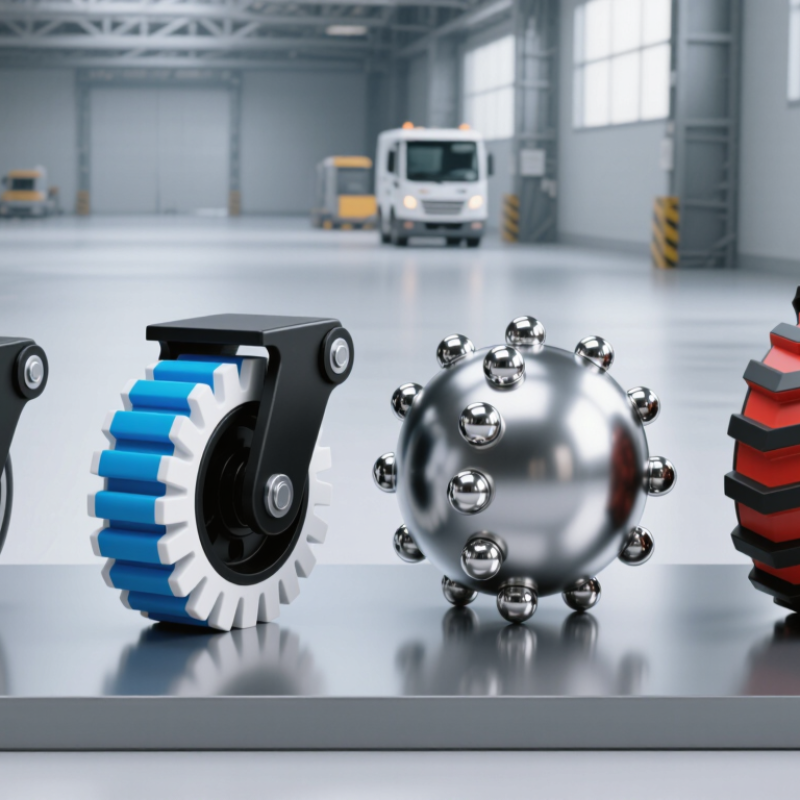
Omnidirectional wheels let a platform move forward, sideways, or diagonally without turning its chassis. Their motion comes from carefully controlled force vectors. Mecanum wheels use angled rollers, commonly set near 45 degrees. Changing each wheel’s speed and direction combines these forces. The result is lateral movement, rotation, or straight travel. Swedish wheels use rollers around the rim, while spherical wheels create movement through a ball-like contact surface. Each design has different traction, noise, and load behavior.

The International Federation of Robotics reported 541,302 industrial robots installed worldwide in 2023, a 10% annual increase in its World Robotics 2024 report. This figure does not measure omnidirectional wheel demand directly. It does show the expanding need for flexible mobile equipment. In practice, wheel selection depends on floor joints, payload, turning frequency, roller hardness, and battery limits. Smooth concrete may suit small rollers. Uneven floors can cause vibration, slip, and positioning errors. The wheel choice is rarely perfect.

Tips: Measure the floor before testing wheel types. Record payload, speed, slope, noise, and stopping distance. Test diagonal travel with a full load. A lightweight empty platform can hide serious traction problems. Also check maintenance access. Rollers wear unevenly, especially during repeated sideways movement. ASTM and ISO guidance can support safety planning, but real site trials remain essential. Small errors in wheel spacing or motor calibration can produce visible drift. That detail is often underestimated.

Leading Omni Directional Wheel Types for Global Buyers in 2026

Leading Omni Directional Wheel Types for Global Buyers in 2026

Omni directional wheels are becoming practical for warehouses, hospitals, factories, and service platforms. IFR’s World Robotics 2024 report recorded 541,302 industrial robot installations in 2023, a 10% annual increase. This growth encourages buyers to examine mobile base performance, not only robot payload. Mecanum wheels suit diagonal movement and tight turning. Swedish 90-degree wheels offer smoother lateral travel on prepared floors. Conventional Omni Wheels remain useful for lighter platforms and compact vehicles.

Choose traction carefully. Mecanum designs use angled rollers, often creating vibration on uneven concrete. Swedish wheels can deliver more consistent sideways motion, but their roller gaps may collect dust or small debris. Ball-based systems provide flexible movement, yet they usually require cleaner surfaces and careful load distribution. Buyers should compare wheel diameter, roller material, bearing protection, floor tolerance, noise, and replacement access. A larger wheel may cross thresholds better, but it can increase platform height.

Reliability requires more than a specification sheet. ISO 3691-4 provides safety guidance for driverless industrial trucks and their operating environments. Buyers should request test results for braking, side loads, wet floors, and repeated turning. Reports from Interact Analysis also show continued expansion in mobile robot adoption, although market forecasts vary by definition and region. That difference matters. A wheel selected from a laboratory floor may disappoint in a humid warehouse with worn joints. Pilot testing remains essential before global deployment.

2026 Top Omni Directional Wheel Types for Global Buyers - Leading Omni Directional Wheel Types for Global Buyers in 2026

Wheel Type Movement Principle Typical Movement Capability Representative Load Range per Wheel* Common Applications Main Advantages Key Limitations Important Buying Criteria
Ball Transfer Unit A large load-bearing ball rotates on smaller supporting balls or an internal race. Free movement in multiple horizontal directions, including 360-degree positioning. Approximately 20–2,500 kg, depending on ball diameter, housing, and construction. Material handling tables, transfer stations, airport and warehouse equipment, and assembly lines. Very low directional resistance and simple multidirectional transfer. Usually requires a flat, rigid load surface; exposed units can be affected by dirt and impact. Ball diameter, housing material, corrosion resistance, mounting method, surface cleanliness, and static versus dynamic load rating.
Single-Row Omni Wheel A central wheel is fitted with rollers around its circumference, with roller axes generally perpendicular to the wheel axis. Forward and lateral movement when used in a properly arranged wheel system. Approximately 10–250 kg, depending on wheel diameter, roller design, and frame support. Small mobile robots, conveyor systems, inspection equipment, and light-duty platforms. Compact design, relatively small turning envelope, and good lateral maneuverability. Individual rollers can create vibration on uneven floors and may have limited point-contact traction. Roller material, roller spacing, wheel diameter, axle strength, floor flatness, noise, and allowable shock load.
Dual-Row Omni Wheel Two offset rows of rollers distribute contact across a wider wheel profile. Multidirectional travel with improved stability and load distribution compared with many single-row designs. Approximately 50–1,000 kg, depending on diameter, roller width, and bearing arrangement. Automated guided vehicles, warehouse carts, robotic platforms, and medium-duty transfer systems. Higher stability, better load support, and reduced risk of edge contact under moderate loads. More expensive and heavier than basic single-row wheels; requires accurate alignment. Total wheel width, roller geometry, load sharing, bearing protection, mounting tolerance, and floor condition.
Mecanum Wheel Angled rollers, commonly arranged at approximately 45 degrees, convert wheel rotation into longitudinal and lateral force components. Forward, reverse, lateral, diagonal, and spot-rotation movement when four or more wheels are controlled as a system. Approximately 50–1,500 kg per wheel, depending on wheel size, roller construction, and drive system. Mobile robots, autonomous transport vehicles, industrial platforms, and indoor logistics equipment. Provides true holonomic movement without steering the wheel assembly. Higher control complexity, reduced efficiency during lateral travel, and sensitivity to uneven or contaminated floors. Wheel orientation pattern, motor torque, encoder feedback, roller hardness, traction, control software, and floor flatness.
Spherical Wheel A spherical load-bearing element rotates within a socket, ring, or powered support mechanism. Potential movement in multiple directions from a single wheel position, depending on the support and drive design. Approximately 20–500 kg for compact industrial designs; capacity varies widely by support structure. Specialized robots, compact maneuvering platforms, positioning equipment, and research systems. Highly compact footprint and flexible directional response. Less common, more specialized, and often more sensitive to surface quality and bearing contamination. Sphere material, socket design, drive method, sealing, friction management, serviceability, and load stability.
Powered Omni-Directional Drive Module Integrates an omni-directional wheel with a motor, gearbox, bearings, and mounting structure. Controlled translation and rotation through coordinated drive modules. Approximately 50–2,000 kg per module, depending on motor torque, gearing, wheel size, and duty cycle. Autonomous mobile robots, production-line transporters, heavy-duty indoor vehicles, and precision positioning platforms. Combines mechanical mobility with integrated control, braking, and feedback options. Higher purchase cost, electrical integration requirements, and greater maintenance complexity. Rated torque, continuous and peak load, duty cycle, motor voltage, encoder type, brake function, ingress protection, and control interface.
Heavy-Duty Omnidirectional Transfer Wheel Uses large rollers or a heavy-duty ball arrangement to support and redirect substantial loads. Manual or powered multidirectional transfer across industrial platforms and fixed handling stations. Approximately 500–5,000 kg per wheel or unit, subject to installation and load distribution. Steel handling, machine loading, fabrication lines, pallet transfer, and heavy industrial assembly. High load capacity, robust construction, and suitability for demanding industrial environments. Large installation space, higher rolling resistance under heavy loads, and significant foundation requirements. Safety factor, dynamic impact load, mounting plate strength, floor capacity, corrosion protection, lubrication, and replacement access.
*Note: Load ranges are representative engineering ranges rather than universal ratings. Actual capacity depends on wheel diameter, material, bearing design, speed, duty cycle, shock loading, mounting arrangement, number of wheels, and floor conditions. Buyers should use the manufacturer's tested static and dynamic ratings for final selection.

Performance Factors for Comparing Different Wheel Designs

2026 Top Omni Directional Wheel Types for Global Buyers

Performance Factors for Comparing Different Wheel Designs

Comparing omnidirectional wheel designs requires more than checking movement diagrams. Load capacity, roller geometry, traction, and floor condition strongly affect real performance. Mecanum wheels create lateral motion through angled rollers, but they may lose efficiency during diagonal travel. Their roller count and contact shape also influence vibration. Omni wheels use perpendicular rollers and often provide smoother side movement on clean, firm floors.

Spherical wheels can offer flexible contact in compact systems, yet their control demands may be higher. Small rollers turn easily, but they can struggle with cracks, thresholds, and loose debris. Larger rollers usually cross obstacles better. That advantage may increase turning resistance. No design wins everywhere.

In practical testing, measure acceleration, stopping distance, turning accuracy, noise, and power use. Test with the intended payload, not an empty platform. We once tested on a polished floor and rated traction too generously. That result needed correction. Repeat trials on concrete, coated floors, and slightly uneven surfaces. Check heat around bearings after extended operation. Inspect roller wear after repeated sideways travel.

Buyers should also compare maintenance access, replacement availability, operating temperature, and control compatibility. A wheel that performs well in a laboratory may disappoint in a dusty warehouse. Sealed bearings can improve reliability, but they do not remove every service need. Review the duty cycle carefully. Then match wheel design to the actual route, payload, and floor conditions.

Best Applications for Each Omni Directional Wheel Type

2026 Top Omni Directional Wheel Types for Global Buyers

Best Applications for Each Omni Directional Wheel Type

Single-row omni wheels suit light-duty carts, inspection platforms, and compact conveyor transfers. Their rollers allow sideways movement with limited turning space. Use them on clean, smooth floors with moderate loads. Small rollers may struggle over floor joints, loose gravel, or metal chips. They are practical for indoor equipment and laboratory transport.

Double-row omni wheels provide better stability under wider platforms and heavier mobile frames. They fit warehouse carts, automated shelving units, and assembly-line carriers. Their two roller rows reduce rocking during lateral movement. Check the center gap carefully. Poor alignment can create uneven contact and faster wear. This detail is often missed during purchasing.

Mecanum wheels are effective for forklifts, service robots, and industrial vehicles requiring diagonal travel. They need accurate wheel spacing and synchronized motor control. Uneven floors can reduce traction, especially under wet or dusty conditions. Spherical wheels work well for small robots, guided platforms, and positioning tables. They offer smooth multi-directional motion but usually carry less weight. Ball transfer units support manual repositioning of crates and workpieces, not high-speed travel. Measure load distribution, surface hardness, noise limits, and replacement access before ordering. A short floor trial is wiser than relying only on a catalog rating.

2026 Top Omni Directional Wheel Types for Global Buyers

Typical load-capacity ranges and best-fit applications by omni directional wheel type.

Load capacities are typical engineering ranges per wheel and vary according to wheel diameter, roller material, frame design, floor condition, speed, and safety factor. Mecanum and heavy-duty omni roller wheels are generally preferred for mobile platforms and industrial carts, while ball transfer units are commonly used for multidirectional pallet and sheet-material handling.

Global Sourcing, Compatibility, and Quality Checks in 2026

Global buyers are comparing omni directional wheel types by more than price in 2026. Mecanum wheels suit mobile robots needing diagonal movement. Standard omni wheels work well for conveyor carts and compact platforms. Ball-transfer wheels support smooth handling, but they usually need a stable, flat surface. Selection starts with load, wheel diameter, axle size, tread material, and floor condition.

Compatibility problems often appear after delivery. Measure the mounting holes and shaft tolerance before placing an order. Check whether the wheel matches the motor’s torque and the chassis height. A six-inch wheel may fit physically but overload a small gearbox. Confirm metric dimensions, technical drawings, thread standards, and replacement-part availability. Ask for samples from the same production batch. Small differences matter.

Quality checks should be practical and repeatable. Inspect tread bonding, bearing noise, side-plate alignment, and visible cracks. Measure radial runout with a dial indicator. Test a loaded wheel on the buyer’s actual floor, not only on polished factory concrete. Record noise, vibration, turning resistance, and temperature after continuous operation. I have seen attractive samples fail after dust entered the bearings. Packaging also deserves inspection. Bent axles can result from weak internal support. Documents help, but hands-on testing remains more convincing. One weakness remains: supplier test methods are not always comparable. Buyers should define acceptance limits before production.

Any Questions? We Are Here for You

Contact Us

Contact Us

Request information

Ask us a question
Service Support

Service Support

Available 24 hours a day, 7 days a week.

Get in Touch
Find a representative

Find a representative

Contact your local representative

View Locations