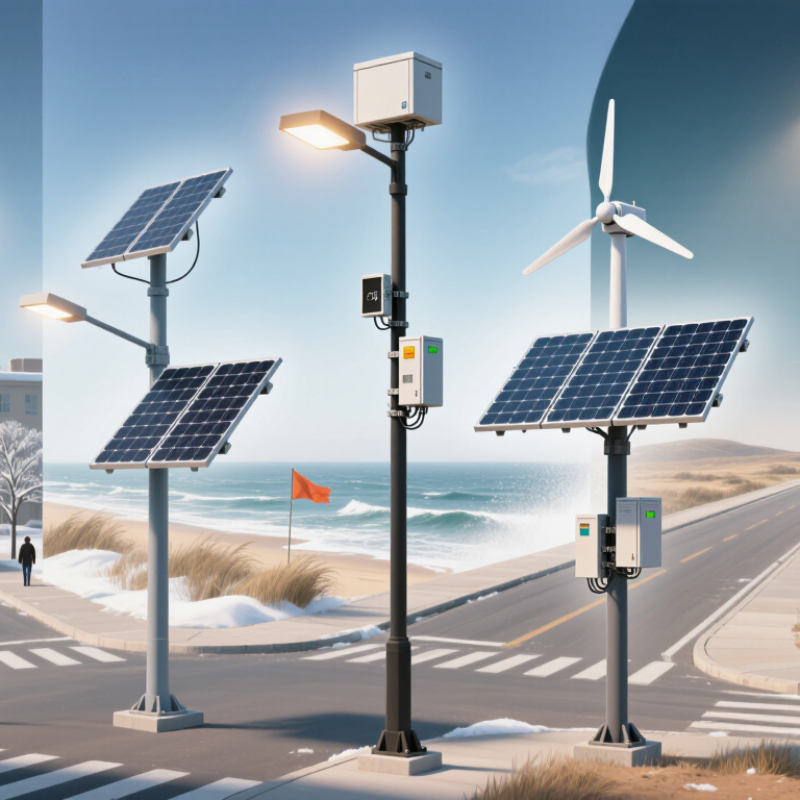
| All-in-One Solar Street Light Pole | 5–12 m | 20–150 W | Integrated panel, LED module, controller, and battery in one compact luminaire | Lithium iron phosphate or other lithium-ion batteries | Urban streets, residential roads, parking areas, and walkways | Simple installation, clean appearance, reduced wiring, and relatively low maintenance | Limited component spacing and possible heat buildup in compact housings |
| Split-Type Solar Street Light Pole | 6–14 m | 30–200 W | Separate photovoltaic panel, luminaire, controller, and battery enclosure | Lithium-ion or sealed lead-acid, depending on design and budget | Main roads, larger streets, high-demand public areas, and sites needing flexible sizing | Better component ventilation, easier service access, and greater design flexibility | More installation work, additional cable routing, and a larger visual footprint |
| Vertical Solar Panel Light Pole | 4–10 m | 15–100 W | Long, narrow panels mounted vertically or along the pole structure | Lithium iron phosphate is commonly selected for compact systems | Narrow roads, coastal locations, windy areas, and sites with limited horizontal space | Smaller wind-facing area, reduced dust accumulation, and efficient use of narrow sites | Energy yield depends strongly on orientation, latitude, shading, and panel design |
| Adjustable-Panel Solar Light Pole | 5–12 m | 20–150 W | Tilt- or angle-adjustable photovoltaic panel | Lithium-ion or sealed lead-acid batteries | Locations where seasonal solar-angle optimization is important | Allows better alignment with local solar conditions and can improve annual energy capture | Requires secure mounting, periodic inspection, and accurate site-specific adjustment |
| Solar Bollard Light Pole | 0.3–1.5 m | 1–15 W | Small integrated panel mounted on the top or upper housing | Rechargeable lithium-ion or nickel-metal hydride battery | Gardens, pathways, parks, campuses, and low-speed pedestrian areas | Low installation cost, no trenching, and suitable for decorative landscape lighting | Lower light output and shorter autonomy than roadway-scale solar poles |
| Solar Floodlight Pole | 4–12 m | 30–300 W | One or more separate panels sized for high-output lighting | High-capacity lithium batteries or sealed lead-acid systems | Sports courts, construction sites, yards, loading zones, and security perimeters | Wide-area illumination, flexible aiming, and useful coverage for open spaces | Higher energy demand requires careful sizing of the panel, battery, and lighting schedule |
| Solar High-Mast Light Pole | 12–30 m | 100–600 W | Large ground-mounted or high-capacity panel array, often distributed around the site | Large lithium battery bank or a hybrid energy-storage system | Ports, logistics yards, highways, industrial compounds, and large open areas | Broad lighting coverage and fewer poles for large sites | High structural, foundation, wind-load, and energy-storage requirements |
| Smart Solar Light Pole | 5–14 m | 20–200 W | Integrated or split panel system with a programmable charge controller | Lithium iron phosphate or other lithium-ion batteries | Smart cities, campuses, transport areas, and public infrastructure networks | Dimming schedules, motion sensing, remote monitoring, and energy-use optimization | Higher initial cost, software configuration, communications coverage, and cybersecurity needs |
| Solar-Wind Hybrid Light Pole | 6–14 m | 30–200 W | Photovoltaic panel combined with a small wind turbine | High-cycle lithium battery bank or another rechargeable storage system | Windy coastal zones, remote roads, islands, and locations with mixed renewable resources | Can generate energy during some nighttime or low-sunlight periods when wind conditions are suitable | More moving parts, noise considerations, maintenance requirements, and site-specific wind assessment |

.svg)