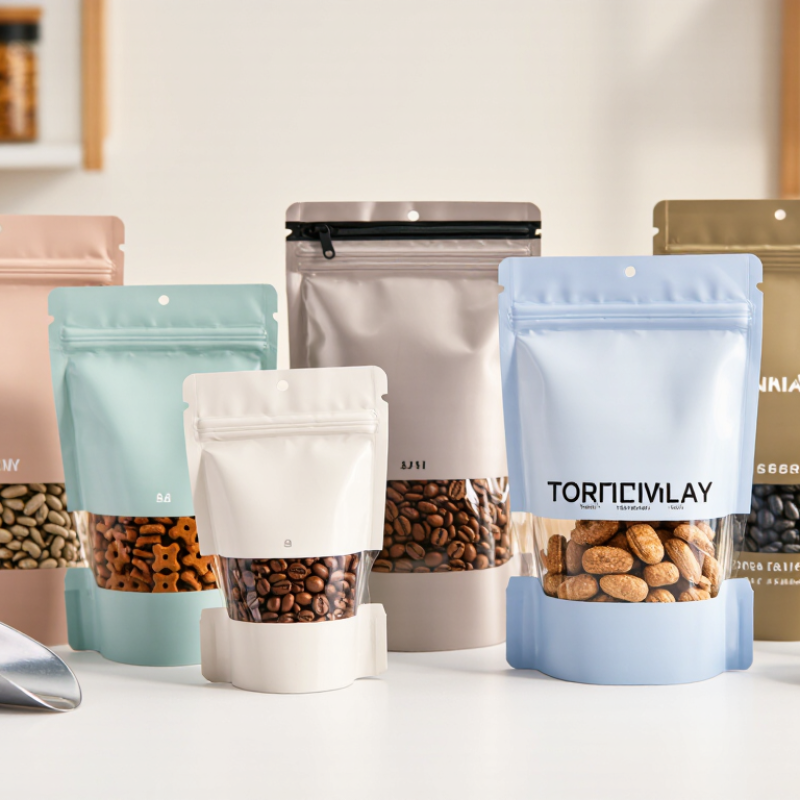
| 1 | Reliable upright standing on retail shelves | K-Seal Bottom | Creates a stable base after filling and is widely used for stand-up flexible packaging. | Choose a gusset width that provides enough contact area for the product’s weight and center of gravity. | Very soft or uneven products may still require testing to confirm shelf stability. |
| 2 | Heavy or dense products that need extra bottom support | Plow Bottom | The folded bottom structure can provide a broad, supportive base for heavier contents. | Check seal strength, material thickness, and the expected filled weight before finalizing the pouch. | A wider bottom does not automatically guarantee stability if the pouch is overfilled. |
| 3 | Premium shelf presentation with four-sided structure | Quad-Seal Bottom | Four sealed corners create a more structured appearance and can improve front-facing presentation. | Use when consistent shape, strong branding panels, and neat shelf alignment are important. | This construction can require more converting steps and may cost more than simpler pouch formats. |
| 4 | Efficient packing into cartons, bins, or shipping cases | Moderate-Width Bottom Gusset | Provides useful volume while avoiding an unnecessarily wide base that can waste case space. | Compare the filled pouch dimensions with the internal dimensions of cartons, shelves, and storage bins. | Measure filled samples rather than relying only on flat pouch dimensions. |
| 5 | Maximum product capacity within a limited footprint | Deep Bottom Gusset | Adds pack-out volume by allowing the pouch to expand vertically and at the base. | Confirm that the expanded pouch will not block neighboring products or exceed shelf-depth limits. | A deeper gusset may increase the risk of tipping when the package is tall and lightly filled. |
| 6 | Compact storage and reduced empty-space movement | Narrow or Shallow Bottom Gusset | Keeps the package profile compact and can help reduce unused space during storage. | Match the gusset depth to the product’s natural settling behavior and the required fill volume. | A shallow gusset may limit standing performance for bulky or irregular contents. |
| 7 | Products that release air or settle after filling | Flexible K-Seal or Plow Bottom | A flexible structure can accommodate moderate changes in product distribution during handling. | Consider headspace, degassing behavior, seal placement, and whether the package needs a valve or vent. | The gusset design cannot replace proper air-management features when gas release is significant. |
| 8 | High-visibility front display with a clean lower panel | Centered Bottom Gusset | Keeps the main front panel broad and visually consistent while supporting upright display. | Reserve the lower gusset area for folds and seals, and place essential graphics within the usable front panel. | Artwork can shift or distort near gusset folds, so create a safe design zone around them. |
| 9 | Frequent opening and closing after purchase | Stable Bottom with Reclosable Top | The bottom gusset supports upright storage while a zipper or other closure helps preserve usability. | Evaluate zipper position, opening width, reseal performance, and whether the filled pouch remains stable after use. | A reclosable feature does not ensure an airtight or moisture-tight seal unless specifically designed and tested for it. |
| 10 | Moisture, oxygen, light, or aroma protection during storage | Barrier Laminate with a Suitable Gusset | The gusset determines shape and capacity, while the laminate structure provides the main barrier function. | Select materials according to the product’s sensitivity, shelf life, seal requirements, and storage environment. | A gusset shape alone does not provide barrier protection; packaging performance must be validated through testing. |

.svg)