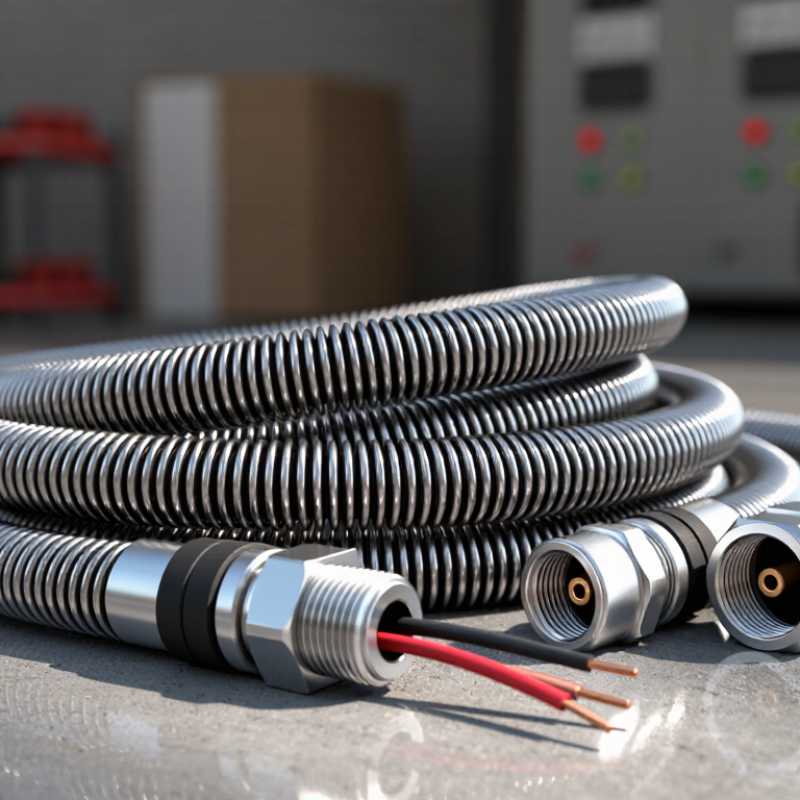
| 1 | Confirm the conduit type | Use metallic liquidtight flexible conduit, commonly identified as LFMC, when both flexibility and protection against liquids are required. | A flexible metal core is combined with a liquid-resistant outer jacket. It is commonly used for motors, pumps, outdoor equipment, and vibration-prone connections. | Verify that the conduit, fittings, and installation method are approved for the intended environment and electrical system. |
| 2 | Choose the metal material | Select galvanized steel for general indoor or protected installations; choose stainless steel where corrosion exposure is severe. | Galvanized steel offers strong mechanical protection and broad availability. Stainless steel provides improved resistance in wet, corrosive, or washdown areas. | Assess moisture, chemicals, salt spray, cleaning agents, temperature, and the possibility of dissimilar-metal corrosion. |
| 3 | Match the outer jacket to the environment | Use a jacket rated for exposure to water, oil, sunlight, chemicals, or low temperatures as applicable. | The jacket provides liquid resistance and protects the metal core. Common jacket materials have different resistance to oils, ultraviolet light, heat, and abrasion. | Check the manufacturer’s environmental ratings and confirm that the jacket remains suitable at the minimum and maximum operating temperatures. |
| 4 | Select the correct trade size | Choose the smallest trade size that meets conductor fill, pulling, bending, and future-maintenance requirements. | Common trade sizes include 3/8, 1/2, 3/4, 1, 1-1/4, and 1-1/2 inches, with larger sizes available for higher conductor capacity. | Calculate conductor fill using the applicable electrical code. Do not select the size based only on the outside diameter of the cable. |
| 5 | Balance flexibility and bend radius | Use highly flexible conduit for frequent movement or tight routing; use a heavier construction when stiffness and impact protection are more important. | More flexibility simplifies installation but can reduce mechanical strength. A larger size may require a larger minimum bend radius. | Follow the published minimum bend radius. Avoid sharp bends, repeated flexing beyond the product rating, and bending directly at fittings. |
| 6 | Verify fittings and grounding continuity | Use compatible liquidtight fittings with correctly sized sealing rings, locknuts, and strain-relief components. | A liquidtight system depends on the conduit and fittings working together. Metallic conduit may also form part of the equipment grounding path when permitted by the applicable code. | Confirm fitting compatibility, tighten connections correctly, protect threads, and test electrical continuity where required. |
| 7 | Check standards, temperature, and documentation | Buy conduit with clearly stated approvals, dimensions, operating-temperature limits, and installation instructions. | Performance can vary by construction, jacket compound, size, and fitting system. Product documentation is essential for confirming suitability. | Review the applicable local electrical code, certification markings, flame or sunlight ratings, temperature range, and manufacturer installation requirements before purchase. |

.svg)