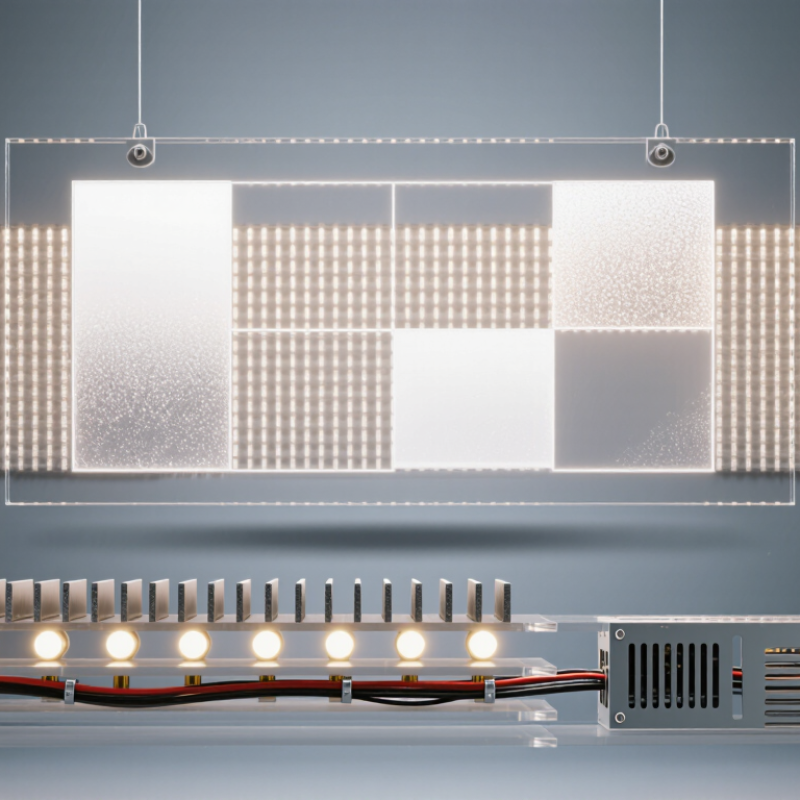
| Basic Definition | A sign with a light-transmitting acrylic face and an internal light source. | The acrylic panel acts as the visible sign face, while the internal lighting makes letters, symbols, or graphics readable in low-light conditions. |
| Primary Face Material | Cast or extruded polymethyl methacrylate, commonly called acrylic or PMMA. | PMMA is a rigid, lightweight thermoplastic that can transmit, diffuse, or selectively block light depending on its color, finish, and thickness. |
| Light Source | LED modules, LED strips, or LED light bars are commonly used. | The light source converts electrical energy into light. LEDs are widely used because they are compact, energy-efficient, and suitable for continuous operation. |
| Electrical Input | Many LED sign systems operate on low-voltage direct current, often 12 V or 24 V DC. | An external power supply converts building mains electricity to the voltage required by the LED system. The exact input and output specifications depend on the lighting components. |
| Acrylic Face Function | Light diffusion, color presentation, graphic protection, and surface appearance. | The face spreads light across the visible area and presents the selected color, printed graphic, cut lettering, or translucent film design. |
| Graphic or Lettering Layer | Printed graphics, translucent vinyl, painted areas, routed details, or individually formed letters. | Opaque and translucent areas control where light passes through, creating the required text, logo-free symbol, pattern, or contrast effect. |
| Enclosure or Cabinet | A shallow box or channel made from metal, acrylic, plastic, or a combination of materials. | The enclosure supports the face, holds the lighting components, protects wiring, and helps maintain a controlled distance between the LEDs and the acrylic. |
| Reflective Interior | A light-colored or reflective backing is often placed behind the LEDs. | The backing redirects stray light toward the acrylic face, improving light utilization and helping reduce dark areas inside the sign. |
| Diffusion and Uniformity | Uniformity depends on acrylic diffusion, LED spacing, LED lens design, and the depth of the enclosure. | The internal light must be distributed evenly before reaching the face. Insufficient spacing or unsuitable diffusion can produce visible bright spots and shadows. |
| Lighting Colors | White, red, green, blue, amber, and programmable RGB or RGBW options are available. | Color is produced by the LEDs, the acrylic sheet, translucent graphics, or a combination of these elements. |
| Illumination Direction | Front-lit, edge-lit, back-lit, or a combination of lighting methods. | Front-lit signs illuminate the face from behind; edge-lit designs introduce light through the acrylic edge; back-lit designs illuminate a separate surface or raised lettering from the rear. |
| Typical Acrylic Thickness | Common sign-face thicknesses are approximately 2–10 mm, depending on size, mounting method, and design. | Thicker sheets generally provide greater rigidity, while thinner sheets can reduce weight. The suitable thickness must be selected for the specific sign structure. |
| Weather Resistance | Acrylic is naturally resistant to moisture and is suitable for many indoor and outdoor sign applications when properly designed. | Outdoor durability also depends on UV exposure, sealing, mounting, drainage, electrical protection, and the quality of the other sign materials. |
| Operating Process | Power supply → LED circuit → light diffusion → illuminated acrylic face. | When powered, the LEDs emit light inside the enclosure. The light reflects and diffuses through the acrylic, making the sign visible. |
| Energy Consideration | Power consumption varies with sign area, LED density, brightness, color, and operating hours. | Total electrical demand can be estimated by multiplying the rated power of the LED system by the operating time, while allowing for power-supply losses. |
| Main Advantages | Lightweight construction, clear appearance, flexible shaping, and effective nighttime visibility. | Acrylic can be cut, engraved, formed, printed, or combined with films and lettering to create a wide range of illuminated sign designs. |
| Common Applications | Building directories, reception signs, directional signs, retail displays, interior decoration, event signage, and outdoor identification signs. | The combination of a visible graphic face and integrated lighting makes acrylic luminous signs suitable wherever information must remain readable in changing ambient light. |

.svg)