Food Safety Insights

In Eagle’s Advanced Insights Blog, experts share their know-how by keeping you up-to-date with the latest trends to ensure your inspection equipment keeps your products safe. Eagle is an industry leader when it comes to performance and innovation, and we’ll share the news that’s important to you to enhance your quality assurance program.
Suggest topic you would like to see at:

sale@generalmachinery.org

Top Benefits of Food Inspection Machines for Ensuring Food Safety and Quality

In today’s food industry, ensuring safety and quality is of paramount importance. With the rising demand for high standards and consumer awareness, food inspection machines have emerged as an essential tool in the production and distribution processes. These machines play a critical role in identifying potential hazards and ensuring that food products meet stringent safety regulations. Their advancements in technology not only enhance the accuracy of inspections but also significantly improve the efficiency of food processing operations.

Food inspection machines utilize various technologies, including X-ray, metal detection, and vision systems, to carry out comprehensive analyses of food items. This proactive approach to food safety helps mitigate risks associated with contamination, thus protecting both consumers and brands from potential harm. Moreover, the implementation of these machines can lead to reduced waste and lower operational costs by detecting defects early in the production cycle. As the industry continues to evolve, the integration of food inspection machines will remain a cornerstone of maintaining quality and safety measures in food production.

Top Benefits of Food Inspection Machines for Ensuring Food Safety and Quality

Understanding Food Inspection Machines: An Overview

Food inspection machines play a crucial role in the food industry, ensuring that products meet safety and quality standards. These machines utilize advanced technologies such as X-ray imaging, near-infrared spectroscopy, and metal detection to identify foreign contaminants, verify product integrity, and assess overall quality. According to recent industry reports, the global food inspection equipment market is projected to reach $25 billion by 2025, driven by increasing consumer awareness and stringent food safety regulations.

The use of food inspection machines significantly reduces the risk of foodborne illnesses. Studies have shown that improper food handling and contamination contribute to approximately 600 million illnesses worldwide each year. By implementing robust inspection systems, businesses can detect potential hazards before products reach consumers, ultimately safeguarding public health. Moreover, food inspection machines enhance operational efficiency by reducing the likelihood of product recalls and the associated financial losses, which can average around $10 million per incident.

Tips: When selecting food inspection machines, consider factors such as the type of food being inspected, detection sensitivity, and compliance with regulatory standards. Regular maintenance and calibration of the equipment are also critical to ensure optimal performance and accuracy in detecting potential hazards. Investing in the latest technology can lead to better inspection capabilities and improve overall product quality, enhancing consumer trust and satisfaction.

Key Functions of Food Inspection Machines in Quality Control

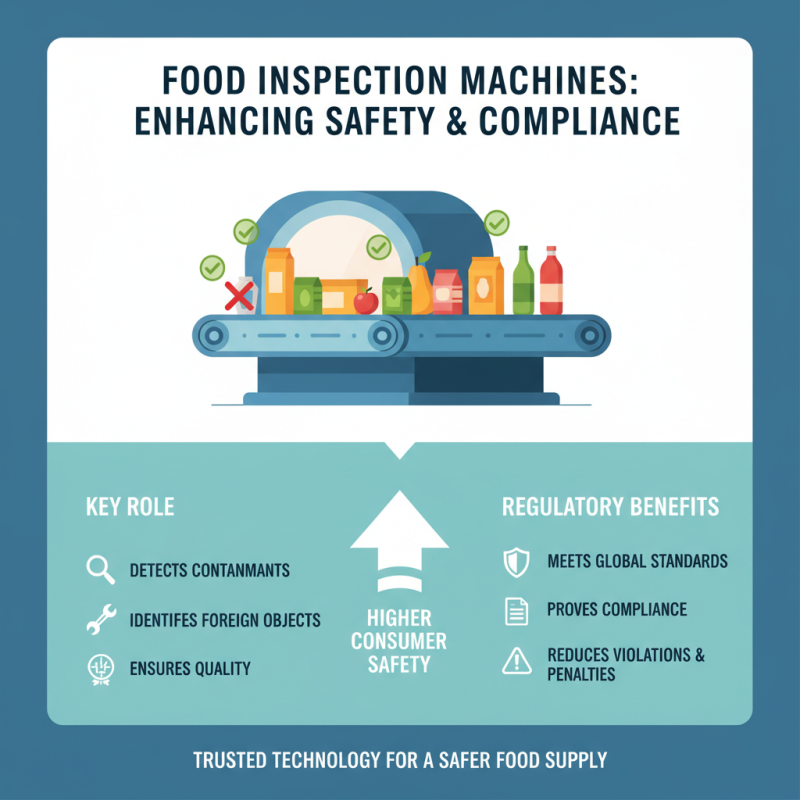
Food inspection machines play a crucial role in maintaining high standards of safety and quality in the food industry. One of their key functions is the detection of contaminants, which can include physical objects such as metal shards or glass fragments. By employing advanced technology like X-ray and metal detection systems, these machines provide real-time monitoring, ensuring that any foreign bodies are identified and removed before products reach consumers. This proactive approach not only helps in safeguarding public health but also minimizes the risk of product recalls that can lead to significant financial losses for manufacturers.

Another vital aspect of food inspection machines is their ability to verify product integrity. These systems assess various parameters such as weight, size, and package integrity, ensuring that all products meet predetermined specifications. By automating these quality control processes, manufacturers can enhance efficiency and reduce human error, ultimately leading to higher customer satisfaction. Additionally, consistent inspection helps in maintaining regulatory compliance, thus reinforcing the trust consumers place in food brands and their commitment to delivering safe, high-quality products.

Benefits of Food Inspection Machines for Safeguarding Consumer Health

Food inspection machines play a crucial role in safeguarding consumer health by ensuring that food products meet the highest standards of safety and quality. These advanced technologies are designed to detect contaminants, foreign objects, and anomalies that could pose risks to consumers. By employing techniques such as X-ray inspection, metal detection, and vision systems, food inspection machines are able to thoroughly analyze products as they move through the production line. This level of scrutiny significantly reduces the likelihood of tainted or unsafe food reaching consumers, thus promoting public health.

Moreover, the implementation of food inspection machines not only protects consumers but also enhances the overall quality of food products. By identifying potential defects early in the production process, manufacturers can reduce waste and prevent costly recalls. The ability to maintain high standards in food quality also boosts consumer confidence, as shoppers increasingly seek transparency and assurance regarding the safety of the products they purchase. This dual focus on safety and quality ultimately leads to a more robust food supply chain, benefiting both manufacturers and consumers alike.

Top Benefits of Food Inspection Machines for Ensuring Food Safety and Quality

Benefit Description Impact on Consumer Health Long-term Benefits
Enhanced Safety Detection of contaminants and harmful substances in food products. Reduces risk of foodborne illnesses. Increased consumer trust and brand loyalty.
Quality Assurance Ensures consistent quality standards across products. Supports healthier food choices for consumers. Sustained competitive advantage in the market.
Regulatory Compliance Helps businesses comply with food safety regulations. Protects consumers from unsafe food products. Reduced risk of legal issues and penalties.
Increased Efficiency Streamlines the inspection process, saving time and resources. Higher quality control leads to fewer recalls. Cost savings through reduced waste and loss.
Traceability Facilitates tracking of food products through the supply chain. Assists in quick response during food safety crises. Enhanced reputation and consumer confidence.

How Food Inspection Machines Enhance Compliance with Safety Regulations

Top Benefits of Food Inspection Machines for Ensuring Food Safety and Quality

Food inspection machines play a crucial role in enhancing compliance with safety regulations in the food industry. These advanced technologies are designed to detect contaminants, foreign objects, and quality issues within food products, thereby ensuring that only safe and high-quality items reach the consumer. With strict regulatory standards enforced by health authorities worldwide, the use of food inspection machines helps manufacturers maintain and demonstrate compliance, mitigating the risk of violations and potential penalties.

Moreover, implementing these machines in food processing lines enables companies to conduct real-time quality control checks, which is essential for adhering to safety protocols. Automated inspection processes reduce the likelihood of human error, ensuring a more consistent and thorough examination of products. By integrating these machines into their operations, food producers can efficiently address safety concerns and enhance transparency throughout their supply chains, fostering greater trust with consumers and regulators alike. This commitment to safety not only helps safeguard public health but also strengthens brand reputation and consumer loyalty in an increasingly competitive market.

The Role of Technology in Advancing Food Inspection Efficiency

The fast-paced world of food production requires innovative solutions to ensure both safety and quality. The role of technology in food inspection is vital, as it enhances the efficiency of quality control measures through advanced machinery that can quickly and accurately identify potential hazards. Automated food inspection machines use sophisticated sensors and imaging techniques to detect contaminants and inconsistencies that might go unnoticed by the human eye. This not only speeds up the inspection process but also significantly reduces the risk of errors, ensuring that only safe products reach consumers.

Tips for implementing food inspection technology effectively include training staff on the use of new machines and integrating these technologies into existing operations. Regular maintenance and calibration of inspection systems are crucial to maintain their accuracy and reliability. Additionally, fostering a culture of safety within the organization can help employees understand the importance of these technologies, encouraging them to leverage these tools to their fullest potential.

Moreover, continuous advancements in artificial intelligence and machine learning provide exciting opportunities for the food industry. These technologies can analyze vast amounts of data to optimize inspection processes further, learning from past inspections to enhance future accuracy. As food safety concerns grow, investing in modern inspection technology not only safeguards public health but also positions businesses as leaders in quality assurance.

Top Benefits of Food Inspection Machines

Any Questions? We Are Here for You

Contact Us

Contact Us

Request information

Ask us a question
Service Support

Service Support

Available 24 hours a day, 7 days a week.

Get in Touch
Find a representative

Find a representative

Contact your local representative

View Locations