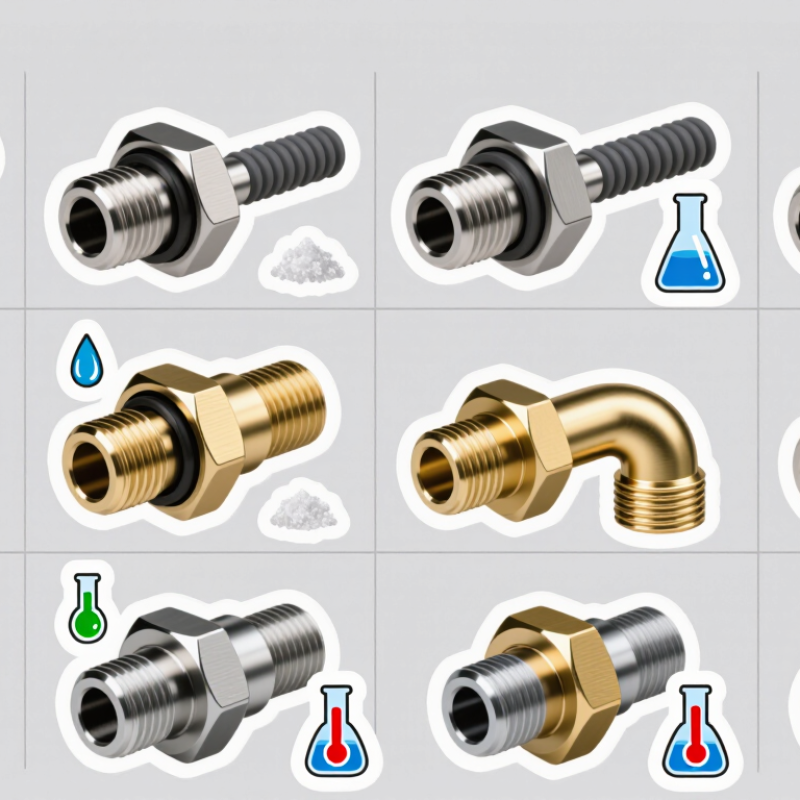
| 1 | 316 stainless steel | Molybdenum-bearing stainless steel generally offers better resistance to chloride pitting and crevice corrosion than 304 stainless steel. It is not immune to corrosion. | Coastal installations, outdoor equipment, and many wet or washdown areas. | Check the full gland specification and surface condition. Salt deposits, stagnant crevices, and incompatible metals can still cause problems. |
| 2 | 316L stainless steel | A low-carbon variant of 316; its corrosion behavior is broadly similar. The lower carbon content can reduce sensitization during welding. | Marine and process installations where a 316-family alloy is specified. | For a machined gland, the low-carbon designation alone does not guarantee better performance; verify the alloy grade and manufacturing details. |
| 3 | 304 stainless steel | Good general corrosion resistance in many indoor and mild outdoor settings, but typically less resistant to chloride pitting than 316. | General industrial enclosures and locations with limited exposure to salt or chlorides. | A practical choice when the environment is not highly chloride-rich. Consider 316 or another alloy for regular seawater or salt-spray exposure. |
| 4 | Nickel-plated brass | The nickel coating provides a barrier and a durable finish when intact. Corrosion protection can decline if the coating is damaged or unsuitable for the exposure. | General industrial, indoor, and moderate outdoor applications. | Check plating quality, coating coverage, and the manufacturer’s stated environmental limits; do not assume it is suitable for continuous seawater exposure. |
| 5 | Brass | Brass can resist corrosion in many ordinary environments, but its performance depends on alloy composition and exposure. Some brasses may be susceptible to dezincification in particular waters. | Indoor equipment and general industrial settings without severe chemical or marine exposure. | Confirm the brass alloy and compatibility with the surrounding enclosure, fittings, and process environment. |
| 6 | Anodized aluminum | Aluminum naturally forms an oxide layer; anodizing thickens the protective oxide surface. Performance depends on alloy, anodizing quality, and coating damage. | Weight-sensitive equipment and many outdoor applications with appropriate finish selection. | Assess salt exposure and galvanic compatibility with adjacent metals. Avoid assuming all aluminum finishes provide equal protection. |
| 7 | Duplex stainless steel (e.g., 2205) | A ferritic-austenitic stainless steel that can offer higher strength and improved resistance to chloride stress-corrosion cracking and pitting compared with common 300-series grades. | Selected marine, chemical-process, and other demanding chloride environments. | Confirm the exact alloy, product availability, and suitability for the specific chemical and temperature conditions. |
| 8 | Super duplex stainless steel (e.g., 2507) | Higher-alloy duplex stainless steel designed for demanding environments; it can provide strong resistance to chloride pitting and crevice corrosion when correctly specified. | Severe marine or process environments where standard stainless grades may be insufficient. | Use only when the exposure and engineering requirements justify it. Verify the material certificate and the gland’s complete performance ratings. |
| 9 | Titanium | Titanium forms a stable passive oxide film and has excellent corrosion resistance in many oxidizing environments, including seawater. Performance depends on grade and chemistry. | Specialized marine, chemical, and weight-sensitive applications. | Often a higher-cost, specialized option. Check availability, grade, and compatibility with other metals in the assembly. |
| 10 | Nickel-copper alloy (e.g., Alloy 400) | Nickel-copper alloys can provide useful resistance in seawater and some reducing chemical environments; suitability depends on the specific chemistry and conditions. | Specialized marine and chemical-process applications. | A niche material rather than a general-purpose choice. Confirm that the exact alloy is available for the required gland design and approvals. |

.svg)