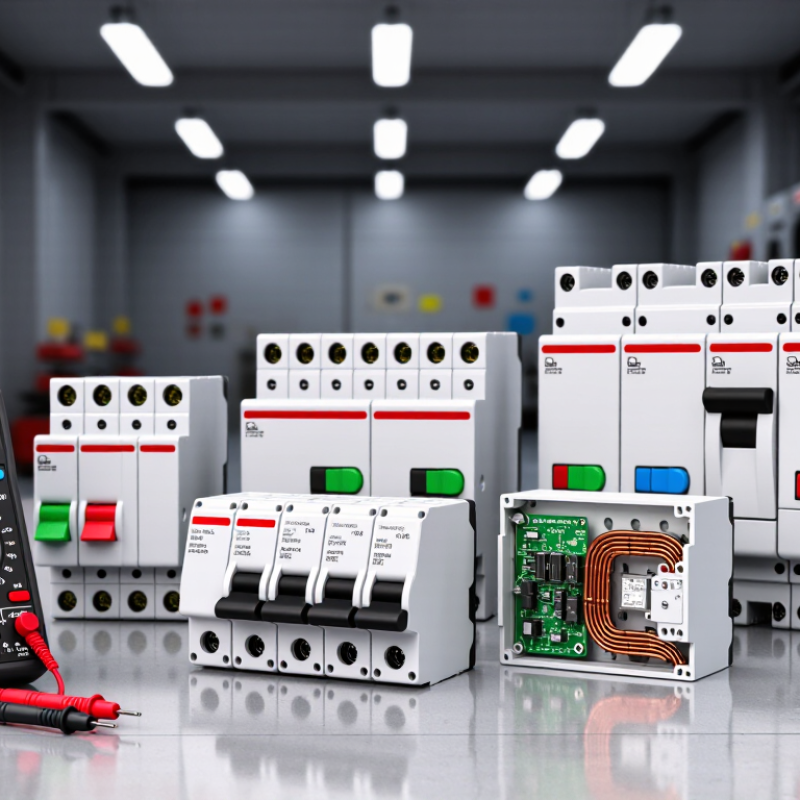
| Miniature Circuit Breaker (MCB) | 1–63 A | 230/400 V AC; 120/240 V AC options | 4.5–10 kA commonly available | Lighting circuits, socket outlets, small commercial loads, residential final circuits | IEC 60898-1; regional equivalents may apply | US$2–15 per pole, depending on configuration and certification | Low
DIN-rail mounting; normally 10–20 minutes per device when wiring is prepared | Visual inspection, terminal retightening during scheduled panel checks, and functional testing; generally no internal servicing | Approximately 15–25 years under normal conditions | Poles, trip curve, rated breaking capacity, terminal size, ambient-temperature derating, and local certification |
| Molded-Case Circuit Breaker (MCCB) | 16–1,600 A | 240–690 V AC; DC versions require dedicated ratings | 18–100 kA, depending on frame and voltage | Industrial feeders, motor protection, commercial buildings, generators, and photovoltaic distribution | IEC 60947-2; UL 489 for applicable North American installations | US$80–2,500 per device; electronic trip units and accessories increase cost | Medium
Panel or busbar mounting; typically 30–120 minutes excluding cable preparation | Annual visual and mechanical inspection; trip testing commonly every 1–3 years, based on risk and duty cycle | Approximately 15–25 years or the manufacturer’s specified operating-cycle limit | Interrupting rating at the actual voltage, adjustable trip settings, coordination study, lug compatibility, accessories, and spare parts |
| Air Circuit Breaker (ACB) | 630–6,300 A | 400–690 V AC commonly used in low-voltage switchboards | 42–150 kA, depending on configuration | Main incomers, bus couplers, large generators, data centers, hospitals, and high-current switchboards | IEC 60947-2; IEC 61439 applies to the complete low-voltage assembly | US$1,500–15,000 per device; draw-out construction and protection accessories add cost | High
Switchboard integration, primary connections, control wiring, testing, and commissioning are required | Periodic cleaning, lubrication where specified, contact-wear inspection, secondary-injection testing, and mechanism checks; often annually or according to duty | Approximately 15–25 years with proper servicing and within rated operations | Fixed or draw-out type, short-time withstand rating, selectivity, arc-flash settings, communication protocol, service support, and test documentation |
| Residual-Current Circuit Breaker with Overcurrent Protection (RCBO) | 6–63 A | 230/400 V AC commonly used | 6–10 kA commonly available | Final circuits requiring both overload protection and residual-current protection, especially wet or public areas | IEC 61009-1; local installation rules determine where it is required | US$18–80 per pole or module, depending on residual-current type and sensitivity | Low to Medium
DIN-rail installation with neutral routing and leakage-protection testing | Test-button operation at regular intervals; inspect nuisance tripping, insulation condition, and terminal tightness | Approximately 10–20 years, depending on environment and test frequency | Type AC, A, F, or B; 30 mA personnel protection where required; neutral arrangement, pole count, and selectivity |
| Residual-Current Device (RCD/RCCB) Without Overcurrent Protection | 25–125 A commonly available | 230/400 V AC commonly used | Must be coordinated with an upstream overcurrent device | Earth-leakage protection for groups of circuits, residential distribution boards, and commercial installations | IEC 61008-1; local electrical codes may specify application limits | US$15–100 per device, excluding the required upstream circuit breaker | Low
DIN-rail mounting; additional neutral connections and testing are required | Regular test-button operation, leakage investigation, and inspection of upstream overcurrent coordination | Approximately 10–20 years under normal service conditions | Residual-current type, rated residual operating current, short-circuit coordination, number of poles, and immunity to transient leakage |
| DC Molded-Case Circuit Breaker | 16–1,600 A | Up to 1,500 V DC, depending on design | Application-specific; DC interruption is not equivalent to AC interruption | Battery energy storage, solar photovoltaic systems, telecom power, and industrial DC distribution | IEC 60947-2; photovoltaic and battery-system standards may also apply to the complete installation | US$100–4,000 per device, depending on voltage, polarity, interruption rating, and accessories | Medium
Polarity, creepage, clearance, cable routing, and isolation requirements must be verified | Thermal inspection, connection checks, trip testing, and review of battery or PV operating conditions | Approximately 10–20 years, subject to fault-current exposure and operating cycles | DC voltage per pole, polarity, interruption rating, reverse-current capability, isolation function, temperature derating, and system coordination |

.svg)