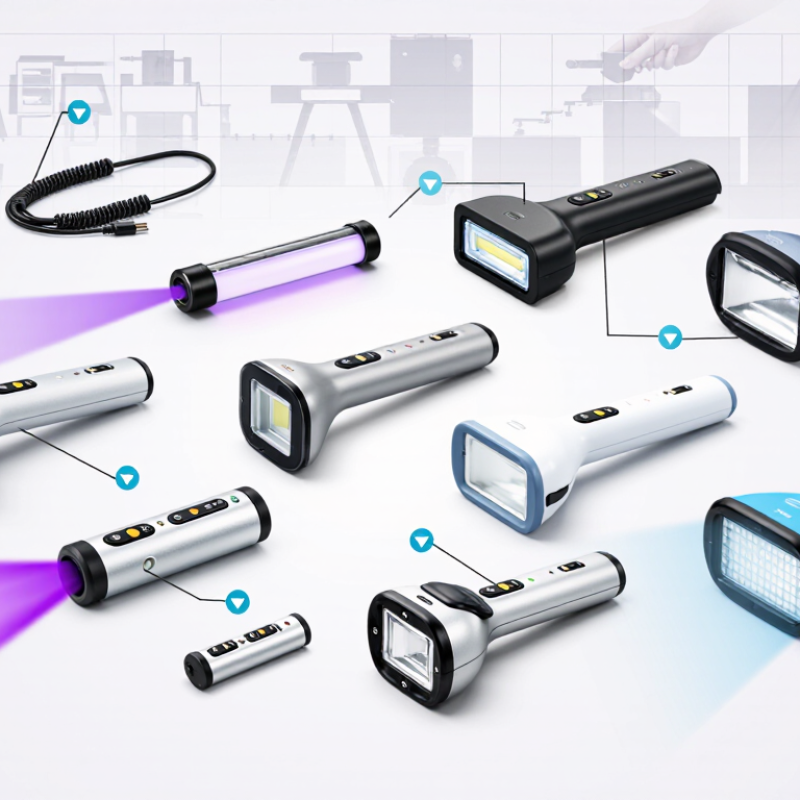
| 1 | Long-wave UV inspection lamp | UVA, commonly around 365 nm | Fluorescence inspection of materials, markings, and some contaminants. | Fluorescence is not proof of identity, cleanliness, or safety; results depend on the material and ambient light. | Avoid looking directly into the beam. Use UV-rated eye protection when exposure is possible, and keep the lens clean. |
| 2 | 395 nm inspection lamp | UVA / near-violet, commonly around 395 nm | General fluorescence checks, hobby use, and some visible-reactive materials. | Often produces more visible violet light than a 365 nm lamp, which can reduce contrast for some fluorescence tasks. | Do not treat visible light as evidence that UV exposure is harmless. Follow the device’s exposure guidance and avoid eye exposure. |
| 3 | Wood’s lamp | Usually long-wave UVA, near 365 nm | Close-range examination of fluorescence in skin or other materials by trained users. | Fluorescence alone cannot diagnose a condition; clinical interpretation may require other tests. | Use only as directed by a qualified professional for medical examination. Protect eyes and clean the unit according to its instructions. |
| 4 | Portable UVB phototherapy device | UVB, commonly narrowband near 311–313 nm | Prescribed phototherapy for selected skin conditions under medical supervision. | Incorrect exposure can cause burns, eye injury, or other harm. It is not a general-purpose inspection or wellness lamp. | Use only with a clinician’s treatment plan, prescribed dose, and eye protection. Do not self-adjust exposure times. |
| 5 | Handheld nail-curing UV/LED lamp | Often UVA and violet output around 365–405 nm | Curing compatible gel nail products, when the product and lamp are designed to work together. | Curing depends on the gel formulation, wavelength, and exposure; incomplete curing may not be apparent by sight. | Follow the gel maker’s curing directions, minimize skin exposure, and do not stare at the light source. |
| 6 | Fluorescent leak-detection lamp | Often UVA around 365–395 nm | Locating compatible fluorescent leak-detection dyes in automotive, HVAC, or plumbing checks. | Only dyes formulated for the system will fluoresce reliably; residue and surface conditions can affect visibility. | Use the correct dye and inspection procedure. Prevent eye exposure and clean the lamp surface with a suitable, non-abrasive method. |
| 7 | Mineral and geology inspection lamp | UVA, commonly around 365 nm or 395 nm | Viewing visible fluorescence in selected minerals and specimens. | Not all minerals fluoresce, and fluorescence can vary with wavelength, specimen composition, and surface condition. | Use eye protection appropriate to the lamp’s UV output. Keep the beam directed at the specimen, not at people. |
| 8 | Document and security-feature inspection lamp | Usually UVA, commonly around 365 nm | Checking UV-responsive features on certain documents, labels, or security materials. | Not every genuine document has the same UV features; a UV check alone cannot establish authenticity. | Use as one inspection aid alongside other checks. Avoid prolonged direct viewing of the source and protect the lamp from impact. |
| 9 | Portable 254 nm UVC germicidal lamp | UVC, commonly around 254 nm for low-pressure mercury sources | Specialized, controlled disinfection applications on suitable, directly exposed surfaces. | Effectiveness depends on delivered dose, distance, exposure time, surface cleanliness, and line of sight. Shadows block direct exposure; it does not reliably disinfect air or hidden surfaces by itself. | Never expose people or animals. Operate only in a controlled, unoccupied area and follow the device instructions. Check whether the source can generate ozone. |
| 10 | Portable UVC LED disinfection lamp | UVC, commonly in the 265–280 nm range | Targeted UVC exposure of compatible surfaces in controlled settings. | Output and coverage differ widely among devices; a short exposure or sweeping motion does not guarantee a disinfecting dose. | Keep the beam away from skin and eyes, including reflected exposure. Use only as instructed in an unoccupied, controlled area; never use on the body. |

.svg)