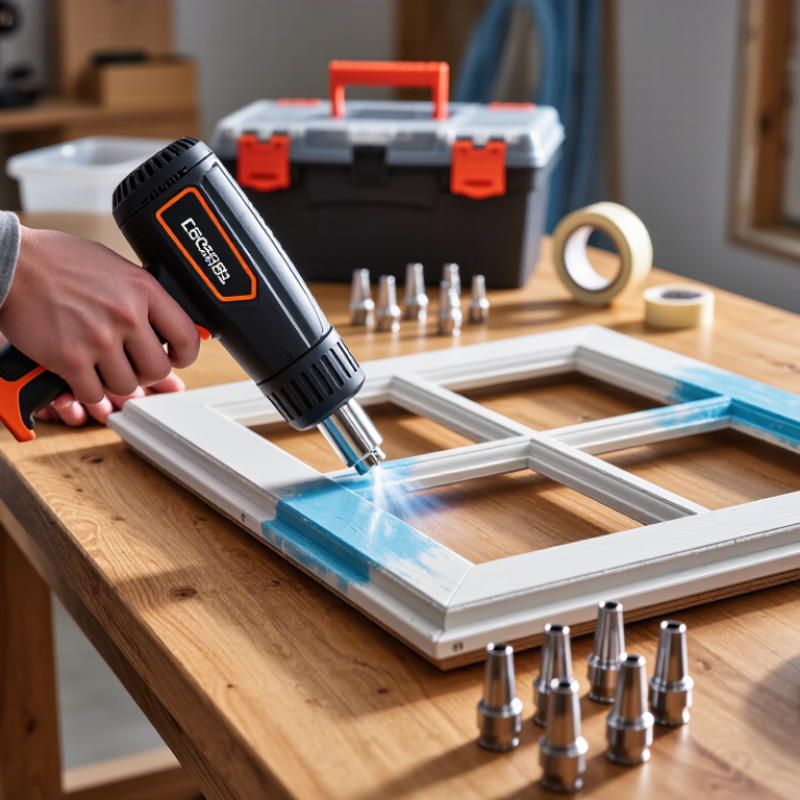
| Temperature control | Adjustable heat settings, preferably with a clearly marked temperature range. | Lower settings can reduce the chance of scorching or damaging heat-sensitive materials. | Start at a low setting and test on an inconspicuous area before increasing heat. |
| Airflow control | More than one fan-speed setting or another clear way to control airflow. | Controllable airflow can help direct heat more precisely and limit disturbance of nearby material. | Keep the nozzle moving and maintain a suitable distance from the work surface. |
| Overheat protection | A documented thermal cut-out or other overheat-protection feature. | Protection can help reduce the risk of damage if the tool overheats; it does not replace careful use. | Do not block the air inlet or outlet. Stop use if the tool behaves unusually or becomes excessively hot. |
| Stable resting position | A stable stand or a design that can rest securely with the hot nozzle pointed away from surfaces and people. | The nozzle and nearby surfaces can remain hot after the tool is switched off. | Place the tool on a stable, heat-resistant surface during pauses; never leave it unattended while hot. |
| Grip and controls | A secure, comfortable grip and controls that are easy to operate without changing hand position. | Good handling helps maintain control and keep hands away from the hot nozzle. | Hold the tool by its handle, keep the nozzle pointed away from yourself and others, and avoid touching hot attachments. |
| Cord and electrical condition | A cord with suitable length for the work area and no visible damage; follow the tool’s electrical instructions. | A damaged or poorly positioned cord can create electric-shock, trip, or heat-damage hazards. | Inspect the cord before use, keep it away from the hot nozzle, and unplug the tool before changing accessories or storing it. |
| Nozzles and accessories | Compatible attachments with clear fitting instructions and a secure connection. | Attachments can concentrate or redirect heat, so incorrect use may overheat a small area. | Fit accessories only as instructed, and let them cool before removal or handling. |
| Work-area safety | A tool whose instructions clearly explain safe operation, cooling, and storage. | Heat guns can ignite nearby combustible materials and produce fumes when heating coatings, plastics, or adhesives. | Clear flammable items, provide ventilation, wear suitable eye protection, and follow material-specific warnings. Do not use a heat gun to remove paint that may contain lead. |
| Cooldown and storage | Instructions for switching off, cooling the tool, and storing it safely. | Residual heat can burn people or ignite materials even after power is disconnected. | Switch off and unplug after use; allow the tool and nozzle to cool fully in a safe place before storage. |

.svg)