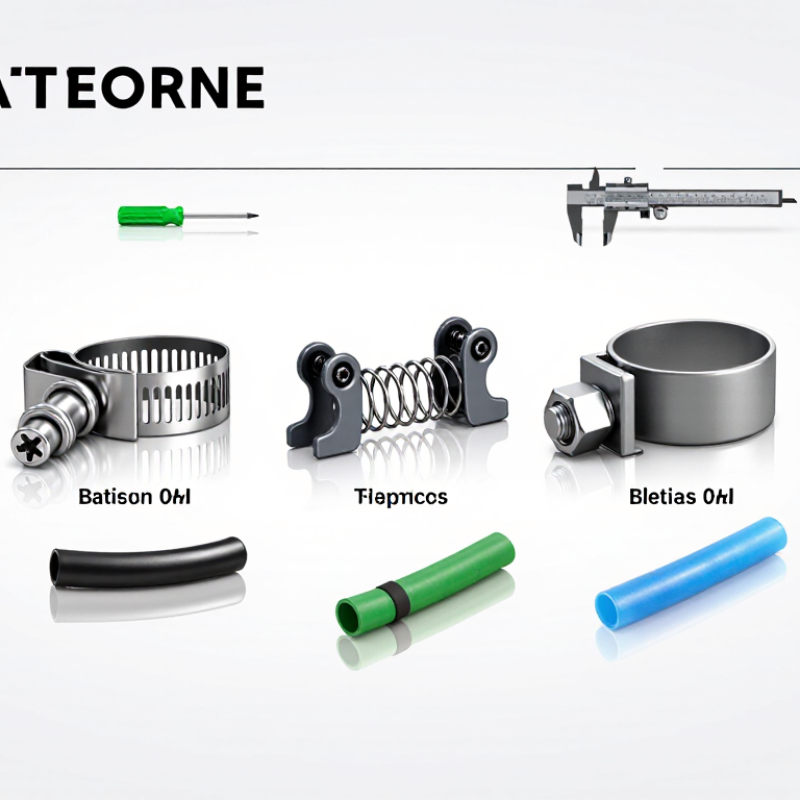
| Worm-Drive Clamp | A perforated band tightens around the hose when a screw engages the band. | General-purpose plumbing, automotive, and equipment hoses where an adjustable connection is suitable. | Easy to adjust, remove, and reuse; available in many sizes. | Uneven band pressure or excessive tightening can damage soft hose. Select a size and rating appropriate to the hose and service conditions. |
| T-Bolt Clamp | A solid band is tightened by a T-shaped bolt assembly, typically with a nut for adjustment. | Larger-diameter or reinforced hoses, including some charge-air, cooling, and industrial connections. | Provides a strong, secure connection when correctly sized and installed. | Requires a suitable tool and careful tightening. Confirm the clamp’s material, dimensions, and pressure suitability for the application. |
| Spring-Band Clamp | A spring-steel band applies clamping force as the hose and connection change size with temperature. | Many factory-style automotive coolant and heater-hose connections. | Can maintain clamping force through normal thermal cycling without repeated screw adjustment. | Removal may require clamp pliers. Match the clamp diameter and design to the hose connection; it is not a universal choice for high-pressure service. |
| Constant-Tension Clamp | A band clamp incorporates a spring element to help compensate for changes in hose dimensions. | Hose connections subject to temperature changes or repeated heating and cooling. | Helps maintain more consistent clamping force as the hose expands or contracts. | Spring travel and operating range vary by design. Verify fit and suitability for the specific hose and service conditions. |
| Ear Clamp | A narrow band is secured by crimping one or more raised “ears” with a compatible tool. | Compact, production-installed connections on small hoses and fluid lines. | Low-profile, compact, and less prone to loosening from screw movement. | Installation typically requires a crimping tool. Removal usually requires cutting the clamp, so replacement is generally needed. |
| Wire Clamp | One or two formed wire loops tighten around the hose when a screw mechanism is secured. | Some light-duty, thin-wall, or flexible hose connections, depending on the clamp design. | Simple construction and a small contact area can suit certain flexible-hose designs. | Concentrated contact pressure may not suit every hose. Check the manufacturer’s guidance for sealing, pressure, and hose compatibility. |
| Quick-Release Clamp | A lever or latch allows the clamp to be opened and closed without fully removing a screw. | Connections that need frequent inspection or removal, such as selected ducting and service-access hoses. | Faster access and reassembly than a conventional screw clamp. | Confirm that the latch remains secure in the intended environment and that the clamp is rated for the hose and operating conditions. |

.svg)