| Spring-rewind retractable reel | Spring-powered automatic rewind | Workstations needing frequent access to power or control cable | Retracts slack cable after use, helping keep walkways and work areas clearer | Rewind mechanism, cable length and gauge, mounting arrangement, and suitability for the intended duty cycle |
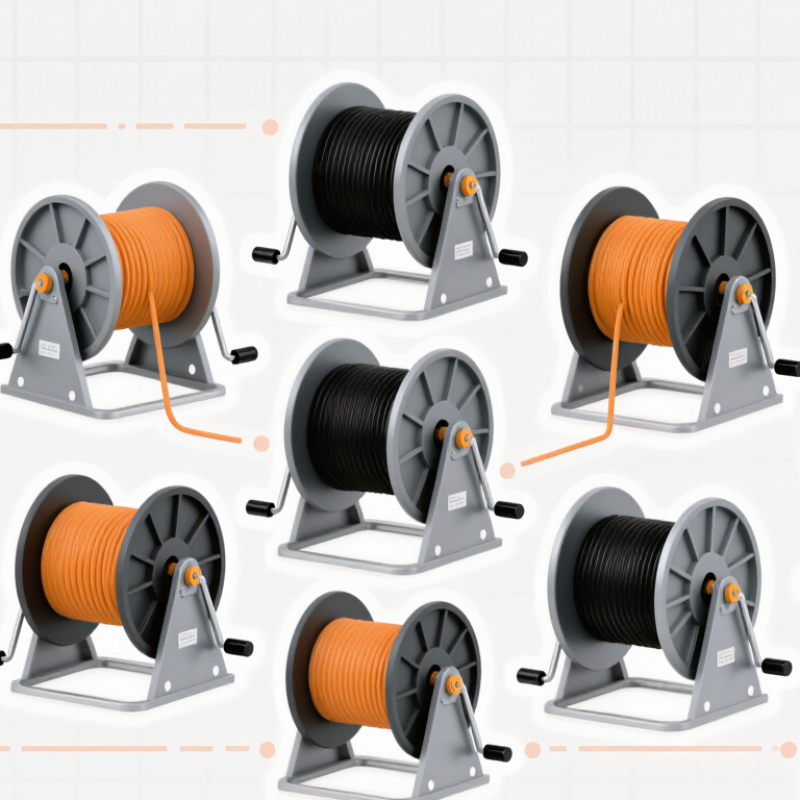
| Hand-crank cable reel | Manual winding with a crank | Portable setups and locations without a convenient power source for a motorized reel | Provides direct control when winding and can be selected for robust frames and large cable loads | Frame stability, handle design, drum capacity, cable bend radius, and whether the reel is intended to be moved while loaded |
| Motor-driven cable reel | Electric or other powered winding | Repeated cable deployment on production lines, vehicles, or large equipment | Reduces manual winding effort for frequent or long cable runs | Power and control requirements, torque and speed controls, duty rating, cable compatibility, and safety features |
| Open-frame industrial reel | Manual or powered, depending on model | Work areas where easy inspection and access to the cable are priorities | Open construction can simplify visual checks, cleaning, and cable replacement | Corrosion protection, guarding, mounting method, and protection from dust, impact, or moisture at the installation site |
| Enclosed cable reel | Manual or spring-rewind, depending on model | Workplaces where the cable needs extra protection during storage | An enclosure can help shield stored cable from incidental contact and some environmental contaminants | Enclosure material, ventilation, ingress-protection rating, cable exit design, and access for inspection |
| Welding cable reel | Manual or powered, depending on model | Welding bays and mobile welding setups | Designed around the handling needs of welding leads, which are often thick and flexible | Current rating, cable size and length, connection method, temperature limits, and manufacturer guidance on winding under load |
| Grounding cable reel | Usually spring-rewind or manual | Grounding and bonding connections in industrial or maintenance areas | Keeps grounding cable organized and ready for repeated deployment | Required electrical rating, continuity, clamp and termination compatibility, cable condition, and applicable workplace procedures |
| Heavy-duty extension-cord reel | Manual or spring-rewind, depending on model | Temporary power distribution in workshops and service areas | Allows a portable cord to be stored and deployed from a reel suited to repeated handling | Voltage, current, conductor size, cord type, grounding, environmental rating, and any derating requirements when the cord is coiled |
| Vehicle-mounted cable reel | Manual or motor-driven | Service vehicles, maintenance fleets, and mobile equipment | Supports organized cable storage where space and secure mounting are important | Mounting strength, vibration resistance, vehicle power requirements, cable routing, and protection against road or weather exposure |
| High-capacity industrial reel | Typically hand-crank or motor-driven | Long cable runs or installations with heavier cable assemblies | Can accommodate larger cable loads when correctly sized and engineered for the application | Rated cable capacity, total loaded weight, drum dimensions, minimum bend radius, drive limits, and structural load rating |

.svg)