| Quilted fabric cover | A stitched fabric top with a soft filling cushions the table and helps absorb the sound of tiles. | Helps guard against dust, light scratches, and minor impacts; protection from spills depends on the fabric and backing. | Soft and quiet, but the padding may make the surface less firm than a bare tabletop. | Often folds or rolls for storage. Check the care label; not every quilted cover is machine-washable. | Home play when noise reduction and a cushioned feel matter. | May shift or wrinkle unless it has a secure fit or non-slip backing. |
| Water-resistant backed fabric | A fabric playing surface is paired with a coated or laminated backing that slows liquid from reaching the table. | Offers more spill protection than ordinary fabric, though seams and edges may still let liquid through. | Usually retains a fabric feel; surface smoothness varies by construction. | Small spills can often be wiped promptly. Follow the maker's care instructions and let it dry fully before storing. | Regular play where occasional splashes are a concern. | “Water-resistant” does not necessarily mean fully waterproof or suitable for soaking. |
| Vinyl or PVC cover | A continuous synthetic sheet creates a barrier between the tabletop and dust or liquid. | Typically easy to wipe and useful against spills, provided liquid does not enter at the edges. | Smooth and firm; tiles may sound louder or slide differently than on a fabric surface. | Wipe clean with a soft cloth and mild cleaner suitable for the material. Store flat or loosely rolled to limit creases. | Easy-clean protection and use where spills are more likely. | Can feel less soft, and some surfaces may show creases or become slippery. |
| Neoprene-style mat | A flexible, cushioned sheet lies flat on the tabletop; its backing can help reduce movement. | Helps protect against light scratches and reduces direct contact between tiles and the table. | Even, cushioned, and often quieter than a hard surface; grip depends on the backing and table finish. | Usually rolled for storage. Clean according to the material instructions and keep it away from excessive heat. | Players who want a stable, padded surface for regular play. | Can be bulky to store and may not cover the table edges or protect the table during storage. |
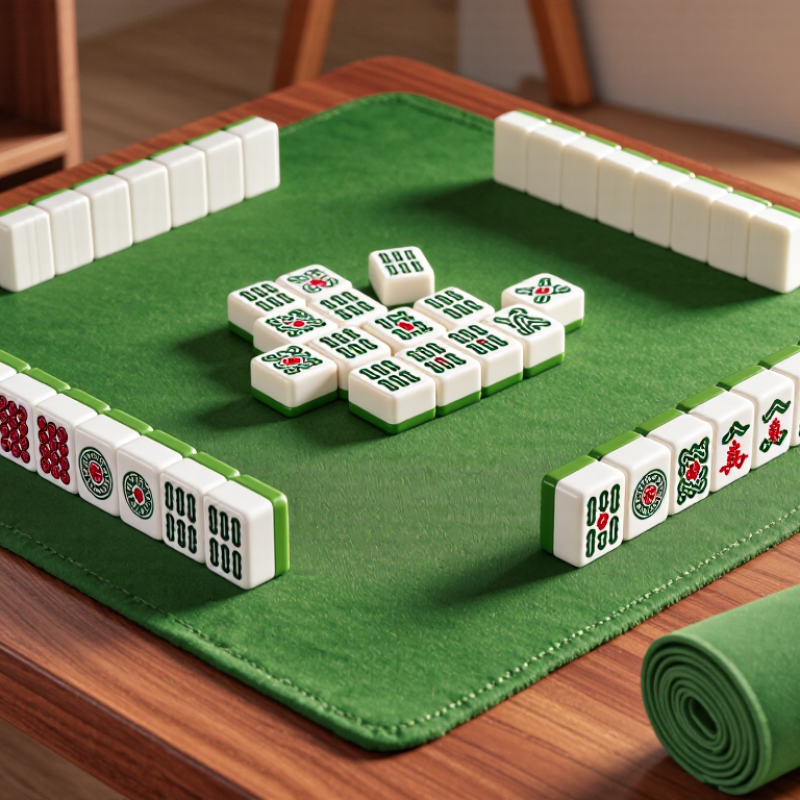
| Felt or non-padded cloth cover | A thin textile layer separates the tiles from the tabletop with little added cushioning. | Helps prevent light surface scuffs and keeps dust off while in use; offers limited impact or spill protection. | Lightweight and relatively firm, though loose fabric can bunch during play. | Typically easy to fold. Washing and stain resistance depend on the fabric. | Occasional play or a simple, low-bulk layer over a smooth table. | Provides less cushioning and may need clips, elastic, or a fitted shape to stay in place. |
| Fitted dust or storage cover | A shaped cover drapes over or encloses the table when it is not being used. | Helps keep dust and household debris off the table; protection from impacts and spills varies by material. | Generally intended for storage, not for playing on unless the surface is designed for gameplay. | Choose a size that fits the table. Keep the cover clean and dry before putting it away. | Protecting a table between sessions, especially in a shared room. | May need to be removed before play and does not necessarily provide a suitable tile-playing surface. |

.svg)