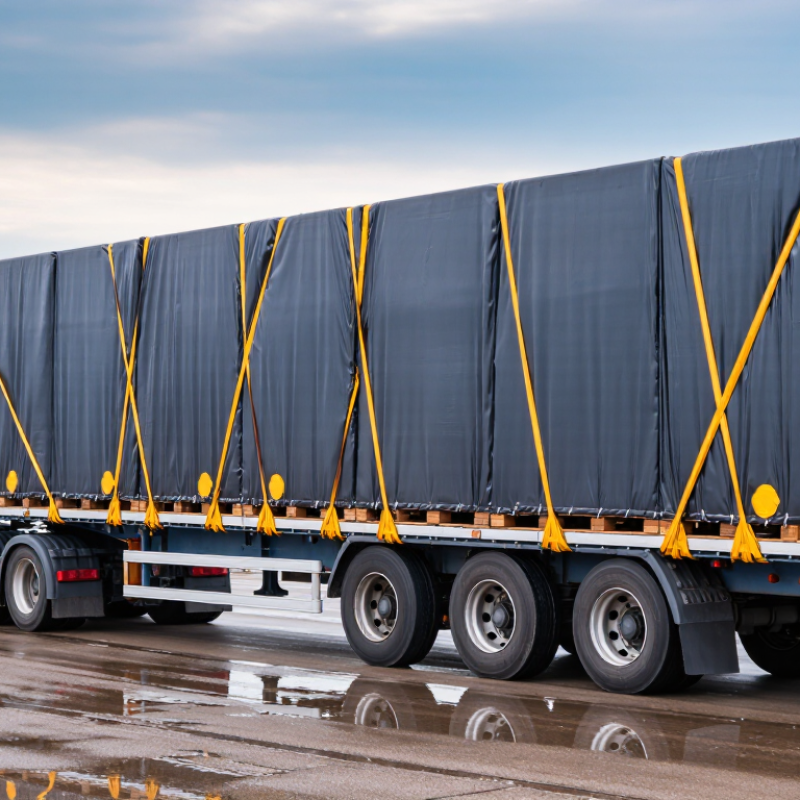
| General freight on an open trailer; moderate exposure to rain and road spray | Coated woven-polyethylene tarp | Woven polyethylene fabric with a coating on one or both sides; commonly sold in light, medium, and heavy-duty weights | Usually water-resistant or waterproof when intact; blocks airflow | Check actual fabric weight, reinforced hems, grommet spacing, and whether seams are sealed | Can wear or tear under repeated abrasion, sharp edges, or high wind if not secured properly |
| Heavy or irregular freight needing frequent handling and strong abrasion resistance | Vinyl-coated polyester tarp | Polyester base fabric coated with PVC; heavy-duty options are often listed around 18 oz per square yard, with specifications varying by product | Typically waterproof and blocks airflow; UV resistance depends on the product specification | Review stated weight, coating, temperature range, seam construction, and repair options | Heavier and less compact than many polyethylene tarps; can be cumbersome to position |
| Long lumber, bundled building materials, or loads with exposed ends | Lumber tarp with end flaps | Usually heavy coated fabric with drops or flaps designed to cover the ends of a load | Can provide rain and road-spray protection when fitted correctly; generally blocks airflow | Measure load length, width, and height; allow enough material for coverage and securement without excessive loose fabric | A poor fit can leave end gaps or create loose sections that catch wind |
| Steel, machinery, or dense freight with hard edges and high abrasion risk | Heavy-duty vinyl-coated tarp with suitable edge protection | Tear-resistant coated fabric; additional padding or edge protectors may be needed at contact points | Typically waterproof and non-breathable | Protect the tarp from sharp corners, check tie-down points, and confirm that the tarp is rated for the intended use | Even heavy fabric can be cut by unprotected edges; the tarp does not replace load securement |
| Loads that need airflow, such as some agricultural products or materials prone to condensation | Woven mesh tarp | Open-weave synthetic fabric, commonly made from polyethylene or similar fibers | Allows airflow and reduces wind resistance compared with a solid cover; does not provide reliable rain protection | Check mesh openness, UV resistance, edge reinforcement, and whether the cargo can tolerate moisture | Rain, fine dust, and small debris can pass through the mesh |
| Goods that need some breathability and protection from dust or light splash | Treated canvas tarp | Woven canvas, often cotton or a cotton blend, with a water-repellent treatment | More breathable than impermeable coated tarps; water resistance varies and may decline with wear | Confirm treatment, care requirements, drying conditions, and suitability for the expected weather | Not a dependable choice for prolonged heavy rain unless specifically rated for that exposure |

.svg)