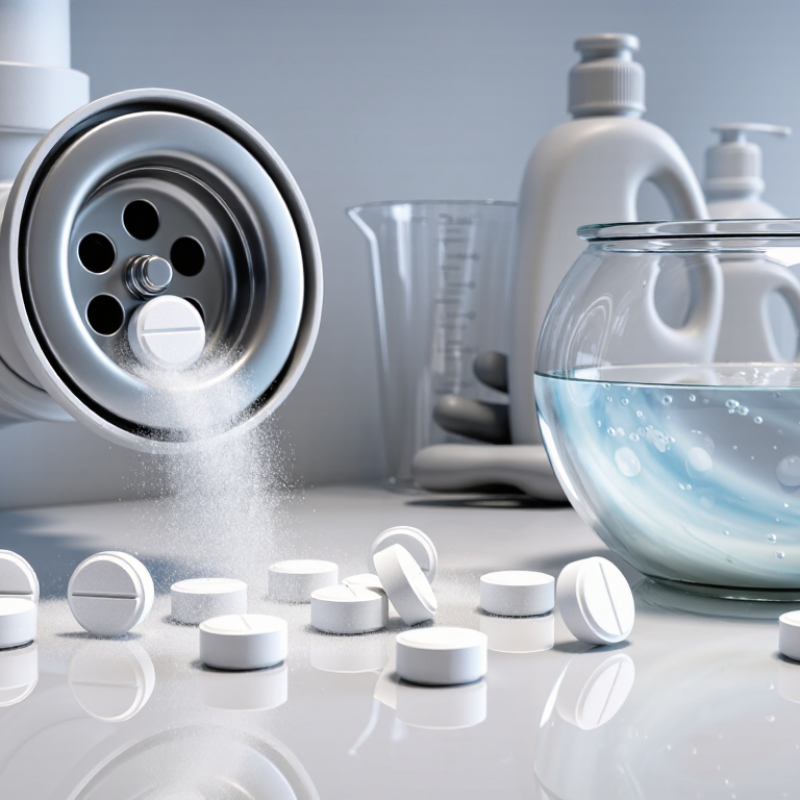
| Basic definition | “Bio sanitizer tablet” is a broad product description, not a single standardized formulation. | The term may refer to products containing biological ingredients, disinfecting ingredients, or both. Check the product label to determine its intended use and active ingredients. |
| Possible biological ingredients | Some tablets contain selected microorganisms, enzymes, or other biologically derived components. | Microorganisms can help break down certain organic materials; enzymes can speed up specific chemical reactions. Ingredients and performance vary by product. |
| Possible disinfecting ingredients | A product marketed as a sanitizer may contain an antimicrobial active ingredient, but the name alone does not confirm this. | Disinfecting action depends on the specific active ingredient, its concentration, the surface or water being treated, and the required contact time. |
| Dissolving and release | The tablet is designed to dissolve or disperse in the application specified on its label. | Water temperature, agitation, dosage, and tablet design can affect dissolving time. Follow the label rather than assuming one tablet treats a particular volume. |
| Biological breakdown | Biological or enzyme-based ingredients may support the breakdown of certain organic matter in suitable conditions. | This process is different from disinfection. It does not, by itself, establish that disease-causing microorganisms have been eliminated. |
| Sanitizing or disinfecting claims | A claim to sanitize or disinfect should be supported by product-specific directions and, where applicable, relevant regulatory authorization. | Verify the approved use, target organisms, dosage, and contact time on the label. Do not infer drinking-water safety or broad pathogen control from the word “bio.” |
| Typical applications | Applications differ among products and may include particular surfaces, equipment, water systems, or waste-treatment settings. | Use a tablet only for the applications stated on its label. A product intended for waste treatment is not automatically suitable for hands, food-contact surfaces, or drinking water. |
| Factors affecting results | Results depend on the formulation and the conditions of use. | Relevant factors can include correct dosage, water quality, temperature, contact time, organic load, and compatibility with other chemicals. |
| Safe handling | Tablets may contain concentrated ingredients and should be handled according to their safety instructions. | Read the label, use any specified protective equipment, store tablets as directed, and do not mix them with other cleaners or chemicals unless the label explicitly permits it. |

.svg)