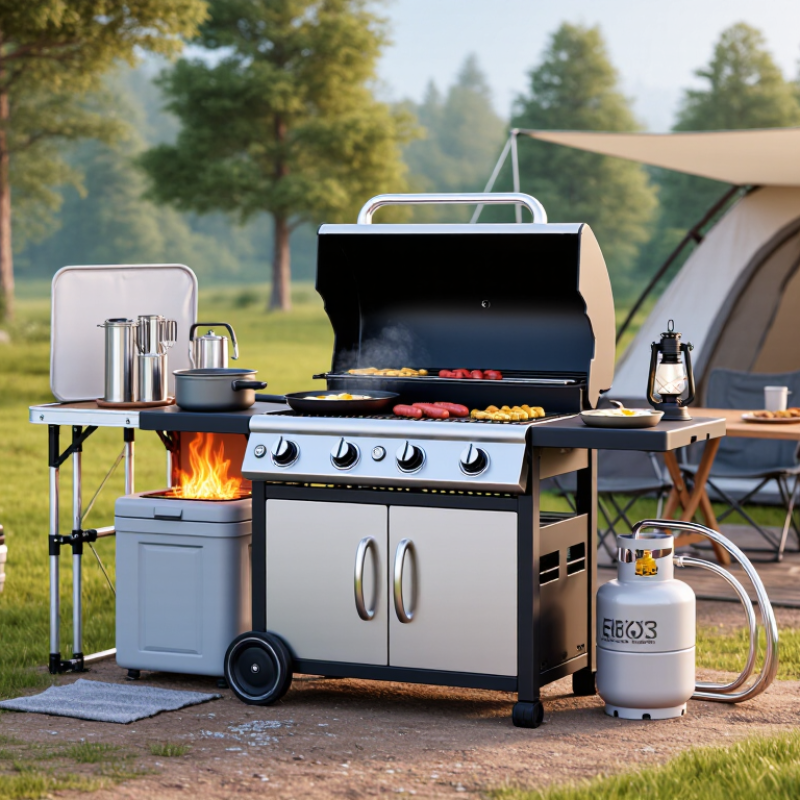
Top Camping Gas Grill Buying Guide for Global Buyers
Portability should be measured beyond the advertised weight. I check packed dimensions, handle strength, latch quality, and setup time. A grill that weighs eight kilograms can still feel awkward beside a tent. Look for folding legs and a stable carry handle. Small cooking areas save space, but they may frustrate families. Measure your vehicle’s storage compartment before ordering. That simple step prevents an expensive mistake.
Materials affect durability, heat control, and maintenance. Stainless steel resists moisture, while coated steel can reduce cost and weight. Cast-iron grates hold heat well, but they need drying after washing. I once underestimated salt air near a campsite, and minor rust appeared within weeks. This experience changed my preference for replaceable grates and accessible burners. Check whether spare parts are available in your destination country. Also inspect the gas connection carefully. Local fuel compatibility matters.
Warranty terms deserve the same attention as cooking performance. Confirm coverage length, international validity, and exclusions for corrosion or transport damage. A warranty requiring overseas shipping may offer little practical value. Keep the invoice, serial information, and delivery photographs. These records can support a claim. Calculate total landed cost before comparing prices. Include freight, insurance, customs duties, taxes, broker fees, and possible storage charges. Delivery delays can create extra costs. A cheaper grill may become more expensive after import fees. I still sometimes focus too much on the purchase price. That habit needs correcting.

.svg)