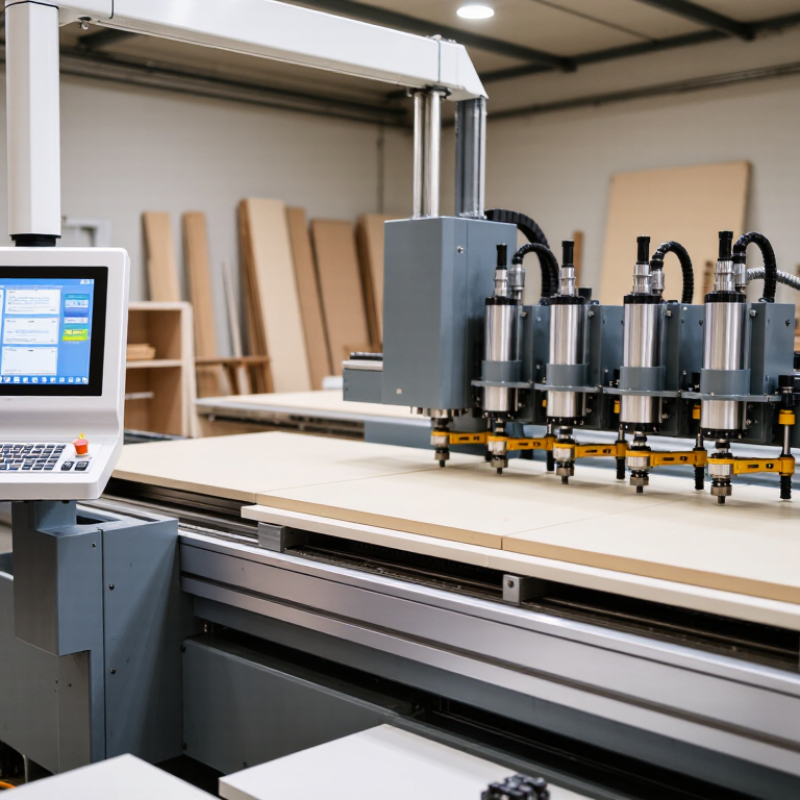
In modern furniture manufacturing, a CNC side drilling machine creates horizontal holes in cabinet panels, drawer parts, and bed-frame components. These holes can hold dowels, confirmat screws, or shelf supports, depending on the design. A cabinet side panel, for example, may need several accurately spaced holes along its edge. The machine can follow a programmed pattern across repeated parts, reducing the need to mark every position by hand. Small details matter.
This is useful in kitchens, office furniture, wardrobes, and modular storage, where panels often meet at fixed angles. A side drilling operation can also complement nesting or panel-saw workflows, helping workshops prepare parts for assembly. Operators should match the program to panel thickness, drilling depth, and connector size. Test cuts on offcuts are practical, especially when changing materials or hardware. Setup still matters.
The machine does not remove every production challenge. Veneer can chip, panels may vary slightly, and a perfect drilling plan on screen can meet a warped board in the shop. Check tool condition, clamping, and dust extraction before a production run. For mixed custom orders, thoughtful setup may take longer than expected; that trade-off deserves attention when estimating output.

.svg)