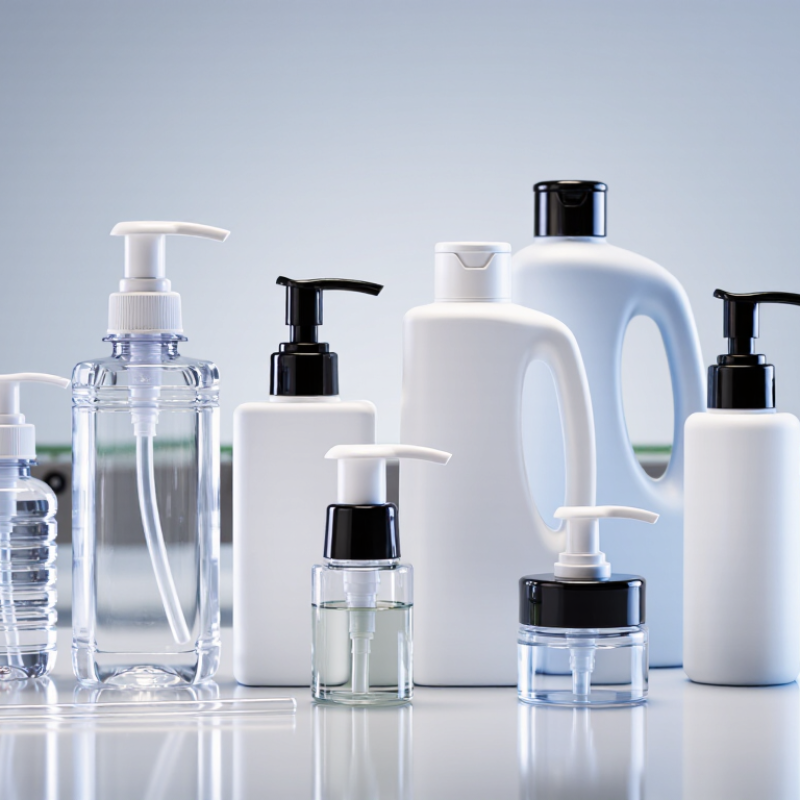
| Bottle Capacity | 30 ml, 50 ml, 100 ml, 150 ml, 200 ml, 250 ml, and 500 ml | Select nominal capacity according to product dosage, usage frequency, and target market. | Confirm nominal volume, overflow capacity, fill tolerance, and compatibility with the lotion formula before mass production. |
| Bottle Material | HDPE, PET, PP, or glass | HDPE is commonly identified by resin code 2, PP by code 5, PET by code 1, and glass by a separate recycling system. | Evaluate chemical resistance, impact resistance, transparency, weight, recyclability, and transport cost. |
| Closure Type | Lotion pump, disc-top cap, flip-top cap, screw cap, or treatment pump | The closure should provide suitable dispensing performance and a secure seal for the formula. | Test actuation force, dosage per stroke, leakage resistance, and compatibility with the bottle neck. |
| Neck Finish | Common lotion-pump finishes include 18/410, 20/410, 24/410, and 28/410. | The bottle neck and closure must have matching diameter and thread specifications. | Do not combine components solely by appearance; verify thread fit, gasket compression, and torque requirements. |
| Bottle Shape | Round, oval, square, rectangular, shoulder, Boston, or custom molded shape | The design should maintain adequate wall thickness, stability, and manufacturability. | Custom molds may require engineering review, prototype approval, and a separate tooling charge. |
| Surface Finish | Natural, opaque, translucent, frosted, glossy, matte, or soft-touch finish | Finish selection should not interfere with label adhesion, decoration quality, or product identification. | Approve a physical color and finish sample because screen colors may differ from production results. |
| Decoration Method | Pressure-sensitive label, screen printing, hot stamping, offset printing, water transfer, or embossing | Artwork should define dimensions, color references, text, barcode placement, and print tolerances. | Confirm minimum text size, print area, registration tolerance, and resistance to rubbing, oil, and moisture. |
| Dispensing Performance | Typical pump output is selected according to formula viscosity and intended dosage. | Output should be evaluated using the actual lotion, not water alone. | Conduct repeated-use testing for priming, re-priming, dripping, clogging, and dose consistency. |
| Formula Compatibility | Check interaction with oils, alcohols, fragrances, acids, preservatives, pigments, and emulsions. | Packaging materials and components should be assessed for swelling, stress cracking, discoloration, odor transfer, and leakage. | Use accelerated and real-time compatibility testing with filled samples before approving the final package. |
| Primary Packaging | Bottle, pump or cap, dip tube, gasket, liner, and tamper-evident feature where required | All parts that contact the lotion should be included in compatibility and safety evaluations. | Request a complete component specification rather than evaluating the bottle body separately. |
| Secondary Packaging | Folding carton, insert, divider, shrink film, or protective sleeve | Packaging must protect the bottle during handling, storage, and transportation. | Use a carton size that limits movement while allowing efficient palletization and barcode scanning. |
| Export Carton | Corrugated carton with dividers, trays, or protective bags | Carton strength and internal protection should match product weight and shipping conditions. | Confirm cartons per pallet, units per carton, gross weight, carton dimensions, and drop-test expectations. |
| Customization Scope | Color matching, custom bottle geometry, cap design, logo-free artwork, decoration, and packaging configuration | Customization should be documented in approved technical drawings and signed samples. | Separate stock-component orders from fully customized mold projects when comparing quotations. |
| Quality Inspection | Appearance, dimensions, weight, capacity, thread fit, leakage, pump output, color, and print quality | Inspection criteria should be defined before production and linked to approved samples. | Use agreed sampling plans, retain inspection records, and document nonconforming-product handling. |
| Cosmetic Compliance | Market-specific documentation for packaging materials, product contact components, labeling, and safety assessment | For the European Union, cosmetic products are governed by Regulation (EC) No 1223/2009; other markets have different requirements. | Confirm destination-market rules with the responsible regulatory party before final artwork and shipment. |
| Material Documentation | Material declaration, technical data sheet, safety information, colorant details, and recycled-content statement where applicable | Documentation should identify the material and intended use without making unsupported compliance claims. | Request current documents for the exact material and component configuration used in production. |
| Sustainability Options | Mono-material design, lightweighting, recycled content, refillable format, and reduced secondary packaging | Recyclability depends on local collection systems, material combinations, colorants, labels, pumps, and closures. | Assess the complete package rather than describing one component as recyclable in isolation. |
| Order Information | Capacity, material, neck finish, decoration, color, closure, packaging level, quantity, and destination | A complete specification is required for an accurate quotation and production schedule. | Provide drawings, artwork, target quantity, formula details, and packaging expectations at the inquiry stage. |
| Pre-Production Approval | Prototype, decorated sample, filled compatibility sample, carton sample, and approved golden sample | The approved sample should define the reference for appearance, dimensions, function, and packaging assembly. | Avoid changing material, closure, decoration, or carton structure after approval without written revalidation. |

.svg)