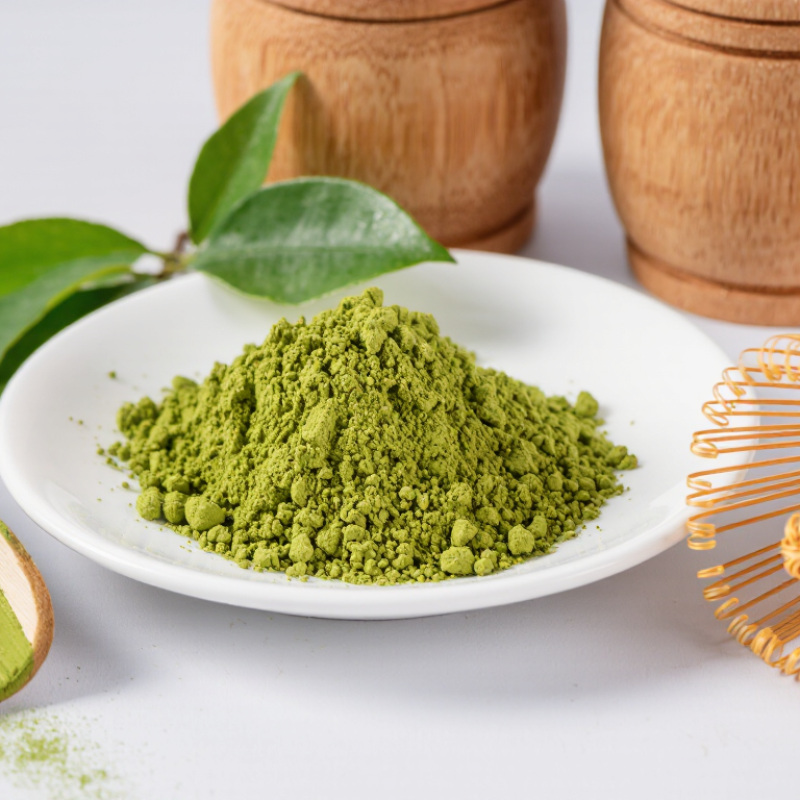
| Pure matcha powder | A finely milled green tea powder made from specially prepared tea leaves, commonly known as tencha. | Pure matcha is made from tea leaves without added sugar, milk powder, flavorings, or other ingredients. Product definitions and labeling requirements can vary by market. | Review the ingredient declaration and product specification. For a single-ingredient product, the ingredient list should identify green tea or matcha only. |
| Tea plant | Matcha is produced from leaves of Camellia sinensis, the same species used to make other teas. | Cultivar, growing conditions, harvest timing, and processing influence color, aroma, taste, and chemical composition. | Ask for the stated origin, harvest information, and traceability records for the supplied lot. |
| Pre-harvest shading | Tea plants are shaded before harvest to alter leaf development and flavor. | Shading commonly lasts for several weeks, though methods and duration differ by farm and product. Reduced light can increase chlorophyll and certain amino acids while influencing bitterness and aroma. | Request the producer’s shading description rather than assuming one shading period applies to every matcha grade. |
| Harvesting | Leaves are picked and selected for processing. | Harvest season and leaf maturity affect the finished tea’s sensory profile. Picking standards vary according to the intended product. | Confirm harvest season, lot identification, and whether the specification describes leaf selection or blending. |
| Steaming | Fresh leaves are briefly exposed to steam to deactivate enzymes that would otherwise drive oxidation. | Steaming helps preserve the leaves’ green character. Time and equipment settings depend on the process. | Ask for process controls and food-safety documentation relevant to the intended market. |
| Drying and tencha preparation | Steamed leaves are dried and processed into tencha, the leaf material used for traditional matcha milling. | Stems and leaf veins are generally removed before milling. The resulting leaf flakes are not the same as ordinary rolled green tea leaves. | Check whether the supplier identifies tencha as the milling input and describes its stem and vein removal process. |
| Milling | Dried tencha is ground into a fine powder. | Stone mills are traditionally used; modern production may use other milling equipment. Milling generates heat, so temperature management can matter for aroma and color. | Request the milling method, particle-size specification if available, and packaging controls used to protect freshness. |
| Color, aroma, and taste | These sensory attributes help describe a matcha but do not alone prove its grade, purity, or safety. | Appearance and flavor vary with cultivar, harvest, processing, storage, and intended use. Naturally occurring bitterness can be present. | Assess a representative sample and compare it with a written specification and intended application, such as beverages or food manufacturing. |
| Food-safety and quality checks | Testing and documented controls help buyers assess suitability for import and use. | Relevant checks may include microbiological criteria, pesticide residues, heavy metals, foreign matter, and other parameters required by the destination market. | Request lot-specific certificates of analysis where available, test methods, laboratory details, and compliance documents required by the importing country. |
| Packaging and storage | Matcha quality can deteriorate when exposed to oxygen, moisture, heat, and light. | Protective, food-contact-compliant packaging and cool, dry, low-light storage help preserve product quality. Shelf life depends on the product and packaging. | Confirm packaging material, pack size, storage instructions, production date, best-before date, and batch coding. |
| Supplier assessment | A reliable sourcing decision requires more than a low price or a “premium” grade description. | Specifications, traceability, samples, production controls, documentation, and communication are practical comparison points. | Compare suppliers using consistent sample tests, written specifications, lot records, and destination-market requirements; do not rely on grade names alone. |

.svg)