China Top Chamomile Extract Manufacturers for Global Buyers
China has become a major sourcing destination for Chamomile Extract, supported by broad botanical resources, advanced processing facilities, and experienced export teams. Global buyers often compare manufacturers by more than price. They examine botanical identity, extraction methods, active compounds, documentation, and production consistency.
Prof. Rudolf Bauer, a respected pharmacognosist, has emphasized, “Quality control of herbal medicines must begin with the plant material.” This principle matters when evaluating Chinese suppliers. Reliable manufacturers should identify the chamomile species clearly, record the growing region, and control drying conditions. A clean, mild aroma can suggest careful handling, but appearance alone proves very little.
Look deeper.
Professional factories may provide HPLC reports for apigenin, moisture results, microbial testing, heavy metal screening, and pesticide analysis. They should also explain whether the product uses water, ethanol, or another permitted extraction system. Batch numbers should connect raw materials with finished goods. That traceability can prevent unpleasant surprises after shipment.
Some suppliers offer standardized Chamomile Extract for supplements, cosmetics, teas, or functional formulations. Their capabilities may include spray drying, customized ratios, private labeling, and export packaging. However, not every impressive website reflects dependable manufacturing experience. This is where buyers need patience.
A factory tour, sample comparison, and independent laboratory verification can reveal important differences. Certificates are useful, but certificates without current testing deserve questions. Even experienced buyers sometimes focus too heavily on unit cost. That is a weakness worth acknowledging.
The strongest Chinese manufacturers combine botanical knowledge, controlled processing, transparent communication, and responsive after-sales support. This guide examines those qualities for global buyers seeking safer, more consistent Chamomile Extract partnerships.
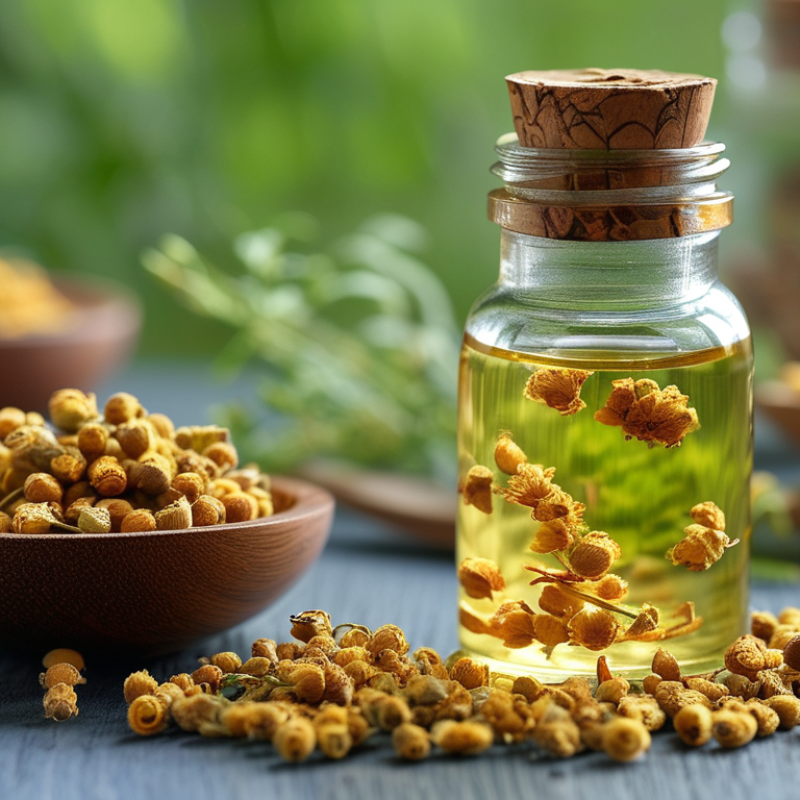
Chamomile Extract: Definition, Types, and Key Active Compounds
China Top Chamomile Extract Manufacturers for Global Buyers
Chamomile extract is a concentrated preparation made from chamomile flowers. Manufacturers usually process German chamomile or Roman chamomile. Their profiles are not identical. German chamomile often contains more chamazulene and bisabolol. Roman chamomile may show a different aroma and flavonoid balance. Common active compounds include apigenin, luteolin, quercetin, bisabolol, and chamazulene. Apigenin is widely studied for its calming potential. Chamazulene forms during oil processing and contributes a deep blue color.
Extract types depend on the solvent and production method. Water extracts suit beverages and gentle formulations. Hydroalcoholic extracts can capture a broader range of compounds. Oil extracts concentrate aromatic components. Some suppliers offer standardized extracts with a stated apigenin level. Others provide only a general plant ratio. In practical sourcing, that difference matters. A higher ratio does not always mean better performance. Processing heat, harvest timing, storage, and flower quality can change the result. No extract is perfectly identical.
Tips: Ask for the botanical name, plant part, extraction solvent, and marker-compound assay. Request recent tests for identity, microbes, heavy metals, pesticides, and residual solvents. Check whether the batch matches the specification. A clean-looking powder proves little. Review stability data, packaging details, and traceability records. When comparing China-based manufacturers, sample testing is wise. One sample may perform well, but repeatability needs evidence. Even experienced buyers can overlook moisture changes during shipping.
How to Evaluate China-Based Chamomile Extract Manufacturers
When evaluating China-based chamomile extract manufacturers, start with botanical identity, not attractive pricing. The WHO Global Report on Traditional and Complementary Medicine states that 170 of 194 Member States reported using traditional medicine. That demand makes traceability essential. Ask for the plant’s Latin name, growing region, harvest season, and supplier records. Request recent certificates of analysis showing apigenin content, moisture, microbial limits, heavy metals, pesticides, and residual solvents. Ask for evidence.
A reliable facility should provide batch numbers, extraction parameters, stability data, and retained samples. Its quality system should align with GMP principles and the FAO/WHO Codex General Principles of Food Hygiene. Verify whether laboratory results come from an independent, accredited laboratory. Certificates alone are not enough. I would also inspect cleaning records, allergen controls, water treatment, and warehouse conditions.
Look for sealed drums, readable labels, and dry storage away from sunlight. Small details matter. WHO guidance emphasizes quality, safety, and consistent evidence for traditional medicinal products.
However, consistency can be difficult when chamomile varies by crop and weather. A thoughtful manufacturer should explain those variations instead of promising identical results every time. Remote audits are useful, but they can miss practical weaknesses. An on-site visit or third-party inspection provides stronger evidence before a long-term supply agreement.

.svg)


