China Best Table Lamp Bulb Suppliers for Global Buyers
Choosing reliable China Best Table Lamp Bulb Suppliers requires more than comparing prices. Global buyers need stable quality, clear communication, and practical evidence of manufacturing capability. A dependable supplier should explain its LED components, wattage options, color temperatures, base types, and expected lifespan. Product samples can reveal details that catalogs often hide. Check the light distribution, heat control, flicker performance, and fitting accuracy before placing a large order.
This guide examines suppliers from a buyer’s working perspective. It considers factory experience, production capacity, quality control, packaging, and export support. Strong manufacturers usually provide test reports, inspection records, and clear answers about certification requirements for different markets. They should also discuss customization, including glass shape, dimming compatibility, color rendering, and private labeling. These details matter when a Table Lamp Bulb must perform consistently in homes, hotels, offices, or retail collections.
Real sourcing is rarely perfect. Some suppliers respond quickly but offer limited technical depth. Others produce excellent samples but struggle with delivery consistency. That gap deserves attention. Buyers should request current samples, confirm specifications in writing, and review how defects are handled. A low quotation may look attractive, yet unstable quality can increase replacement costs and customer complaints. This overview does not treat every factory as equally suitable. Instead, it offers a careful framework for comparing China-based Table Lamp Bulb suppliers and building a more reliable international purchasing decision. Small checks matter.
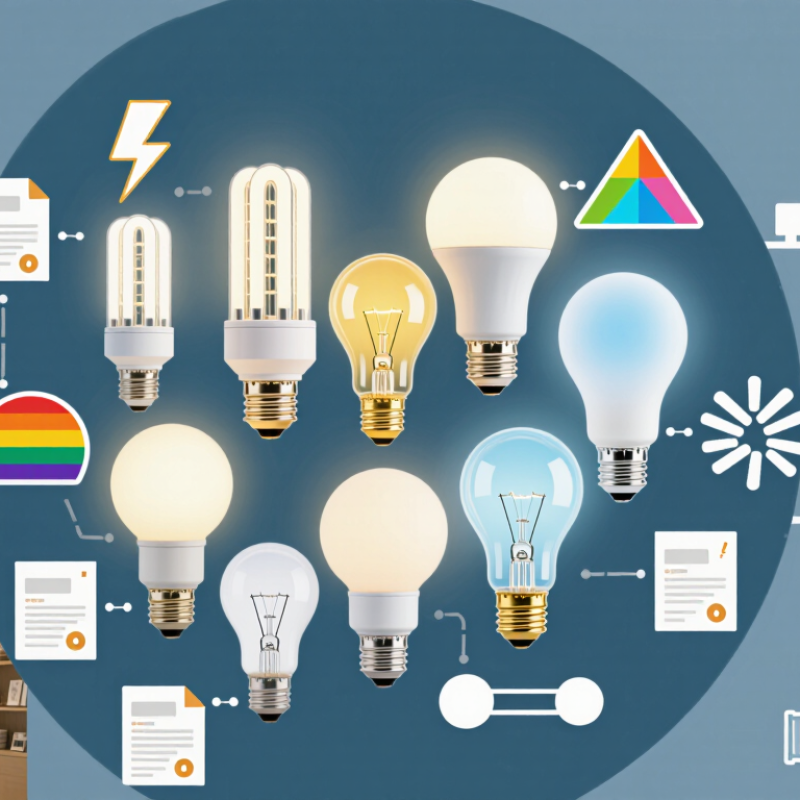
Types of Table Lamp Bulbs Supplied by Chinese Manufacturers
Chinese manufacturers supply a wide range of table lamp bulbs for global buyers. Common options include E27 and E14 LED bulbs, G45 globe bulbs, candle bulbs, filament bulbs, and compact COB designs. Many factories also produce G4 and G9 capsules for decorative lamps. Base size matters. A beautiful bulb is useless if it does not fit.
LED remains the main choice. The International Energy Agency reports that lighting uses about 15% of global electricity, while efficient LEDs can reduce lighting energy demand substantially. The U.S. Department of Energy’s solid-state lighting reports commonly place modern LED efficacy above 100 lumens per watt. For bedside lamps, buyers often request 400–800 lumens, 2700–3000K warm white light, and CRI 90 or higher. Filament LEDs offer visible amber rods and lower glare, but their heat management can be weaker.
Chinese suppliers also provide dimmable, smart, RGB, rechargeable, and sensor-compatible bulbs. Voltage options usually include 110–120V and 220–240V, with different driver designs. The IEA notes that LED performance depends on controls, quality, and installation, not only wattage. Ask for lumen maintenance data, flicker testing, power-factor figures, and sample aging results. Some suppliers quote impressive laboratory values. Real rooms can be less perfect. A 6W bulb may feel too bright inside a shallow fabric shade. Packaging, socket tolerance, and color consistency still deserve careful inspection.
China Best Table Lamp Bulb Suppliers for Global Buyers - Types of Table Lamp Bulbs Supplied by Chinese Manufacturers
Specifications are typical industry ranges and may vary by product design, market requirements and testing method. Buyers should request product datasheets, photometric reports, safety documentation and samples before placing a bulk order.
Key Standards for Evaluating China-Based Bulb Suppliers
China Best Table Lamp Bulb Suppliers for Global Buyers
Key Standards for Evaluating China-Based Bulb Suppliers
A capable bulb supplier should prove performance, safety, and production consistency. The IEA reports that lighting uses about 15% of global electricity, making efficiency a serious purchasing factor. Ask for measured lumens, wattage, power factor, color temperature, and color rendering index. Do not rely on catalog claims alone. Request independent laboratory reports and compare them with your own sample tests.
Safety documentation matters. Check compliance with IEC 62560 for self-ballasted LED lamps and IEC 62471 for photobiological safety. Market-specific requirements may also include RoHS, REACH, or other substance controls. A reliable factory should provide traceable test records, component declarations, and clear production dates. ISO 9001 certification can indicate process discipline, but it is not proof of product quality.
Factory experience becomes visible in small details. Inspect solder joints, diffuser uniformity, heat dissipation, packaging strength, and batch labels. Ask how the supplier controls LED binning and color consistency. A sample may perform well while later batches drift in color. That risk is often underestimated. Require pre-shipment inspection, aging tests, and written acceptance limits. Warranty terms should define lumen maintenance, failure rates, and response timing.
Even experienced buyers can over-trust polished documents. I would test several batches, not just one. Supplier evaluation is never perfectly tidy.
How to Verify Quality, Safety, and Product Compliance
China Best Table Lamp Bulb Suppliers for Global Buyers
How to Verify Quality, Safety, and Product Compliance
Choosing a reliable table lamp bulb supplier requires more than comparing prices. Request samples from the exact production model, not a similar catalog item. Check the bulb’s voltage, frequency, base type, wattage, color temperature, and rated lifetime. Fit the sample into your lamp and observe heat, flicker, startup time, and brightness stability. Small differences matter.
Ask for test reports from a recognized, independent laboratory. Each report should show the supplier’s legal entity, product model, test standards, and recent issue date. Verify that the tested model matches the packaging and purchase order. Check electrical safety, electromagnetic compatibility, photometric performance, and material restrictions required in your destination market. A certificate alone is not enough. A polished document may still hide an outdated model.
Traceability strengthens confidence. Request production-batch codes, incoming material records, inspection procedures, and carton drop-test results. Review the supplier’s quality plan before placing a large order. An experienced supplier should explain failure handling, replacement terms, and corrective actions clearly. I have learned that factory photos prove little; controlled sampling proves more. Still, sampling has limits. Performance can drift when components change, so repeat inspections matter. Ask for written approval before substitutions. Keep retained samples, photographs, and signed specifications for future comparison.
China Best Table Lamp Bulb Suppliers for Global Buyers
How to Verify Quality, Safety, and Product Compliance
This procurement scorecard assigns practical verification priorities to the main evidence buyers should request before approving a supplier. Safety testing, photometric performance, restricted-substance documentation, electromagnetic compatibility, and sample consistency should be checked against the destination market and the applicable product standards.
Shipping, Pricing, and Supplier Selection for Global Buyers
China remains a major sourcing base for table lamp bulbs, but shipping can change the final cost quickly. UNCTAD’s Review of Maritime Transport 2023 states that over 80% of global merchandise trade moves by sea. Buyers should compare FOB, CIF, and DDP quotations carefully. A carton may cost less, yet port fees, customs handling, and inland delivery can erase the saving.
Freightos market data shows that container prices can fluctuate sharply by route and season. Request a recent freight validity period, carton dimensions, gross weight, and loading port. Ask for a sample shipment before placing a large order. Small details matter, such as protective inserts, moisture control, and clear wattage labels. Delays happen.
Pricing should include bulb type, color temperature, lumen output, driver quality, packaging, testing, and replacement terms. The International Energy Agency reports that lighting uses about 15% of global electricity consumption, making efficiency an important buying factor. Request test reports for energy performance and electrical safety. However, certificates alone are not enough. Check whether the report matches the exact model and production batch.
Supplier selection needs evidence, not polished photos. Review factory capacity, response speed, quality procedures, and export experience. Confirm payment stages and inspection rights in writing. I would also compare three landed-cost quotations, not only unit prices. My earlier mistake was trusting a very low offer before checking carton strength. That cost more than expected. Supplier records, sample testing, and transparent shipping terms provide stronger purchasing confidence.

.svg)


