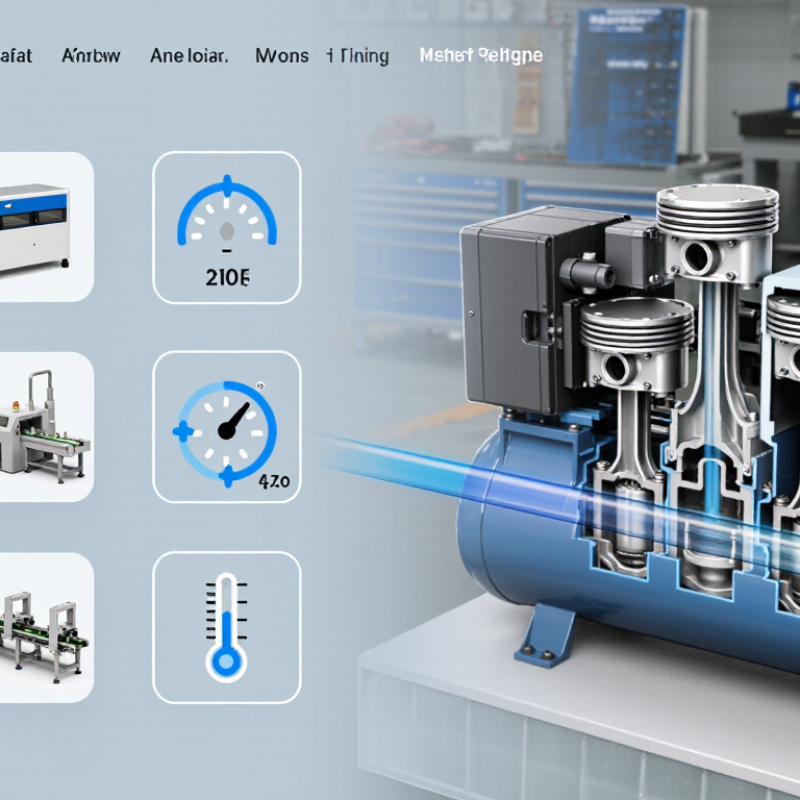
When choosing an oilless reciprocating compressor, verify noise with measured evidence, not brochure claims. A practical audit should record sound pressure levels at defined microphone positions, load conditions, and operating distances. ISO 2151 specifies methods for determining noise emission from compressors and vacuum pumps. Ask for the test environment, uncertainty, and A-weighted results.
Do not trust showroom silence.
A common mistake is comparing decibel values without checking test conditions. A 3 dB increase represents roughly twice the sound energy, although perceived loudness does not double.
The U.S. Department of Energy and Compressed Air Challenge guidance indicate that energy can represent about 70% of a compressed-air system’s lifecycle cost. Therefore, calculate annual cost using actual power, operating hours, electricity tariffs, pressure, and duty cycle.
Use this practical model:
purchase price, installation, energy, scheduled maintenance, repairs, downtime, and disposal.
Oilless designs remove oil-management tasks, but they still require valve checks, piston-ring inspection, intake-filter replacement, and cooling-system cleaning. Maintenance intervals should reflect dust, humidity, starts per hour, and load fluctuations.
Small details matter.
A perfect spreadsheet can still mislead. Add a sensitivity check for electricity prices and unexpected downtime. Compare five- to ten-year ownership costs, not only the initial quotation.
For credible decisions, retain ISO 2151 test records and maintenance assumptions with the calculation.

.svg)