How to Choose a Computer Multi Needle Quilting Machine
Choosing a Computer Multi-needle Quilting Machine is a practical production decision, not merely a search for the fastest model. The right machine must match your quilt size, fabric layers, thread types, workspace, and daily workload. A small workshop may need flexibility, while a factory may prioritize speed, repeatability, and automated pattern control.
Harriet Hargrave, a respected quilting educator and author, once said, “There are no mistakes in quilting, only opportunities for design.” That idea matters when comparing computerized equipment. A machine with multiple needles can improve consistency, but it cannot correct poor fabric preparation or unsuitable tension settings. Test carefully.
Look closely at the needle system, sewing field, frame length, motor stability, and software interface. Place a sample quilt beneath the presser foot. Watch how the machine handles thick batting, sharp corners, and changing thread colors. Check whether patterns can be edited without complicated steps. Small screens can feel frustrating during long production sessions.
Service support deserves equal attention. Ask about spare parts, technician response times, training, and warranty coverage. A low purchase price may become expensive when downtime interrupts orders. Energy use and cleaning access also affect daily costs.
Do not choose from speed numbers alone. A faster machine may create more rejects if operators cannot control it confidently. This guide examines the details that matter, including machine capacity, stitch quality, automation, maintenance, and operator comfort. Some recommendations may seem obvious. They are still easy to overlook.
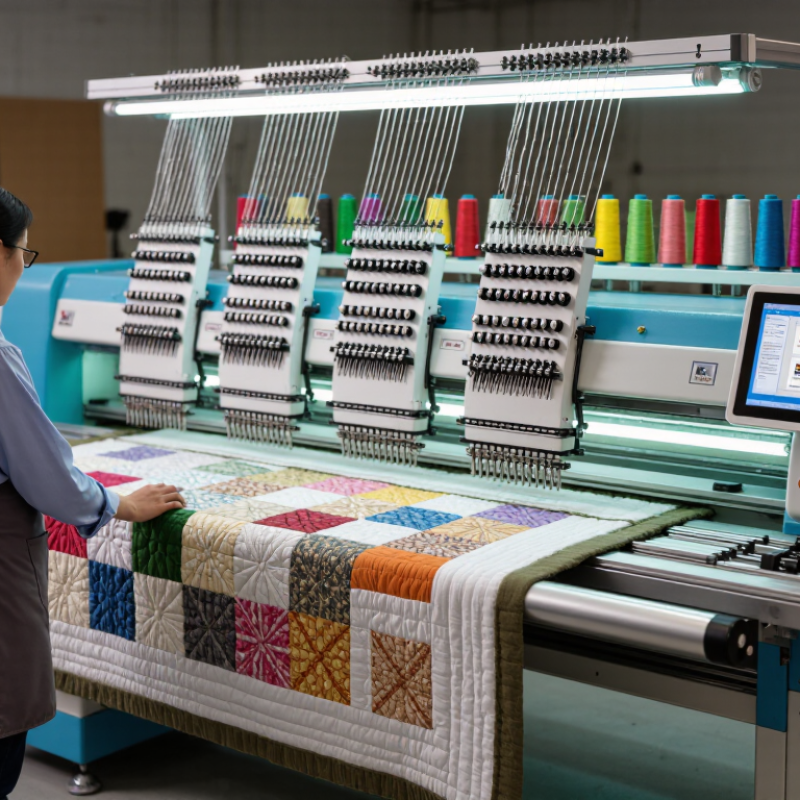
Understanding Computer Multi-Needle Quilting Machine Functions
Choosing a computer multi-needle quilting machine starts with its control system, not its needle count. A 2024 Fortune Business Insights report estimates the industrial sewing machine market at about USD 5.2 billion in 2023, with steady growth ahead. That expansion reflects demand for repeatable production. Yet automation only helps when the functions match your workflow. Check programmable stitch length, pattern memory, needle selection, thread-break detection, and automatic trimming. These features reduce interruptions during long quilts. They do not replace judgment.
Test the machine with cotton fabric, batting, and your usual thread. Watch how the presser foot handles thick seams. Listen for skipped stitches. A useful control panel should show speed, stitch count, tension alerts, and pattern position clearly. Multi-needle systems can change thread colors quickly, but poor digital patterns still create weak corners or uneven density. I have learned this the hard way. More needles are not always better.
Material choice also matters. Textile Exchange’s 2024 Materials Market Report states that polyester represented about 57% of global fiber production in 2023. Synthetic threads may run smoothly, while blended fabrics can behave differently under heat and tension. Compare frame size, maximum quilting area, USB or network transfer, and recovery after a power interruption. Ask whether settings can be saved for repeat orders. A machine may promise high speed, but real productivity depends on clean starts, stable tension, and simple corrections. Leave room for trial runs. That part is often underestimated.
How to Choose a Computer Multi-Needle Quilting Machine
Understanding Computer Multi-Needle Quilting Machine Functions
Use this practical 1–5 evaluation scale when comparing machines. A higher score indicates that the function generally has a greater effect on production efficiency, pattern accuracy, and ease of operation. Prioritize needle positioning and pattern memory for detailed designs, while speed control and thread-break detection are especially useful for consistent long quilting runs.
Comparing Needle Configurations, Stitch Control, and Automation Features
Choosing a computer multi needle quilting machine starts with needle configuration, not screen size. In my workshop, I compare the planned quilt width, thread changes, and design density. A two-needle setup handles simple parallel lines efficiently. Machines with more needles support layered patterns and color changes with fewer interruptions. However, extra needles also increase threading time, calibration needs, and maintenance costs. More is not always better.
Stitch control affects both appearance and fabric stability. Look for adjustable stitch length, needle position, presser-foot pressure, and speed control. A useful system keeps stitches even when the machine slows near corners. Test it on cotton, batting, and backing together. Watch the first ten centimeters closely. Uneven tension can create small loops underneath, especially with thick batting. I once trusted an automatic tension setting too quickly. It looked fine on a sample, but failed on a larger panel. Manual adjustment still matters.
Automation features should reduce repetitive work without removing operator judgment. Thread-break sensors, pattern memory, automatic needle positioning, and controlled speed can improve consistency. A clear interface is important when designs contain many stops. Check whether settings can be edited during stitching. Also examine emergency stopping and restart accuracy. Some systems promise effortless production, but complex menus may slow beginners. Choose features you can verify through demonstrations, service records, and written specifications. Reliable support matters more than impressive software claims.

.svg)


