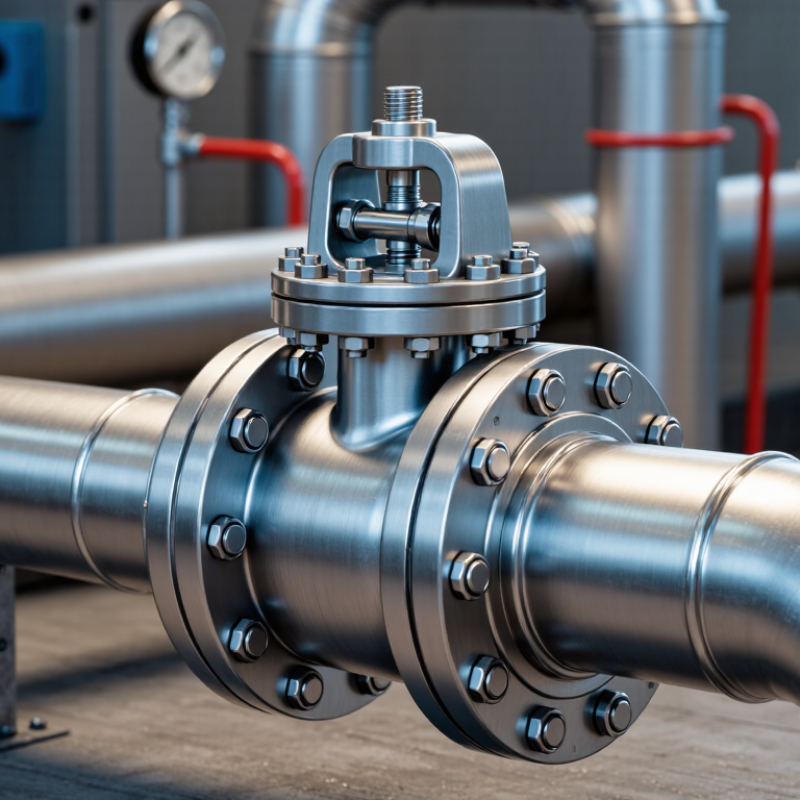
| Valve Definition | A ball valve with a permanently welded body or welded pipeline connections. | Confirm whether “welded” refers to a fully welded body, butt-weld ends, socket-weld ends, or a combination of these features. |
| How It Works | A spherical ball with a central bore rotates approximately 90 degrees between open and closed positions. | The bore aligns with the pipeline in the open position and turns perpendicular to the flow in the closed position. It is intended primarily for on/off isolation, not routine throttling. |
| Nominal Size | Common sizes range from DN15 to DN1200 and approximately 1/2 in to 48 in, depending on the application. | Match the valve nominal diameter, pipe outside diameter, wall thickness, and required flow capacity. Large sizes may require a gearbox or powered actuator. |
| Bore Design | Full bore, reduced bore, or standard bore. | Choose full bore where low pressure loss, pigging, or minimal flow restriction is important. Reduced bore can lower weight, cost, and actuator torque requirements. |
| Typical Body Material | Carbon steel, stainless steel, low-temperature carbon steel, or alloy steel. | Select material according to fluid compatibility, design temperature, corrosion allowance, impact toughness, and applicable piping material requirements. |
| Ball and Stem Material | Commonly stainless steel or corrosion-resistant alloy with a polished or coated surface. | Check resistance to erosion, corrosion, hydrogen service, sour gas, abrasive particles, and repeated operating cycles. |
| Seat Materials | PTFE-based materials, reinforced polymers, PEEK, nylon, or metal seats. | Soft seats are commonly used for clean fluids and moderate temperatures. Metal seats are considered for high temperature, abrasive, or fire-critical services. |
| Pressure Class | Typical classes include ASME Class 150, 300, 600, 900, 1500, and 2500; metric ratings may also be specified in PN16 to PN420. | Pressure rating depends on material, temperature, size, and design standard. Never select a rating from nominal pressure alone; use the applicable pressure-temperature table. |
| Operating Temperature | Typical service may range from approximately -196°C to 200°C for selected designs; specialized metal-seat valves can cover higher temperatures. | Confirm the actual minimum and maximum design temperatures, start-up conditions, thermal cycling, seat limits, and material toughness requirements. |
| Connection Type | Butt-weld ends, socket-weld ends, flanged ends, or welded body construction. | Match end dimensions, bevel geometry, wall thickness, weld procedure requirements, allowable heat input, and field installation access. |
| Pressure Drop | A full-bore ball valve normally produces low pressure loss when fully open. | Compare the valve flow coefficient, bore size, fluid velocity, viscosity, density, and required flow rate. Avoid using a valve as a permanent throttling device unless specifically designed for it. |
| Leakage Performance | Soft-seated designs can provide very low shutoff leakage; metal-seated designs may have different allowable leakage criteria. | Specify the required seat leakage class, test medium, test pressure, duration, and whether double-block-and-bleed capability is required. |
| Fire-Safe Requirement | Fire-safe construction may include secondary metal sealing and anti-blowout stem features. | For flammable fluids, specify a recognized fire-test requirement and verify that the complete valve design—not only the seat material—has been tested. |
| Stem Configuration | Top-entry or side-entry stem arrangements with anti-blowout construction. | Check stem sealing, external leakage control, anti-static continuity, access for maintenance, and the required operating torque. |
| Actuation | Manual lever, gearbox, pneumatic actuator, electric actuator, or hydraulic actuator. | Size the actuator using maximum breakaway, running, and closing torque, including safety margin, differential pressure, temperature, and emergency operating requirements. |
| Operating Time | Manual operation commonly takes about 90 degrees of rotation; powered operating time varies by actuator and valve size. | Confirm required opening and closing speed, surge-control limits, fail-open or fail-closed action, and compatibility with the control system. |
| Welding Considerations | Permanent welded joints reduce potential bolted-body leakage paths and can provide a compact pipeline assembly. | Use qualified welding procedures, protect seats and seals from excessive heat, verify alignment, perform required non-destructive examination, and pressure-test after installation. |
| Testing and Inspection | Shell test, seat test, low-pressure air or gas test, high-pressure test, visual inspection, and selected non-destructive examinations. | Request material certificates, dimensional records, pressure-test reports, weld inspection records, traceability documents, and actuator test data where applicable. |
| Applicable Standards | Common references include API 6D, ISO 14313, ASME B16.34, ASME B16.10, ASME B16.25, ISO 5208, and fire-safe testing standards where required. | Specify the governing standard edition, design code, inspection level, end-to-end dimensions, pressure class, and project-specific deviations. |
| Suitable Applications | Natural gas, oil, water, district heating, process fluids, cryogenic service, and selected chemical applications. | Evaluate fluid composition, solids content, toxicity, flammability, pressure, temperature, corrosion potential, cleaning method, and maintenance access. |
| Main Advantages | Low leakage potential, compact installation, low flow resistance, strong pipeline integration, and reduced external bolted-joint exposure. | The permanent connection can make replacement more labor-intensive, so verify expected service life, inspection strategy, bypass requirements, and isolation provisions. |
| Recommended Choice for 2026 | Select a fully documented valve with appropriate materials, digital traceability, tested leakage performance, and actuator compatibility. | Base the final choice on the complete duty specification: fluid, size, pressure, temperature, bore, end connection, materials, standards, actuation, testing, installation method, and lifecycle requirements. |

.svg)