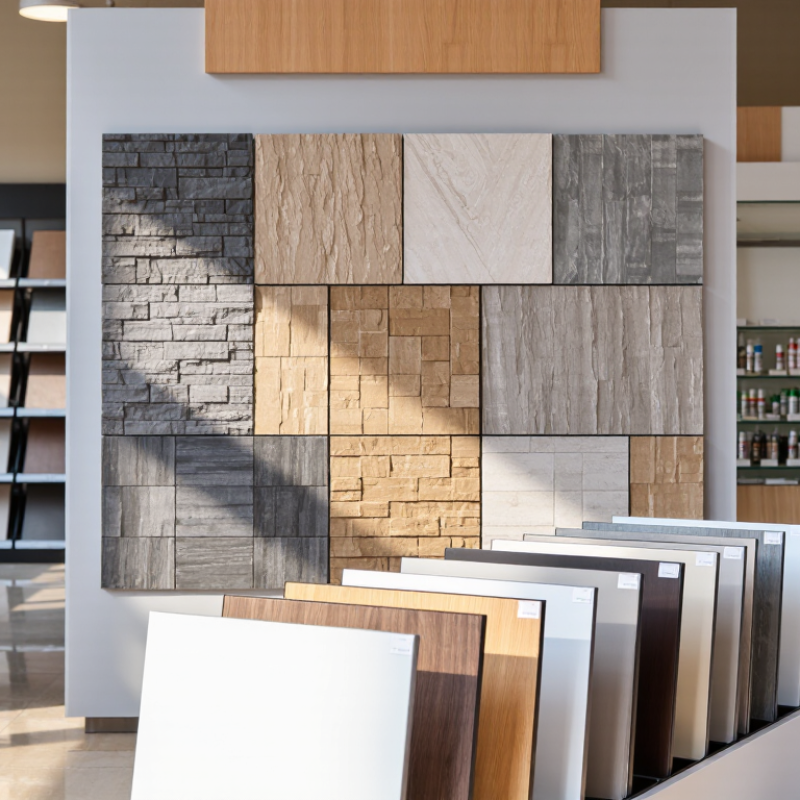
| Panel Composition | Common products use polymer resin, cementitious material, polyurethane, or fiberglass-reinforced compounds. | The composition affects weight, impact resistance, moisture behavior, texture, installation method, and long-term durability. | Request the technical data sheet, material description, sample cross-section, and confirmation that the supplied material matches the approved sample. |
| Panel Thickness | Typical decorative faux stone panels are approximately 10–50 mm thick, depending on the construction and profile. | Thickness influences appearance, rigidity, fixing requirements, package volume, and freight cost. | Confirm nominal thickness, permitted tolerance, corner-piece dimensions, and whether the stated thickness includes the relief or only the backing. |
| Panel Weight | Many lightweight systems are designed to remain substantially lighter than natural stone; actual weight must be checked by product type and size. | Lower weight can reduce structural loading and make handling easier, but excessive lightness may indicate lower impact resistance for some constructions. | Ask for weight per panel and weight per square metre, measured from production samples rather than estimated from catalog images. |
| Water Absorption | A lower water-absorption value is generally preferred for exterior or humid applications; the acceptable limit depends on the material and applicable standard. | Moisture can affect staining, freeze-thaw performance, dimensional stability, coating life, and adhesive selection. | Request a laboratory test report stating the test method, sample condition, result, and date. Do not rely only on the phrase “waterproof.” |
| Freeze-Thaw Suitability | Exterior products in cold climates should have documented freeze-thaw or weathering performance appropriate for the project location. | Repeated freezing and thawing can cause cracking, delamination, surface scaling, or loss of bond when a product is not suitable. | Provide the target climate and request test evidence, installation limitations, and approved substrate and adhesive requirements. |
| Fire Performance | Fire classification depends on the panel composition, thickness, backing, adhesive, and installation assembly. ASTM E84 and EN 13501-1 are commonly referenced systems. | A panel’s fire result cannot be transferred automatically to every wall assembly or installation method. | Request a report for the exact product and configuration. Confirm the classification required by the destination building code before ordering. |
| UV and Weather Resistance | Exterior panels should use a weather-resistant color layer or coating and have documented accelerated-weathering or outdoor exposure results where required. | UV exposure may cause fading, chalking, embrittlement, or changes in surface texture over time. | Ask for coating details, color-control samples, cleaning instructions, and any accelerated-weathering test method and duration. |
| Dimensional Consistency | Panels should have consistent length, width, thickness, locking edges, and corner geometry within the supplier’s declared tolerance. | Inconsistent dimensions increase installation time, visible joints, material waste, and the need for site modification. | Measure several panels from a pre-production sample. Include dimensional tolerances and rejection criteria in the purchase order. |
| Surface Appearance | Texture, color variation, aggregate distribution, and joint design should be consistent with the approved reference sample. | Faux stone relies on realistic variation, but uncontrolled variation can create an uneven or visibly repetitive façade. | Approve a physical color board or production sample. Specify acceptable variation, texture direction, gloss level, and repair-color requirements. |
| Installation System | Possible methods include adhesive fixing, mechanical fastening, or a combined system, depending on panel weight, substrate, and application. | The correct installation method affects safety, wind resistance, moisture management, labor cost, and warranty validity. | Request installation drawings, recommended adhesive or fastener specifications, substrate preparation requirements, joint details, and maintenance guidance. |
| Quality Control | A reliable production process should include incoming-material inspection, in-process checks, final inspection, and batch traceability. | Documented quality control reduces variation between containers and provides evidence when defects or claims occur. | Ask for an inspection checklist, acceptable quality limit, batch coding method, defect photos, and a pre-shipment inspection procedure. |
| Testing and Compliance Documents | Documentation should match the exact model, material, thickness, finish, and intended application. | Generic or unrelated reports may not satisfy project consultants, customs authorities, or building-code requirements. | Verify report issuer, test standard, product identification, test date, sample description, and whether the report is transferable to the supplied configuration. |
| Sample Approval | Required before bulk production | Digital images cannot accurately show color, relief depth, texture, gloss, edge details, or panel stiffness. | Use a signed or documented approval sample and keep a retained reference sample for production and final inspection comparison. |
| Packaging Protection | Export packaging should protect corners, surfaces, edges, and decorative finishes from impact, moisture, and abrasion. | Many transit claims result from inadequate internal protection rather than manufacturing defects. | Confirm carton or crate design, moisture barrier, corner protection, pallet loading, maximum stacking height, and package drop or handling precautions. |
| Production Lead Time | For standard items, production may commonly require several weeks after sample and artwork approval; custom molds may require additional time. | Lead time affects construction schedules, inventory planning, seasonal shipping, and project penalties. | Obtain a written schedule covering sample approval, mold development, production, inspection, packing, and estimated shipping readiness. |
| Minimum Order Quantity | MOQ varies by panel design, finish, packaging, and whether a new mold or color is required. | A low MOQ may reduce inventory risk, while a higher MOQ may provide better pricing for standardized production. | Request separate MOQs for standard colors, custom colors, custom textures, replacement pieces, and mixed-container orders. |
| Customization Capability | Potential options include color, texture, panel size, corner pieces, trim, packaging, and private-label carton artwork. | Customization can improve project matching but may increase tooling fees, approval time, MOQ, and quality-control complexity. | Request mold charges, sample charges, ownership terms, revision limits, color-matching conditions, and the process for approving changes. |
| Commercial Transparency | A complete quotation should identify product specifications, quantity unit, packaging, tooling, inspection, delivery terms, and payment milestones. | Clear quotations make supplier comparisons meaningful and reduce unexpected charges after the order is placed. | Compare like-for-like quotations using the same Incoterm, currency, quantity, packaging standard, testing scope, and delivery destination. |
| After-Sales Support | The supplier should provide installation guidance, replacement-piece procedures, claim response times, and reasonable product warranty terms. | Panels may need replacement because of transit damage, site cutting, color variation, or installation errors. | Clarify warranty exclusions, evidence required for claims, response deadline, replacement policy, and availability of matching future batches. |
| China Sourcing Advantage | China has a broad manufacturing base for decorative building materials, tooling, packaging, and export logistics. | A wider supplier pool can support design variety, custom development, competitive production costs, and consolidated shipments. | Select based on verified samples, product-specific documents, factory-process evidence, communication quality, and inspection results—not price alone. |

.svg)