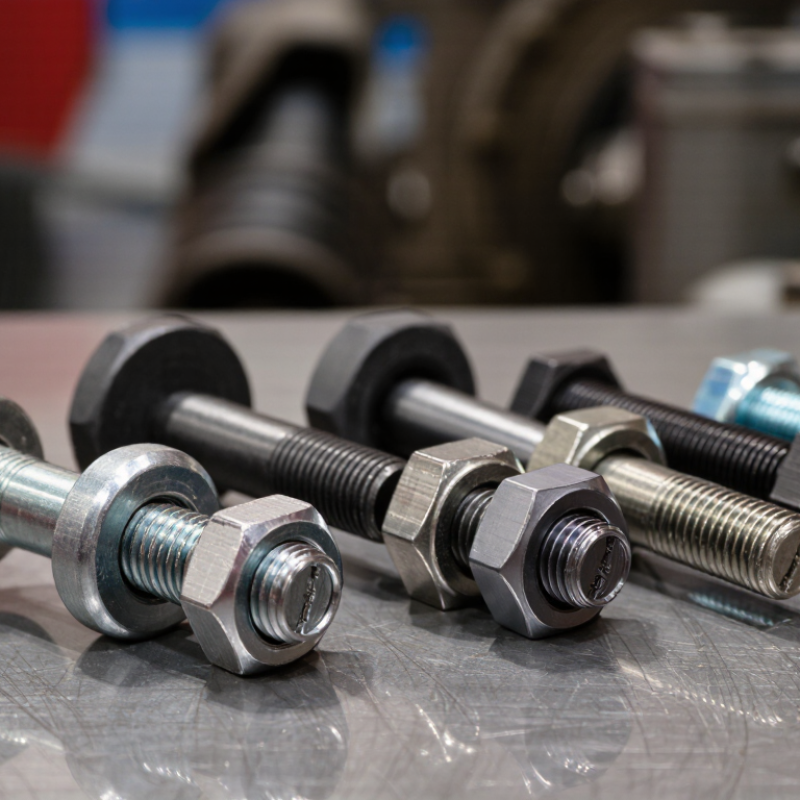
| Double-ended stud bolt | Threads into a tapped hole at one end; a nut secures the other end. Check engagement length and use compatible thread pitch and lubricant. | Commonly carbon steel or stainless steel; used in machinery, flanges, and equipment assemblies. | $1–$8 for common small-to-medium sizes; larger diameters and alloy grades cost more. | High for common diameters and thread sizes; special lengths or grades may require ordering. | Applications where one side must remain fixed in a tapped component while the other side is removable. |
| Tap-end stud | Install the shorter, usually tighter-tolerance end into the tapped hole. Follow the specified engagement depth; avoid forcing the stud or damaging the internal threads. | Often carbon or alloy steel; used in engine, equipment, and machinery assemblies where reliable engagement is needed. | $2–$12 for common sizes; heat-treated or application-specific versions may cost more. | Moderate to high for standard configurations; uncommon thread combinations may have longer lead times. | Repeated assembly or service work where the stud is intended to stay in the base component. |
| Continuous-thread stud | Position nuts as needed along the threaded length. Cut-to-length versions may require deburring and protection of the threads after cutting. | Available in carbon steel and stainless steel; used for clamps, supports, and general-purpose fastening. | $1–$10 for common short lengths; longer stock is generally priced by length. | High for standard rod sizes and common materials; cut lengths are widely obtainable. | Assemblies that need adjustable nut positions or a non-standard overall length. |
| High-strength alloy-steel stud | Confirm the specified grade, nut compatibility, tightening method, and lubrication requirements. Use controlled tightening where the joint design calls for it. | Heat-treated alloy steel; used in highly loaded machinery, structural connections, and pressure equipment when specified by the design. | $4–$25+ for common sizes; certification, coating, and larger dimensions increase cost. | Moderate for standard grades and sizes; certified or non-standard parts may be made to order. | Designed joints that require higher strength than general-purpose carbon-steel fasteners. |
| Stainless-steel double-ended stud | Use compatible stainless nuts and consider galling during tightening. Appropriate lubricant and controlled installation can reduce thread damage. | Commonly austenitic stainless steel; used in damp, washdown, or mildly corrosive environments, subject to material-selection requirements. | $3–$18 for common sizes; corrosion-resistant grades and larger sizes may cost more. | High for common dimensions; specialty grades and non-standard lengths can be less readily stocked. | Environments where corrosion resistance is important and the selected stainless grade is suitable. |

.svg)