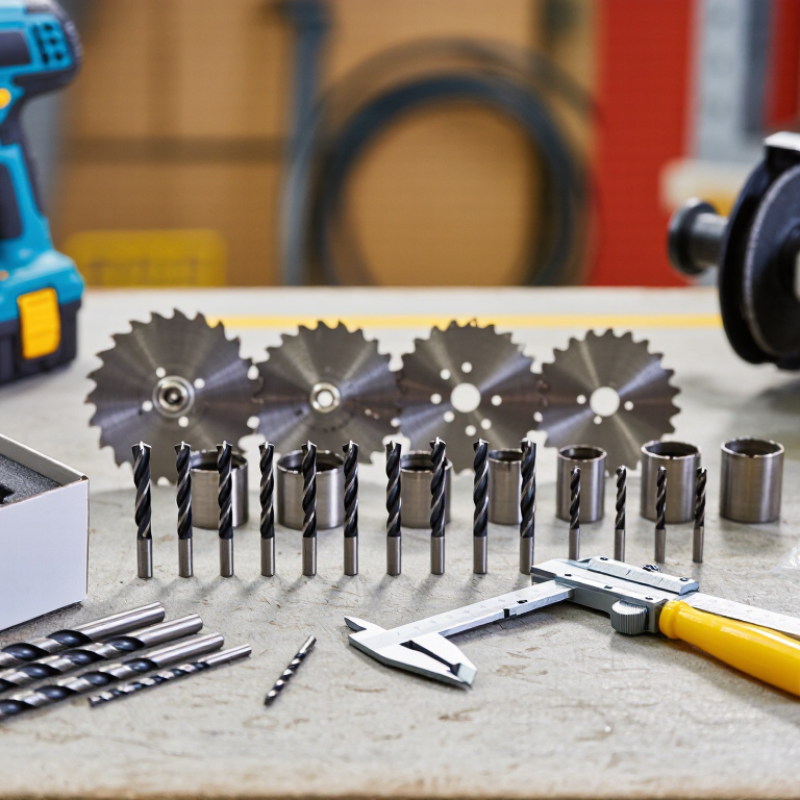
| Twist Drill Bits | Round shank; commonly 1/4 in, 3/8 in, or 1/2 in chuck capacity depending on bit size | Cordless or corded drills and drill drivers | Unalloyed steel, aluminum, wood, and plastic; general-purpose drilling | Chuck capacity, bit diameter, drilling depth, rotation direction, and speed range | High-speed steel grade, point angle, flute length, overall length, surface treatment, diameter tolerance, and set configuration | Use cutting fluid when recommended for metal; avoid excessive pressure and overheating |
| Masonry Drill Bits | Round shank or quick-change shank; some versions use specialized hammer-drill interfaces | Drills with rotary or hammer-drilling modes | Brick, concrete block, mortar, and light concrete; anchor-hole preparation | Hammer-mode suitability, shank diameter, hole diameter, maximum drilling depth, and tool chuck system | Carbide tip grade, brazing quality, flute design, diameter range, length, and impact resistance | Wear eye and respiratory protection; do not use rotary-only bits for reinforced concrete unless specified |
| Driver Bits | 1/4 in hex shank | Drill drivers, impact drivers, and manual bit holders with matching receptacles | Wood, sheet metal, plastics, and general fastening; Phillips, slotted, hex, Torx-type, and square recesses | Bit profile, impact rating, holder retention, screw recess, and required torque level | Alloy steel, hardness range, torsion-zone design, bit length, coating, tip precision, and packaging assortment | Use impact-rated bits in impact drivers; worn tips can damage screw recesses |
| Hole Saws | Arbor-mounted system with pilot drill; arbor shank must match the chuck | Drills and drill drivers; low-speed operation is commonly required | Wood, plastic, drywall, thin sheet metal, and selected masonry products | Arbor type, cutting diameter, cutting depth, pilot-bit size, material suitability, and tool speed | Bi-metal or carbide-grit construction, tooth form, wall thickness, arbor compatibility, replacement parts, and diameter range | Secure the workpiece; use controlled feed pressure and remove the core safely |
| Circular Saw Blades | Arbor hole sized to the saw spindle; common blade diameters include 165 mm, 184 mm, and 190 mm | Handheld circular saws and compatible table or mitre saws | Softwood, hardwood, plywood, engineered wood, and some non-ferrous metals with dedicated blades | Blade diameter, arbor diameter, maximum revolutions per minute, kerf, guard clearance, and tooth direction | Carbide tooth count, tooth geometry, plate thickness, kerf width, expansion slots, runout, and balance | Never exceed the marked speed rating; select tooth count according to cut speed and finish requirements |
| Reciprocating Saw Blades | Universal reciprocating-saw tang; tang dimensions and locking clearance should be verified | Cordless or corded reciprocating saws | Wood, pruning work, metal pipe, sheet metal, plastics, and demolition applications | Tang fit, blade length, stroke length, stroke rate, material thickness, and cutting direction | Bi-metal or carbon-steel construction, teeth per inch, blade thickness, working length, flexibility, and tooth pattern | Choose coarse teeth for fast wood cutting and finer teeth for thin metal; clamp loose materials |
| Jigsaw Blades | Common T-shank or U-shank designs; the blade holder must match the saw | Orbital or straight-action jigsaws | Wood, laminate, plastics, aluminum, and thin steel sheet | Shank style, blade length, teeth per inch, maximum material thickness, orbital setting, and cutting curve | High-carbon steel or bi-metal construction, tooth direction, progressive tooth pitch, blade width, and finish quality | Use down-cut blades for reduced top-surface splintering where appropriate; support the workpiece |
| Angle Grinder Discs | Arbor hole matched to the grinder spindle; common disc diameters include 100 mm, 115 mm, and 125 mm | Angle grinders with matching disc diameter and speed rating | Cutting or grinding steel, stainless steel, masonry, concrete, and stone with dedicated disc types | Disc purpose, diameter, arbor size, thickness, maximum revolutions per minute, guard compatibility, and material rating | Abrasive type, reinforcement layers, bond hardness, disc thickness, conformity markings, shelf life, and moisture-resistant packaging | Use the correct guard and personal protective equipment; do not use cutting discs for side grinding |
| Sanding Discs and Sheets | Hook-and-loop or pressure-sensitive backing; hole pattern must match the sanding pad | Random orbital sanders, palm sanders, detail sanders, and angle grinders with sanding backing pads | Wood, painted surfaces, plastics, composites, and metal preparation | Pad diameter or shape, hole layout, backing attachment, grit range, tool speed, and dust-extraction openings | Abrasive mineral, grit standard, backing material, coating, anti-clog treatment, edge durability, and pack quantity | Use progressively finer grits; avoid excessive pressure, which can reduce abrasive life and cause surface defects |
| Oscillating Multi-Tool Blades | Open-interface or star-shaped mounting patterns; interface geometry must match the tool holder | Oscillating multi-tools with compatible mounting systems | Flush cutting, plunge cutting, grout removal, scraping, sanding, and detail work in wood, plastic, and metal | Mounting pattern, oscillation angle, blade width, cutting depth, teeth per inch, and tool clearance | Bi-metal or high-carbon steel, carbide grit or carbide teeth, blade thickness, working width, and accessory life | Confirm the blade is fully seated; use lower speed for heat-sensitive materials and controlled plunge pressure |
| Router Bits | Collet shanks commonly sized at 6 mm, 8 mm, or 1/4 in, depending on the router and market | Fixed-base or plunge routers with matching collets | Solid wood, plywood, MDF, and plastic for edging, grooving, trimming, and joinery | Collet diameter, maximum bit diameter, router speed range, cutting depth, guide compatibility, and workpiece material | Carbide grade, cutter geometry, shank straightness, brazing quality, balance, cutting diameter, and bearing specification | Insert the shank deeply without bottoming out; take multiple shallow passes for large profiles |
| Wire Wheels and Brushes | Arbor-mounted, threaded, or shank-mounted designs depending on tool type | Angle grinders, drills, bench grinders, and rotary tools with matching mounts | Rust removal, paint stripping, weld cleaning, deburring, and surface preparation | Mounting thread or arbor, brush diameter, wire type, wire thickness, maximum speed, and tool guard clearance | Carbon-steel or stainless-steel wire, crimped or knotted construction, trim length, balance, and corrosion resistance | Use face and hand protection; inspect for loose wires and do not exceed the marked speed rating |
| Vacuum Attachments and Dust-Extraction Hoses | Tool-specific ports, stepped adapters, or common hose diameters such as 27 mm and 32 mm | Saws, sanders, drills, grinders, routers, and compatible dust extractors | Dust collection during wood cutting, sanding, drilling, routing, and masonry work | Port diameter, adapter profile, airflow requirement, hose flexibility, antistatic needs, and connection security | Hose internal diameter, material, bend radius, connector dimensions, filtration compatibility, abrasion resistance, and length | Dust extraction reduces airborne particles but does not replace suitable respiratory protection or ventilation |

.svg)