Food Safety Insights

In Eagle’s Advanced Insights Blog, experts share their know-how by keeping you up-to-date with the latest trends to ensure your inspection equipment keeps your products safe. Eagle is an industry leader when it comes to performance and innovation, and we’ll share the news that’s important to you to enhance your quality assurance program.
Suggest topic you would like to see at:

sale@generalmachinery.org

How to Choose the Right Food X Ray Inspection Equipment for Your Business?

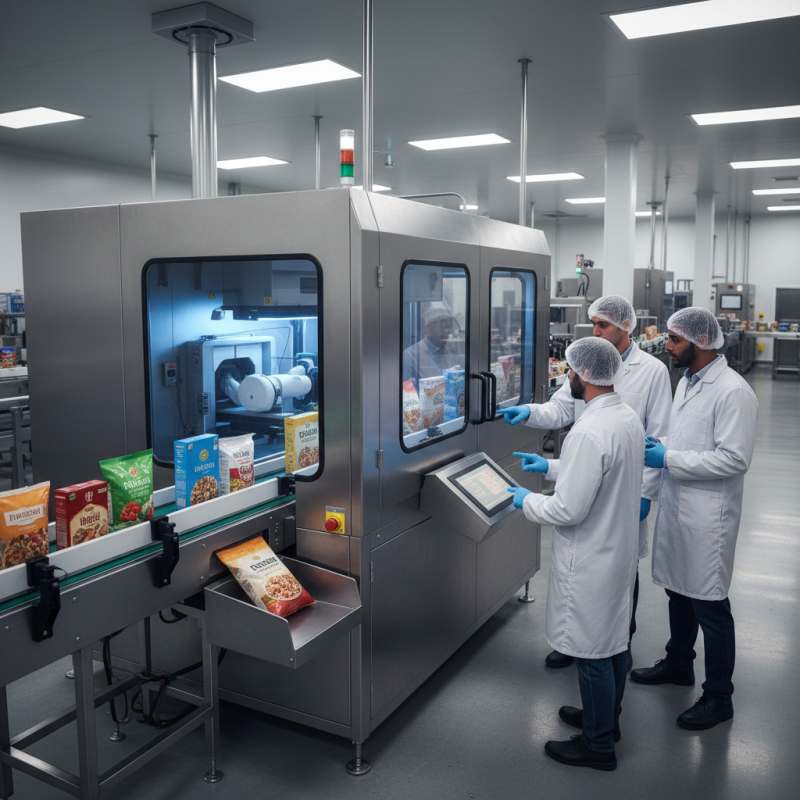
Choosing the right food x ray inspection equipment is crucial for food businesses. This equipment helps detect foreign contaminants in products. Ensuring food safety is a top priority for every company.

Many factors influence the decision. The size of your facility matters. Different machines are designed for different production scales. Some businesses may only need a compact system, while others require larger solutions.

Understanding your specific needs is vital. Features to consider include detection sensitivity and ease of use. It can be overwhelming to navigate the options. Mistakes in selection can lead to costly issues. Reflecting on past experiences may guide your choice. Investing in the right equipment is worth the effort.

How to Choose the Right Food X Ray Inspection Equipment for Your Business?

Understanding the Importance of Food X-Ray Inspection in Quality Control

Food X-ray inspection plays a crucial role in maintaining quality control. It helps detect foreign objects in food products, such as metal, glass, and plastic. These contaminants can pose serious health risks to consumers. By implementing X-ray inspection, businesses can enhance food safety and build trust with their customers.

Yet, selecting the right X-ray inspection equipment can be challenging. Factors like product size and packaging type must be considered. For example, a large box may need a more robust machine to ensure thorough scanning. Additionally, companies often overlook the importance of employee training. Insufficient training can lead to improper use, reducing the effectiveness of the equipment.

Investing in quality control is vital for any food business. However, it's essential to reflect on how often the equipment is maintained. Neglecting maintenance can result in inaccurate readings. Businesses must consistently evaluate their inspection processes to ensure they meet safety standards. Every decision impacts the quality of the food supplied.

Key Factors to Consider When Selecting Food X-Ray Inspection Equipment

How to Choose the Right Food X Ray Inspection Equipment for Your Business?

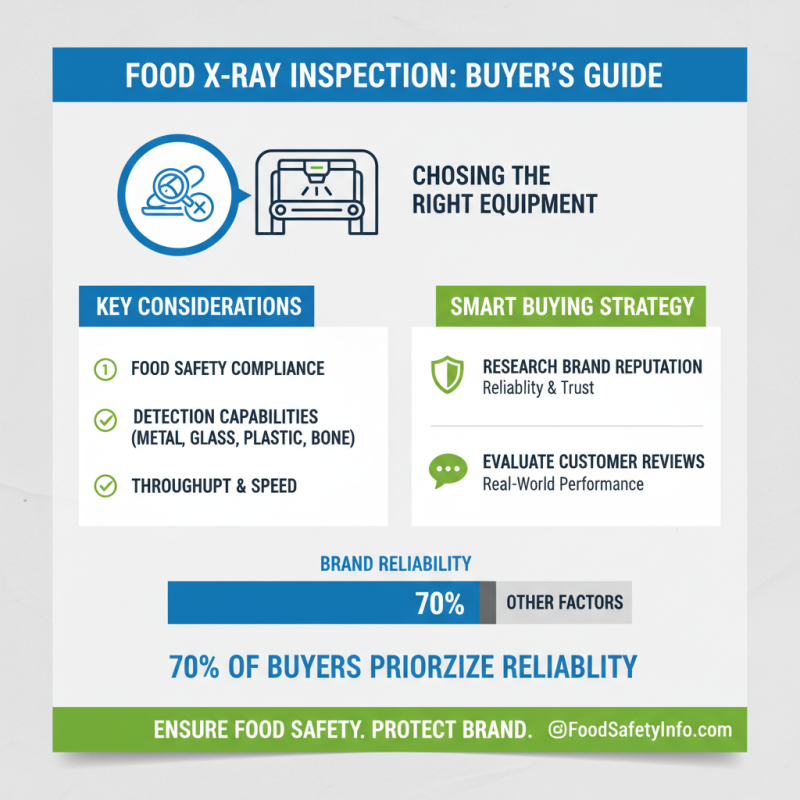
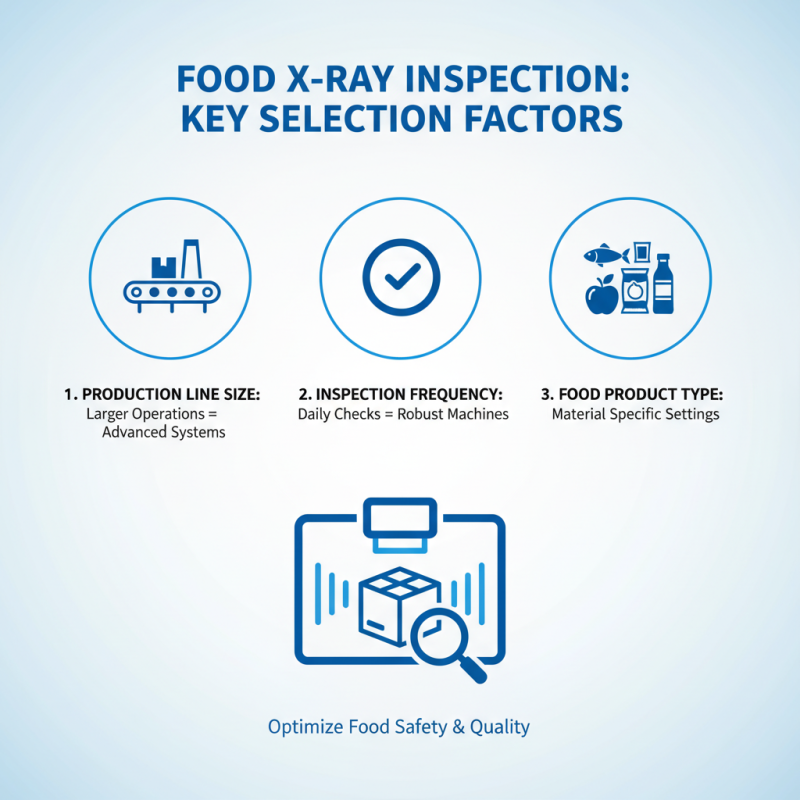
When selecting food X-ray inspection equipment, focus on several key factors. The size of your production line is crucial. Larger operations may require more advanced systems. Consider how often you will conduct inspections. If it’s daily, a robust machine is essential. The type of food products you handle also matters. Different materials may need specific settings.

Tips for selection: Evaluate the sensitivity of the X-ray system. It should detect small contaminants effectively. Pay attention to user-friendliness. Equipment should have an intuitive interface to facilitate training. Staff may struggle with complicated systems. Ask about maintenance requirements. Frequent servicing can disrupt operations.

Cost is always a factor. Cheaper options may lack features or durability. Think about long-term return on investment. Expensive does not always mean better. Sometimes, mid-range machines offer great reliability. Test the equipment if possible. Seeing it in action can provide valuable insights. If problems arise, reflect on what went wrong. Understand operational needs before making a decision.

Comparing Different Types of Food X-Ray Inspection Technologies

When selecting food X-ray inspection technologies, understanding the differences among them is crucial. Several types are available, including traditional X-ray, dual-energy, and advanced spectral imaging. Each technology offers unique advantages in detecting contaminants. Traditional X-ray machines are effective but may miss certain materials due to density overlap. Reports suggest that dual-energy systems can enhance detection capabilities by differentiating materials based on their energy absorption characteristics. This can lead to more accurate identification and fewer false positives.

Advanced spectral imaging takes it further. It not only spots foreign objects but also identifies their composition. This technology is increasingly adopted, as a report from the Food Safety Alliance indicates a 30% increase in contamination detection rates. However, these systems can be costly and complex, leading to hesitation among smaller businesses. A balance between cost and efficiency often needs careful consideration.

Additionally, integrating X-ray systems into existing production lines presents challenges. Some businesses face difficulties in operation and maintenance. Employees must be trained properly to maximize system potential. Despite technological advancements, many companies still struggle with various inspection levels. These complexities highlight the continuous need for evaluation and adaptation in the industry.

Evaluating Brand Reputation and Customer Reviews for Reliability

How to Choose the Right Food X Ray Inspection Equipment for Your Business?

Choosing the right food X-ray inspection equipment is vital for ensuring food safety. Evaluating brand reputation and customer reviews plays a key role in making an informed decision. According to recent industry reports, 70% of equipment buyers consider brand reliability as their top priority. This shows how important it is to research the brands you are considering.

Customer reviews can provide insight into real-world performance. Look for feedback regarding the equipment's accuracy and user-friendliness. A study shows that reliable inspection systems can reduce contamination detection time by up to 40%. Don't just look at the star ratings; dive deeper into user experiences. This can help you spot potential issues others faced.

Tip: Check multiple platforms for reviews to get a balanced view. Also, consider reaching out to other businesses to ask about their experiences. Understanding their challenges can help you avoid pitfalls. Remember, even platforms showcasing high ratings can have sponsored content. Always question the validity of what you read.

Budget Considerations and Return on Investment for Equipment Purchase

When selecting food X-ray inspection equipment, budget considerations play a pivotal role. The initial purchase price is just the beginning. You must consider ongoing maintenance costs, staff training, and potential upgrades. These factors can quickly add up. A low initial cost may lure buyers, but hidden expenses can impact total investment.

Return on investment (ROI) is crucial. Effective equipment can reduce product recalls and enhance safety, which saves money. It’s vital to calculate potential savings against the total cost. Some businesses might not initially see the value of investing in quality equipment. Initially, a cheap option could seem wise, yet long-term benefits may be missed.

Before making a decision, conduct a thorough cost-benefit analysis. Seek input from team members on the use and functionality. Involve them in discussions. Equipment may appear to meet standards, but real-world applications vary. Reflecting on past mistakes can guide choices. Equipment that seems sufficient may not meet future demands. Always anticipate growth and changes in regulations. Selecting the right equipment is not just about budget; it's also about preparing for the future.

Food X-Ray Inspection Equipment Cost vs. ROI

Any Questions? We Are Here for You

Contact Us

Contact Us

Request information

Ask us a question
Service Support

Service Support

Available 24 hours a day, 7 days a week.

Get in Touch
Find a representative

Find a representative

Contact your local representative

View Locations