How to Choose Stone Composite Flooring in 2026?
Choosing a Stone Composite Floor in 2026 requires more than comparing colors, prices, and online ratings. The right decision begins with the room itself. A busy kitchen, sunlit hallway, and quiet bedroom create different flooring demands. Examine moisture exposure, subfloor condition, foot traffic, and cleaning habits before selecting a product.
Look closely at the construction. Ask manufacturers for the core composition, wear-layer thickness, surface treatment, slip-resistance data, and indoor air-quality certifications. Reliable technical documents matter more than impressive marketing phrases. Request samples, then place them beside cabinets and windows. A gray finish can appear blue under cool lighting. Small details matter.
Installation experience also deserves attention. Qualified installers can identify uneven subfloors, expansion requirements, and transition problems before they become expensive repairs. Check the warranty carefully, especially its exclusions for moisture, fading, and commercial use. Independent testing can support manufacturer claims, but no certification replaces proper installation.
There is no perfect floor.
Some products look luxurious yet feel harsh underfoot. Others resist scratches well but show dust quickly. I have seen attractive samples fail to match real rooms because lighting and furniture changed the visual balance. That possibility should encourage careful testing, not rushed purchasing. This guide explains how to compare performance, maintenance, cost, sustainability, and long-term suitability when choosing stone composite flooring in 2026. Reliable choices come from evidence, practical observation, and honest awareness of each product’s limitations.
Define Stone Composite Flooring and Its Main Types
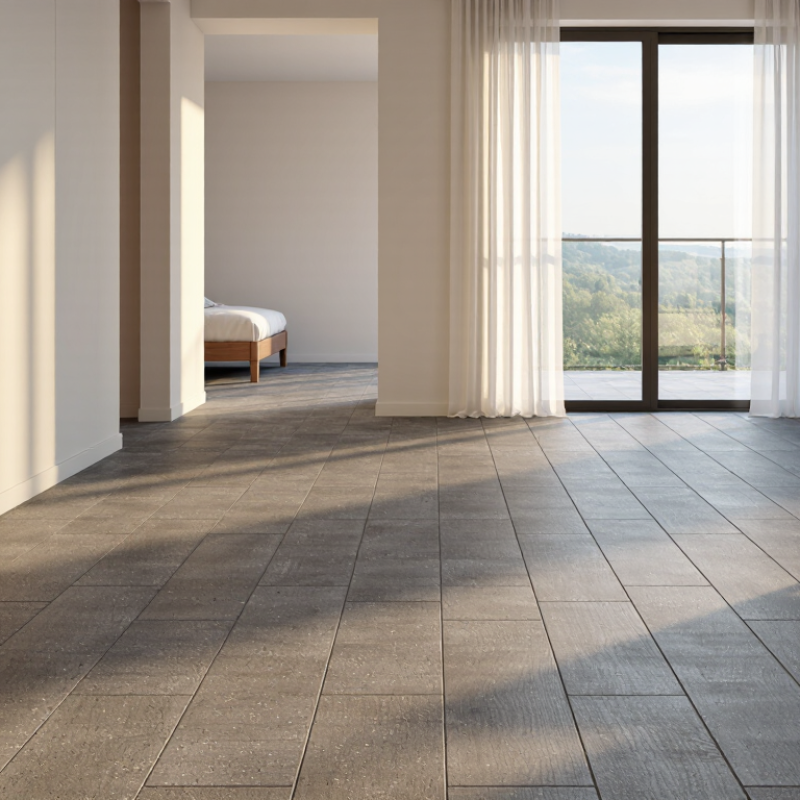
Stone composite flooring is a rigid floor product made with mineral powder, polymer resin, stabilizers, and a decorative surface. Its dense core gives the plank a firm feel underfoot. Many products also include a transparent wear layer and attached underlayment. In site inspections, edge quality often matters more than showroom appearance.
The main type is SPC, or stone plastic composite, which commonly uses limestone powder and PVC. It offers strong dimensional stability and resists everyday moisture. Mineral-core flooring uses a higher mineral content and may feel more solid, but it can be less forgiving over uneven subfloors. Some suppliers also sell hybrid stone-polymer boards with enhanced acoustic layers. These categories overlap, so product labels deserve careful reading.
Grand View Research valued the global flooring market at approximately US$458 billion in 2023. Its report also identified renovation and durable residential materials as important growth factors. That trend explains the interest in rigid composite floors, but growth is not proof of quality. ASTM and ISO test results provide better evidence than marketing language.
Tips: Check the core composition, wear-layer thickness, locking profile, and moisture rating. Ask for test reports, not only sample boards. A thicker plank is not automatically stronger. Compare expansion gaps, subfloor flatness requirements, and room temperature conditions. I would also inspect one installed row before ordering the full quantity. Small defects become obvious near windows.
Evaluate Safety, Sustainability, Installation, and Maintenance Needs
Choosing stone composite flooring in 2026 requires more than comparing colors and prices. Safety should lead the assessment. Check slip resistance data for dry and wet conditions, especially near entrances, kitchens, and bathrooms. Ask for formal testing, not vague “anti-slip” claims. Confirm low emissions, stable surface temperatures, and edge profiles that reduce trips. A sample under bright light can reveal glare and uneven texture.
Sustainability depends on the entire life cycle. Review recycled content, manufacturing disclosures, and end-of-life guidance. A durable floor may create less waste, but only when its core and wear layer remain stable. Measure rooms carefully before ordering. Poor estimates can leave unusable offcuts. That is easy to overlook. I once saw a renovation lose several boxes through rushed cutting plans.
Installation should match the subfloor, room moisture, and expected traffic. The base must be clean, level, and dry. Follow acclimation and expansion requirements. A qualified installer should record moisture readings and explain each preparation step. Maintenance is usually simple: sweep grit, wipe spills quickly, and use neutral cleaners approved for composite surfaces. Avoid abrasive pads and standing water. Inspect joints every few months. Small movement may signal a subfloor problem, not a flooring defect. Keep product documents, test reports, and cleaning instructions. Real homes are messier than showroom tests.
Set a Budget and Verify Product Quality Before Buying
Set a realistic budget before comparing stone composite flooring. Include flooring, underlayment, trims, delivery, installation, and waste. A 5–10% allowance is sensible for cutting and damaged boards. Grand View Research estimated the global stone plastic composite flooring market at about USD 4.18 billion in 2023, with strong growth expected through 2030. That growth creates more choices, but not always better value.
Do not judge quality by thickness alone. Check the wear layer, core density, locking strength, and dimensional stability. Ask for independent test reports, not only product brochures. ASTM F2199 can support dimensional stability claims, while ISO 16000-6 testing can indicate volatile organic compound emissions. Slip resistance and fire-performance reports also matter, especially in kitchens, entrances, and commercial rooms. The exact test method should match your local building requirements.
Measure twice. Do not guess.
A practical budget comparison should calculate cost per installed square metre. A cheaper board may need more leveling work or replacement later. I have found that glossy samples can hide uneven textures under strong lighting. That is an easy mistake. Request a full-size sample, place it beside a window, and inspect the joints after heating and cooling. Product quality still needs verification. Even good specifications cannot fix poor subfloor preparation.

.svg)


