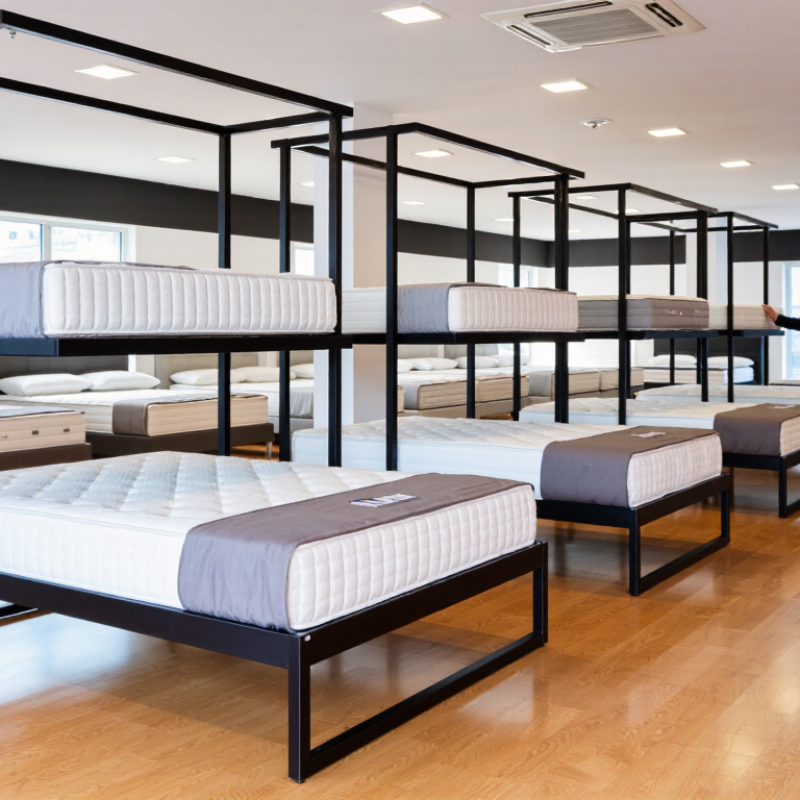
Welded steel frame
Steel uprights, rails, and welded joints; finish may be painted or powder-coated. | Rigid construction suits stable layouts and frequent use. A fixed design can be less convenient to alter than a modular system. | Check the rated load for each shelf or position, weld quality, sharp-edge protection, floor anchoring requirements, and finish condition. | Low to moderate. Some systems allow shelf or rail adjustments, but major layout changes may require new components or professional work. | Moderate | Often low to moderate
Durable construction may reduce replacement needs; repair or refinishing can add cost over time. | Showrooms seeking a robust, long-term layout with limited planned changes. |
Bolted modular steel
Steel frames assembled with bolts, brackets, or adjustable connectors. | Commonly offers a practical balance of rigidity and adaptability. More connections mean more fasteners to inspect and maintain. | Verify connector and fastener ratings, use the specified hardware, tighten connections as directed, and anchor the rack if required by its design. | High. Sections, rails, or shelf positions can often be changed when compatible parts are available. | Moderate | Often low to moderate
Reusable components can limit replacement costs when layouts change; account for added parts and labor. | Retailers expecting store resets, assortment changes, or future expansion. |
Aluminum modular frame
Aluminum profiles joined with mechanical connectors. | Lightweight sections can be easier to move and reconfigure. Performance depends on profile size, connector design, and the complete system’s rating. | Confirm load ratings for the assembled configuration, connector security, bracing, stability, and any anchoring instructions. Do not assume all aluminum frames have the same capacity. | High when the manufacturer supports modular changes and replacement connectors are available. | Moderate to high | Moderate
Reusability may help offset initial cost; specialized connectors or replacement profiles can increase upkeep costs. | Spaces where lightweight handling and frequent layout adjustments matter. |
Wood-and-steel hybrid
Steel supports combined with wood shelves, panels, or decorative cladding. | Offers a furniture-like appearance and can coordinate with showroom finishes. Wood surfaces may show wear and require cleaning or repair. | Confirm that the load-bearing frame—not decorative panels alone—supports the stated load. Check joint security, edge condition, stability, and anchoring requirements. | Low to moderate. Cosmetic panels or shelves may be replaceable, but changes to the overall structure can be less straightforward. | Moderate to high | Moderate to high
Appearance upgrades can increase initial cost; damaged or worn wood components may need replacement. | Showrooms prioritizing a coordinated, residential-style display. |
Custom fixed display
Purpose-designed frame and finishes, often combining metal, wood, or panels. | Can be tailored to a specific room, product range, or customer path. Custom dimensions and finishes may limit reuse elsewhere. | Request documented load limits and installation requirements for the final design. Check stability, anchoring, edges, and any locally applicable safety requirements. | Low. Changes may require custom fabrication, new parts, or installer involvement. | High | Often high
May be worthwhile for a permanent, carefully planned layout, but modifications and relocation can be costly. | Stores with a stable floor plan and specific display or architectural requirements. |

.svg)