| Removing surface debris | Leaf skimmer with telescopic pole | All pool types | Requires only a small storage area; pole length should match pool width | Low; rinse the net after use and inspect the frame | Several times per week during the swimming season | Fine-mesh net, corrosion-resistant pole, secure locking mechanism |
| Cleaning the pool floor | Manual vacuum head and hose | Pools with compatible filtration systems | Needs hose storage and enough deck space for setup | Moderate; clean the vacuum head and backwash or rinse the filter as required | Weekly or when visible dirt accumulates | Hose length, connection compatibility, brush quality, and pool shape |
| Reducing manual cleaning time | Automatic or robotic pool cleaner | Most permanent pools; verify surface and shape compatibility | Requires a dry, protected storage location and nearby power for some models | Low to moderate; empty debris canisters and clean filters regularly | One to three cycles per week, depending on debris levels | Pool dimensions, wall-climbing ability, filter capacity, cable or hose management |
| Brushing walls and steps | Pool brush | Concrete, tile, vinyl, and fiberglass pools with the correct brush type | Compact and easy to store | Low; rinse bristles and allow the brush to dry | Weekly, or more often in areas with algae growth | Soft bristles for vinyl and fiberglass; stronger bristles for durable masonry surfaces |
| Monitoring water balance | Water test strips or liquid test kit | All pools | Needs a cool, dry storage location away from direct sunlight and chemicals | Low; replace expired reagents and keep the container sealed | At least weekly and after heavy rain or unusually high use | Ability to measure pH, sanitizer level, and total alkalinity; clear instructions |
| Improving swimmer safety | Non-slip steps, handrail, and safety equipment | Pools used by children, older adults, or people with limited mobility | Must not obstruct walkways; allow clear access around entry points | Moderate; inspect fixings, surfaces, and rescue equipment regularly | Continuous need; inspect before each swimming session | Stable installation, non-slip surfaces, visible placement, and suitability for users |
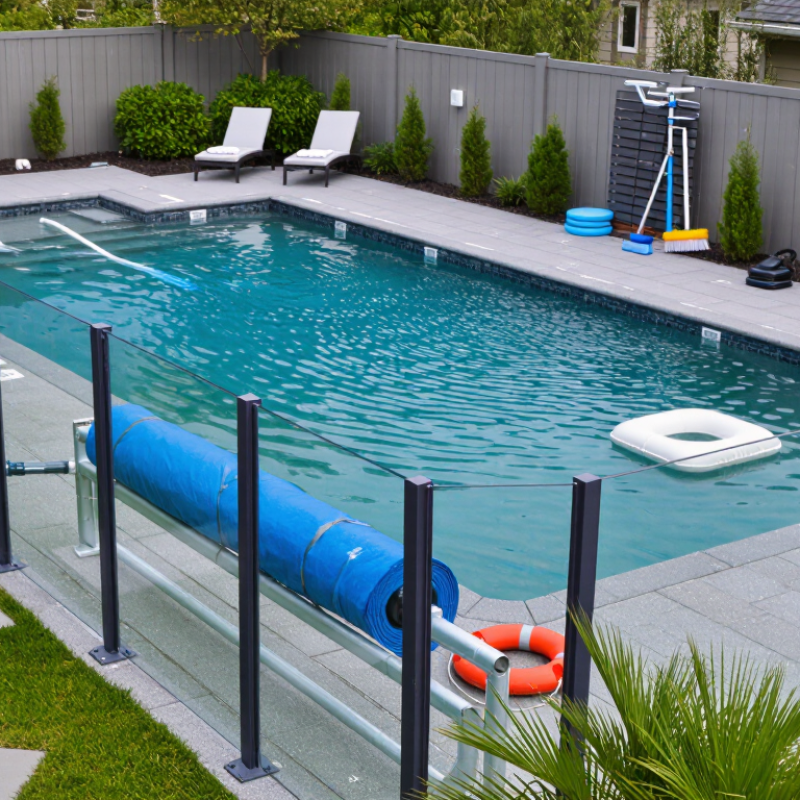
| Protecting the pool when not in use | Pool cover | Most residential pools; select according to pool shape and local conditions | Needs a cover reel or dedicated storage space near the pool | Moderate; remove debris, dry when appropriate, and check for damage | Whenever the pool is unused; especially useful during off-season periods | Correct dimensions, material durability, ease of handling, drainage, and safety design |
| Keeping water comfortable | Solar cover or thermal blanket | Outdoor pools exposed to sunlight and nighttime temperature changes | A reel is recommended for larger pools to prevent folding and deck obstruction | Low to moderate; rinse periodically and protect from prolonged direct exposure when stored | Daily or overnight when the pool is not being used | Pool dimensions, bubble or insulation design, UV resistance, and handling method |
| Organizing small pool areas | Wall-mounted storage rack or compact accessory caddy | Small residential pools and pools with limited deck space | Uses vertical space; keep equipment away from electrical outlets and chemicals | Low; rinse and dry stored tools to reduce corrosion and odor | After every maintenance session | Load capacity, drainage, corrosion resistance, mounting method, and accessibility |
| Reducing evaporation and chemical loss | Fitted cover or automatic cover system | Pools in hot, dry, or windy climates | Automatic systems require equipment clearance; manual covers need reel space | Moderate; inspect tracks, fabric, fasteners, and drainage areas | Whenever the pool is closed | Fit accuracy, wind resistance, operating effort, safety features, and repairability |
| Enhancing relaxation and convenience | Floating drink holder or removable pool lounger | Pools used mainly for leisure and recreation | Avoid oversized items in narrow pools; provide a dry storage area | Low; rinse with fresh water and inspect seams or valves | As needed | Buoyancy, stability, material quality, weight capacity, and ease of cleaning |

.svg)