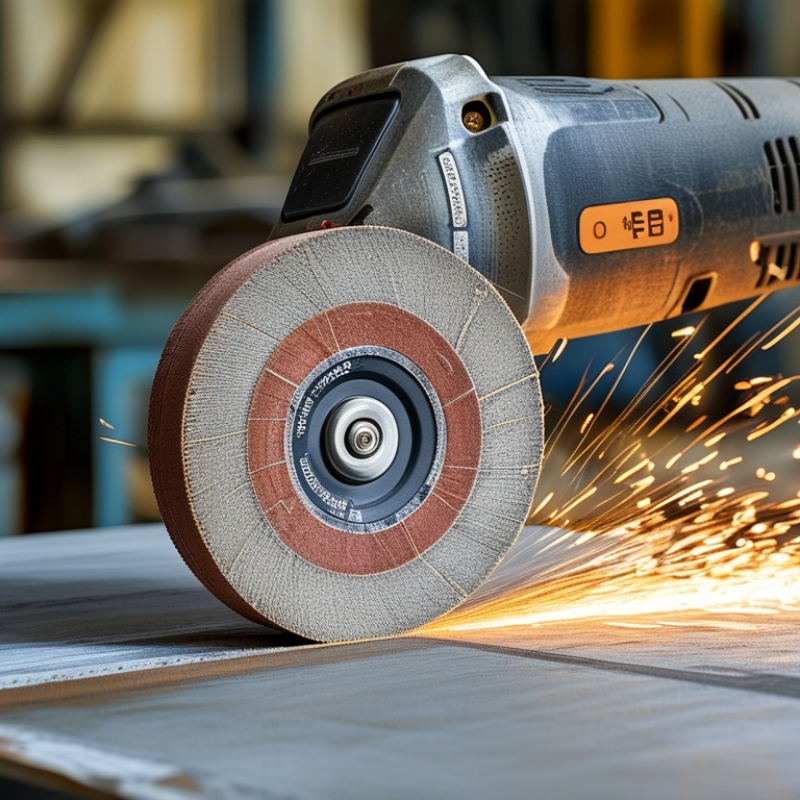
Choosing an abrasive flap disc starts with three practical questions. What size fits the tool? What backing suits the work? Is the disc compatible?
Measure the grinder’s rated diameter and spindle specification before buying. A disc that is too large may exceed the tool’s safe operating limits. A small disc can reach tight corners, but it removes material more slowly. Check the maximum RPM printed on both the tool and disc. Never assume similar-looking discs are interchangeable.
Backing material affects control, durability, and feedback. Fiberglass backing is common for general grinding because it balances strength and flexibility. Plastic backing can feel lighter and may trim more easily near edges. Rigid backing often supports heavier pressure, while flexible backing follows curved surfaces better.
Not universal. In hands-on work, I prefer a stiffer disc for weld blending and a more flexible one for contoured panels. Still, pressure, angle, and heat can change the result.
Compatibility involves more than diameter. Match the disc’s bore, attachment method, abrasive grade, and intended material to the grinder and job. Aluminum, stainless steel, and mild steel may require different abrasive formulations. Using the wrong grade can load the flaps, discolor the surface, or leave a rougher finish than expected.
Inspect the disc for cracks, loose flaps, or moisture damage before use. Wear suitable eye, hearing, hand, and face protection, and follow the manufacturer’s instructions. I have learned that the fastest cut is not always the best finish. A short test pass on scrap metal often exposes a poor match early.

.svg)