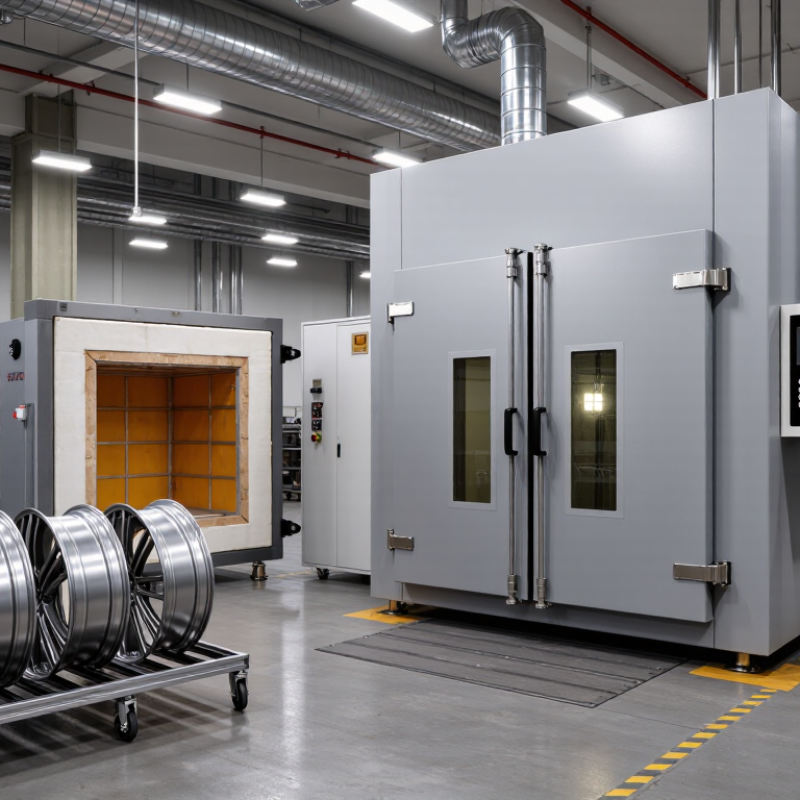
| Batch oven — electric convection | Electric elements heat circulating air, which transfers heat to the wheels and coating. | Low-to-medium production, varied wheel sizes, and shops without gas service. | Straightforward temperature control; no combustion exhaust in the workspace; flexible batch loading. | Warm-up and recovery can take time. Electricity cost and available supply may affect operating economics. | A practical choice for variable workloads and smaller production runs. |
| Batch oven — gas-fired convection | A gas burner heats the oven air, which is circulated around the load. | Medium-to-high batch volumes where natural gas or another approved fuel is available. | Can provide rapid heat-up and recovery; may have lower energy costs where fuel pricing is favorable. | Requires suitable fuel, ventilation, combustion safeguards, and installation that meets local codes. | A strong option for regular batch production and higher oven utilization. |
| Infrared (IR) oven | Infrared emitters transfer radiant energy to exposed surfaces; some systems combine IR with air circulation. | Short-cycle processes and coatings or line layouts validated for radiant heating. | Fast response and localized heating can reduce the time needed to bring exposed areas up to temperature. | Wheel spokes, recesses, and shadowed areas may heat differently. Validate the complete wheel, not just the visible surface. | Best when wheel geometry and coating performance have been tested with the specific IR setup. |
| Hybrid IR and convection oven | IR provides rapid radiant heating while forced hot air helps heat less-exposed areas and maintain oven conditions. | Production lines needing a balance of faster heating and more complete heat distribution. | Combines quick response with air circulation; can be configured around specific wheel and coating requirements. | More complex controls and system design; performance depends on emitter placement, airflow, and load spacing. | Consider for higher-throughput lines after process trials confirm uniform cure. |
| Continuous conveyor oven — convection | Wheels move through heated zones on a conveyor, with airflow and line speed controlling the thermal process. | High, consistent production volumes with a predictable product mix. | Supports repeatable throughput and can integrate with upstream and downstream coating equipment. | Needs floor space and coordinated line operation. Changeovers and low-volume operation may be less efficient. | Suitable for established production lines with steady demand. |

.svg)