| Tank Shell Material | Carbon steel | Commonly engineered for hot asphalt service; operating temperatures are often approximately 150–190°C (302–374°F), subject to the asphalt grade and design. | High strength, widely available plate grades, good weldability, and comparatively favorable capital cost. | Requires corrosion protection where moisture, salts, or contaminated feedstock may be present. Internal and external surfaces should be inspected periodically. | Best general-purpose choice for most heated asphalt storage applications when correctly designed and maintained. |
| Tank Shell Material | Stainless steel | Suitable for applications requiring improved resistance to oxidation or contamination; allowable temperature depends on the selected grade and design code. | Excellent corrosion resistance, easier cleaning, and lower risk of product contamination in specialty applications. | Higher material and fabrication cost. Thermal expansion, welding procedures, and compatibility with the asphalt formulation must be considered. | Consider for chemically aggressive environments, frequent product changes, or strict cleanliness requirements. |
| Tank Shell Material | Aluminum | Lightweight construction; suitability depends strongly on alloy, wall temperature, support design, and the asphalt operating temperature. | Low density and good natural resistance to atmospheric corrosion. | Generally not preferred for continuous high-temperature asphalt storage because strength decreases as temperature rises and compatibility must be carefully verified. | Use only after a documented engineering review confirms temperature, load, welding, and chemical compatibility requirements. |
| Tank Configuration | Vertical fixed-roof tank | Efficient footprint for larger capacities; commonly paired with a heated bottom or internal heating system. | Good capacity-to-footprint ratio and effective separation of storage, heating, and loading areas. | Requires suitable foundation design, access platforms, roof venting, level instrumentation, and safe maintenance access. | Suitable for high-volume, long-duration storage where site space and foundation capacity are available. |
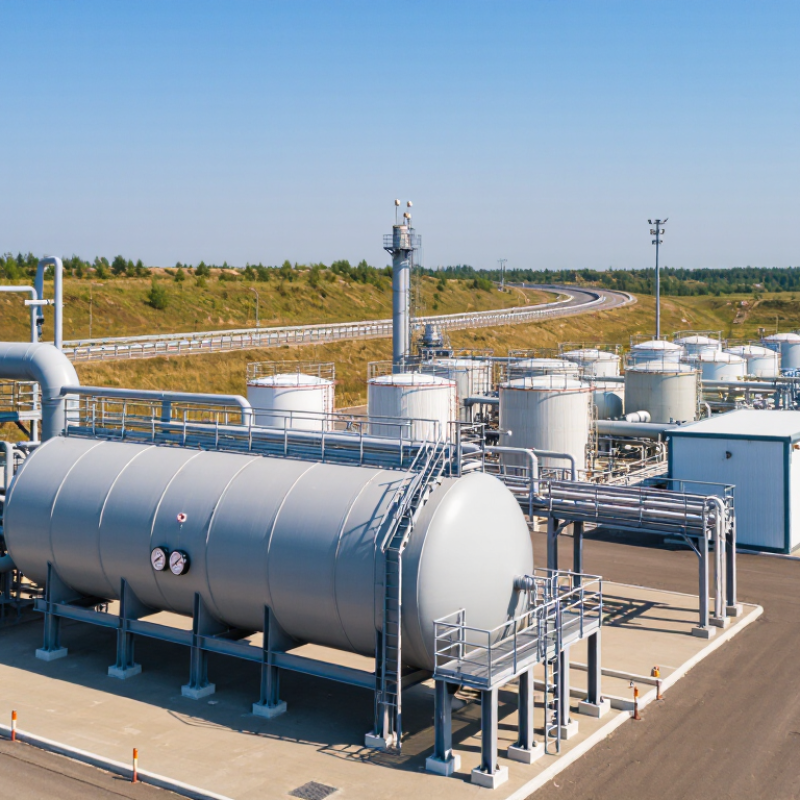
| Tank Configuration | Horizontal cylindrical tank | Common for smaller or medium storage volumes and mobile or modular layouts. | Lower overall height, easier access for some installations, and flexible placement near loading or production equipment. | Uses more ground area per unit of storage and may require careful support, saddles, drainage, and heat-distribution design. | Useful where height restrictions, transport requirements, or phased capacity expansion are important. |
| Insulation System | Mineral wool or rock wool with weatherproof cladding | Typical thermal conductivity is approximately 0.035–0.045 W/m·K near room temperature; service temperature depends on the product and system design. | Non-combustible insulation, good fire performance, and suitable for high-temperature industrial equipment when properly installed. | Can absorb moisture if the cladding or joints fail. Compression, water ingress, and damaged jacketing reduce thermal performance. | Strong default option for high-temperature asphalt tanks where fire resistance and robust industrial service are priorities. |
| Insulation System | Fiberglass insulation with metal cladding | Typical thermal conductivity is approximately 0.032–0.044 W/m·K near room temperature; maximum service temperature varies by product. | Lightweight, widely available, and effective when kept dry and correctly supported. | The binder and facing system must be rated for the tank surface temperature. It is less tolerant of compression and moisture damage than a well-protected mineral-wool system. | Appropriate when the selected product has a verified temperature rating and the outer weather barrier is reliably sealed. |
| Insulation System | Rigid calcium silicate insulation | Typical thermal conductivity is approximately 0.05–0.08 W/m·K near room temperature; designed for high-temperature industrial service. | Non-combustible, rigid, and capable of maintaining shape around high-temperature equipment. | More brittle than fibrous insulation and can crack under impact, vibration, or poor installation. Joints require careful detailing. | Consider for high-temperature zones, supports, penetrations, or locations exposed to mechanical damage. |
| Insulation System | Polyurethane or polyisocyanurate foam | Typical thermal conductivity is approximately 0.022–0.030 W/m·K near room temperature, but continuous-use temperature limits are product-specific. | Low thermal conductivity and relatively thin insulation for a given heat-loss target. | Many foam systems have lower continuous-temperature limits than hot asphalt service. They must not be used near hot surfaces unless the complete system is specifically rated and protected. | Use only in approved low-temperature zones or with a verified high-temperature barrier and documented manufacturer limits. |
| Heating System | Thermal-oil heating coils or external heat exchanger | Provides controlled indirect heating and can reduce localized hot spots when properly sized and circulated. | Good temperature uniformity, controllability, and suitability for temperature-sensitive asphalt products. | Requires a thermal-oil heater, circulation pump, expansion provisions, filtration, and leak detection. | Preferred where precise temperature control and low risk of direct-heater hot spots are required. |
| Heating System | Electric heating elements or electric immersion heaters | Heating capacity is selected according to tank volume, insulation, ambient temperature, turnover, and required heat-up time. | Accurate control, no combustion products at the tank, and straightforward automation. | Requires suitable electrical classification, over-temperature protection, element coverage, and prevention of exposed hot elements. | Suitable where reliable electrical supply and compliant hazardous-area design are available. |
| Temperature Control | Independent high-temperature cut-out | A separate temperature sensor and shutdown circuit should be independent of the normal process controller. | Helps prevent overheating, accelerated oxidation, product degradation, and damage to insulation or heating equipment. | Sensor placement, calibration, proof testing, and manual reset requirements must be defined in the control philosophy. | Essential for heated asphalt tanks, especially when unattended operation or automatic heating is used. |
| Level and Overfill Protection | Continuous level measurement plus independent high-high level alarm | May combine radar, guided-wave radar, load cells, or other suitable technology with an independent alarm or shutdown. | Reduces spill risk during transfer and provides operators with real-time inventory information. | Sensor selection must account for high temperature, vapor, buildup, foam, and calibration access. | Use two independent layers of protection for high-consequence filling operations. |
| Venting | Atmospheric vent with correctly sized emergency venting | Normal and emergency vent capacity must be calculated for filling, emptying, heating, fire exposure, and other credible scenarios. | Prevents excessive vacuum or pressure and helps protect the tank shell from structural damage. | Vent outlets must be routed to a safe location and protected from blockage, rain entry, and unauthorized modification. | Required for safe tank operation; sizing should follow the applicable tank and fire-safety standards. |
| Fire and Personnel Safety | Guarding, insulation burn protection, emergency stop, spill containment, and safe access | Safety systems should be selected through a site hazard assessment and applicable local requirements. | Reduces burn exposure, improves emergency response, and limits environmental impact from leaks or overfills. | Safety equipment does not replace operating procedures, training, inspection, and preventive maintenance. | Treat these features as part of the tank system rather than optional accessories. |
| Inspection and Maintenance | Inspection ports, drains, sample points, thickness monitoring, and documented maintenance access | Inspection intervals depend on tank design, service severity, corrosion rate, operating history, and local regulations. | Supports early detection of corrosion, leaks, insulation damage, buildup, and instrument failure. | Access points must be designed to avoid unnecessary exposure to hot asphalt and should include isolation and lockout provisions. | Choose a design that makes routine inspection practical; inaccessible equipment is more likely to be neglected. |

.svg)