Food Safety Insights

In Eagle’s Advanced Insights Blog, experts share their know-how by keeping you up-to-date with the latest trends to ensure your inspection equipment keeps your products safe. Eagle is an industry leader when it comes to performance and innovation, and we’ll share the news that’s important to you to enhance your quality assurance program.

Suggest topic you would like to see at:

sale@generalmachinery.org

How to Choose the Right Bus Handrail for Global Sourcing

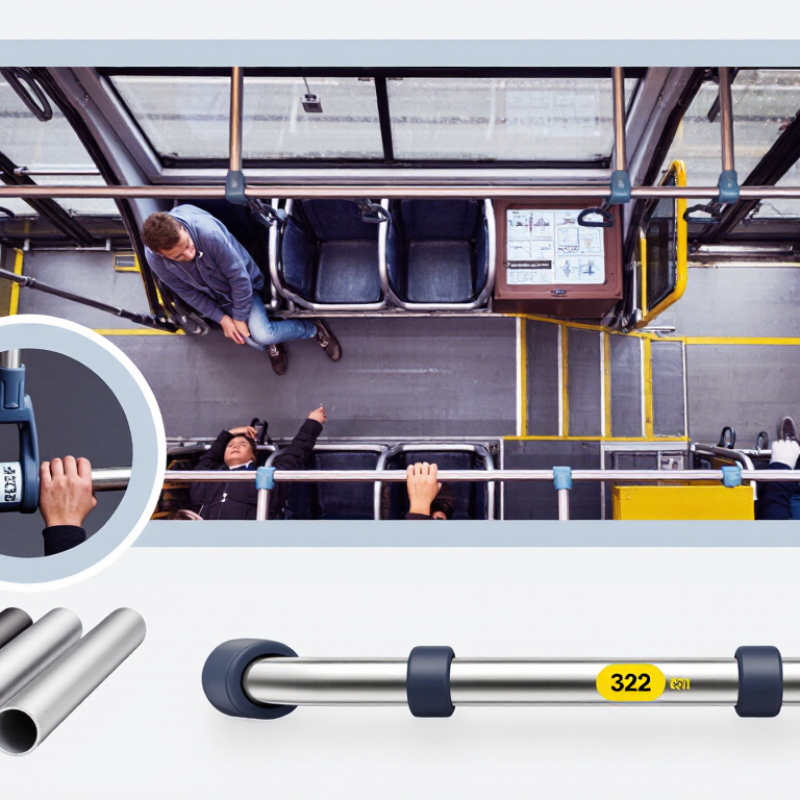
Choosing the right Bus Handrail for global sourcing is not merely a matter of selecting a polished metal tube. It affects passenger stability, vehicle safety, installation speed, and long-term maintenance. A suitable handrail should feel secure in a crowded aisle, even when the bus turns sharply or stops suddenly. As transit ergonomics expert Dr. John J. Fruin noted, “The handrail is a critical element in maintaining passenger stability.” This principle remains practical today.

A reliable sourcing process begins with the operating environment. City buses may face rain, humidity, road salt, dust, or extreme temperature changes. Stainless steel can resist corrosion, while powder-coated aluminum may reduce weight. However, material choice alone does not prove quality. Check the tube diameter, wall thickness, surface smoothness, mounting strength, and grip comfort. A 32-millimeter diameter often suits adult passengers, but actual user testing remains valuable. Children, older adults, and passengers wearing gloves may experience the product differently.

Supplier evaluation also requires physical evidence. Request samples, load-test records, dimensional drawings, surface-finish details, and traceable material documents. Inspect welded joints closely. Small rough edges can become uncomfortable after thousands of daily contacts. Confirm packaging quality, replacement availability, and communication during production. Global sourcing sounds efficient. It can also hide weak assumptions. A supplier may meet the drawing but miss the passenger experience. Another may offer a low price while creating costly installation delays. The best decision balances safety, ergonomics, durability, compliance, and total lifecycle cost. Some choices will remain imperfect, so record the reasoning and review it after field use.

How to Choose the Right Bus Handrail for Global Sourcing

Define Grip Geometry with ADA’s 32–51 mm Diameter and 38 mm Clearance

How to Choose the Right Bus Handrail for Global Sourcing

Grip geometry should be defined before comparing suppliers. The U.S. Access Board’s ADA 2010 Standards specify a circular handrail diameter of 32–51 mm. They also require at least 38 mm of clearance between the rail and adjacent surfaces. These measurements support secure gripping, especially for passengers with limited hand strength. A 40 mm tube often feels balanced, but passenger feedback may challenge that assumption.

For global sourcing, place these dimensions directly on the technical drawing. Specify finished diameter, not only tube diameter. Powder coating, rubber sleeves, and weld seams can change the final grip. Use a calibrated caliper during inspection. Also check the 38 mm clearance near brackets, windows, and seat backs. The Transit Cooperative Research Program highlights frequent contact and high passenger turnover in bus interiors, making surface durability and cleanability practical purchasing concerns. ADA remains a useful benchmark, not a universal global requirement. Local accessibility rules still need verification.

Tips: Request first-article samples from each supplier. Test them with wet and gloved hands. Measure the coated rail at several points. Do not trust one reading. A small tolerance error can reduce clearance or create an uncomfortable grip. Include a drawing revision number, inspection method, and acceptance range in every purchase order.

Map Regional Compliance Across ADA, UNECE R107, and Local Transit Rules

Global bus sourcing begins with regional compliance, not appearance. UN DESA’s World Urbanization Prospects projects that 68% of people will live in urban areas by 2050. Transit interiors will face heavier, more varied use. ADA 49 CFR 38.23 specifies handrail diameters of 1.25–1.5 inches and at least 1.5 inches of clearance. These measurements should guide drawings, tooling, and inspection gauges. Numbers matter.

UNECE Regulation No. 107 focuses on safe access, passenger movement, and interior fittings, but national transit authorities may add stricter requirements. Check doorway geometry, emergency egress, accessible seating, surface grip, and fire performance for every destination. Local rules can change the acceptable height, bend radius, anchorage, or load test. A spreadsheet can still lie. Request clause-level evidence from suppliers, including material certificates, pull-test records, corrosion testing, and dimensional reports. The WHO Global Status Report on Road Safety 2023 records approximately 1.19 million annual road deaths, reinforcing the need to treat passenger stability as a safety issue, not a cosmetic feature. Specify rounded edges, consistent grip texture, and secure fasteners. Do not assume one design fits all markets. A practical mistake is copying an ADA-compliant drawing into a UNECE project without reviewing local approval procedures. Independent validation remains valuable, especially when regional interpretations are unclear.

Select 304 or 316 Stainless Steel Using ASTM A240 Material Data

How to Choose the Right Bus Handrail for Global Sourcing

A bus handrail faces sweat, cleaning chemicals, rain, and road salt. Material choice should begin with verified chemistry, not appearance. ASTM A240/A240M data commonly lists 304 stainless steel with about 18–20% chromium and 8–10.5% nickel. Grade 316 usually contains 16–18% chromium, 10–14% nickel, and 2–3% molybdenum. That molybdenum improves resistance to chloride-related pitting. It does not make the handrail corrosion-proof.

For urban routes with ordinary humidity, 304 can offer a practical balance between cost and durability. Coastal fleets, winter-salted roads, and poorly rinsed interiors create a stronger case for 316. The AMPP International Measures of Prevention, Application, and Economics of Corrosion Technologies study estimated global corrosion costs at approximately 2.5 trillion US dollars annually, or 3.4% of global GDP. A small material upgrade may prevent repeated replacement and passenger complaints.

Do not stop at the certificate. Ask for heat numbers, chemical analysis, surface finish, weld inspection, and passivation records. ASTM A240 covers flat-rolled stainless products, so confirm that the finished tube or formed rail meets the correct product standard too. This detail is easy to miss. A polished 304 rail can look excellent during factory inspection, yet chloride exposure may reveal pits months later. I would also question universal 316 recommendations. In low-salt inland service, they may add cost without meaningful benefit. Local water quality, cleaning routines, and maintenance records should influence the final specification.

How to Choose the Right Bus Handrail for Global Sourcing – Select 304 or 316 Stainless Steel Using ASTM A240 Material Data

Selection Dimension AISI Type 304 Stainless Steel AISI Type 316 Stainless Steel Sourcing Guidance for Bus Handrails
ASTM A240 material designation UNS S30400; chromium-nickel austenitic stainless steel UNS S31600; chromium-nickel-molybdenum austenitic stainless steel Request the applicable ASTM A240 specification and the heat number on the material test certificate.
Carbon, maximum 0.07% by mass 0.07% by mass Both grades are commonly suitable for formed and welded handrail components when fabrication controls are followed.
Chromium, by mass 17.5–19.5% 16.0–18.0% Chromium supports the passive corrosion-resistant surface layer of stainless steel.
Nickel, by mass 8.0–10.5% 10.0–14.0% Nickel stabilizes the austenitic structure and contributes to ductility and formability.
Molybdenum, by mass Not specified as an alloying requirement 2.0–3.0% The molybdenum addition generally gives 316 better resistance to chloride-related pitting and crevice corrosion.
Manganese, maximum 2.00% 2.00% Verify actual heat chemistry rather than relying only on the nominal grade designation.
Phosphorus, maximum 0.045% 0.045% Use the certificate values for incoming-quality inspection.
Sulfur, maximum 0.030% 0.030% Low sulfur supports general corrosion performance; surface contamination must still be prevented during fabrication.
Tensile strength, minimum 515 MPa (75 ksi) 515 MPa (75 ksi) ASTM A240 minimum mechanical requirements should be checked against the ordered product form and applicable edition.
Yield strength, minimum 205 MPa (30 ksi) 205 MPa (30 ksi) For structural or passenger-load requirements, complete the handrail design using the applicable transport regulations and engineering calculations.
Elongation in 50 mm, minimum 40% 40% Both grades provide substantial ductility for tube bending, provided the selected temper, wall thickness, tooling, and bend radius are appropriate.
Typical corrosion environment Interior dry or moderately humid areas; ordinary urban and industrial exposure Chloride-bearing, coastal, marine, de-icing-salt, or frequently washed environments Choose 316 when chloride exposure, crevices, water retention, or aggressive cleaning conditions are significant.
Welded handrail considerations Use compatible filler metal and remove heat tint after welding when corrosion appearance and performance are important. Use compatible 316-series welding consumables; clean and passivate the heat-affected surface as required. Prevent carbon-steel contamination from tools, worktables, wire brushes, and storage racks.
Surface and hygiene requirements Smooth brushed or polished surfaces can support routine cleaning in passenger areas. Offers additional corrosion margin for wet, salty, or chemically cleaned passenger-contact areas. Specify surface finish, roughness target, weld blending, edge condition, and cleaning method separately from the steel grade.
Recommended default choice Preferred for standard interior applications where chloride exposure is limited. Preferred for coastal, high-salt, wet, or chemically demanding operating conditions. Make the final decision using the operating environment, required service life, fabrication process, local standards, and total lifecycle cost.

Technical note: The chemistry and mechanical values shown are commonly specified ASTM A240 requirements for Types 304 and 316 in the annealed condition. Confirm the current ASTM A240 edition, product form, thickness range, test method, surface condition, and heat-treatment requirements in the purchase specification and material test certificate.

Compare Protective Finishes Through ASTM B117 Salt-Spray Test Results

How to Choose the Right Bus Handrail for Global Sourcing

A bus handrail faces sweat, rainwater, road salt, and repeated contact. Finish selection needs evidence, not attractive samples. ASTM B117 exposes coated panels to a controlled salt fog, commonly using a 5% sodium chloride solution at 35°C. Test hours reveal corrosion resistance under stress. They do not equal outdoor service years.

Compare finishes by corrosion creep, blistering, rust spots, and coating adhesion. Zinc-plated steel may protect cut edges differently from powder-coated steel. Stainless steel can resist corrosion well, but surface grade and fabrication quality still matter. Record the first red rust hour and the creepage width from each scribe. Small details count.

One test is not enough. ASTM B117 warns against direct service-life conversion, so procurement teams should avoid claims such as “500 hours equals five years.” The NACE IMPACT study estimated global corrosion costs at about 3.4% of global GDP, showing why weak assumptions become expensive. AMPP guidance also stresses combining laboratory testing with field exposure and material review. I would request three samples per finish, inspect them weekly, and photograph every defect. Real buses are messier than chambers. That gap deserves reflection.

How to Choose the Right Bus Handrail for Global Sourcing

Comparing Protective Finishes Through ASTM B117 Salt-Spray Testing

The chart presents representative neutral salt-spray exposure ranges commonly used for preliminary sourcing comparisons of steel protective finishes. ASTM B117 defines the test environment and procedure, but it does not establish one universal pass/fail duration for every coating. Actual corrosion resistance depends on coating thickness, pretreatment, edge protection, substrate condition, and the supplier’s test criteria. Always request the original laboratory report and confirm the required exposure time before approving a bus handrail finish.

Qualify Global Suppliers with ISO 9001 and Lot-Based Inspection Data

Choosing a bus handrail for global sourcing requires more than comparing steel grades and unit prices. Supplier qualification should begin with evidence, not polished presentations. Ask for the ISO 9001 certificate, its scope, expiry date, and issuing body’s details. Check whether it covers fabrication, welding, surface treatment, and inspection. An impressive certificate can still be irrelevant. Request process maps, calibration records, corrective-action logs, and training records. These documents show whether quality is managed daily or only described during an audit.

Lot-based inspection data adds practical proof. For each production lot, request the sample size, inspection method, acceptance criteria, and actual results. Useful records may include handrail diameter, wall thickness, weld continuity, coating thickness, and pull-test performance. Photos with lot numbers and timestamps improve traceability. Compare several lots, not one perfect report. Variation matters. A supplier may pass dimensional checks while showing inconsistent weld finishing. That weakness can create installation delays, rework, or passenger-contact concerns. Ask how failed samples are isolated and how corrective actions are verified. Do not accept only a pass or fail statement.

A practical review combines documents with a witnessed inspection. Select samples from different cartons, then match markings to the inspection records. Check drilled holes, end caps, surface smoothness, and packaging protection. I would also record small deviations instead of hiding them. They may not stop a shipment, but they reveal process control. Sampling has limits. One missed defect can change the whole assessment. That is why supplier approval should remain conditional until repeated lots show stable results.

Any Questions? We Are Here for You

Contact Us

Contact Us

Request information

Ask us a question
Service Support

Service Support

Available 24 hours a day, 7 days a week.

Get in Touch
Find a representative

Find a representative

Contact your local representative

View Locations