Food Safety Insights

In Eagle’s Advanced Insights Blog, experts share their know-how by keeping you up-to-date with the latest trends to ensure your inspection equipment keeps your products safe. Eagle is an industry leader when it comes to performance and innovation, and we’ll share the news that’s important to you to enhance your quality assurance program.

Suggest topic you would like to see at:

sale@generalmachinery.org

How to Choose the Right HDPE Floater in 2026?

Choosing the right Hdpe Floater in 2026 requires more than comparing price, dimensions, and buoyancy claims. The decision affects stability, maintenance, safety, and service life. A floater supporting a small walkway faces different demands from one carrying a marina platform or utility line. Site conditions matter. So do loading patterns.

Grand View Research reported that the global high-density polyethylene market was valued at approximately USD 79.47 billion in 2023. Its analysis also projects continued growth through 2030. This expansion reflects HDPE’s strength, chemical resistance, weldability, and broad industrial use. PlasticsEurope’s Plastics—The Fast Facts 2024 reported 413.8 million tonnes of global plastics production in 2023. These figures show scale, but they do not prove that every HDPE product suits marine service.

A reliable selection process should examine resin grade, wall thickness, foam or air-cell design, UV stabilization, connectors, and reserve buoyancy. PIANC guidance on floating structures stresses the importance of environmental loads, operational conditions, and stability assessment. Wave action, tidal movement, current speed, impact, and sunlight can change performance significantly. Ask for test results, not attractive promises. Check buoyancy after expected loads, not only empty-unit performance. Inspect welds and attachment points closely.

Small details matter.

For example, a dark, sun-heated platform may expand more than expected. A crowded dock may experience uneven loading near one corner. My first specification may still miss local wave behavior or seasonal debris impact. That is why supplier drawings, site measurements, and independent engineering review remain valuable. The best Hdpe Floater is not simply the largest or cheapest option. It is the one matched carefully to real loads, exposure, inspection routines, and future expansion.

How to Choose the Right HDPE Floater in 2026?

Understanding HDPE Floater Types and Their Main Applications

How to Choose the Right HDPE Floater in 2026?

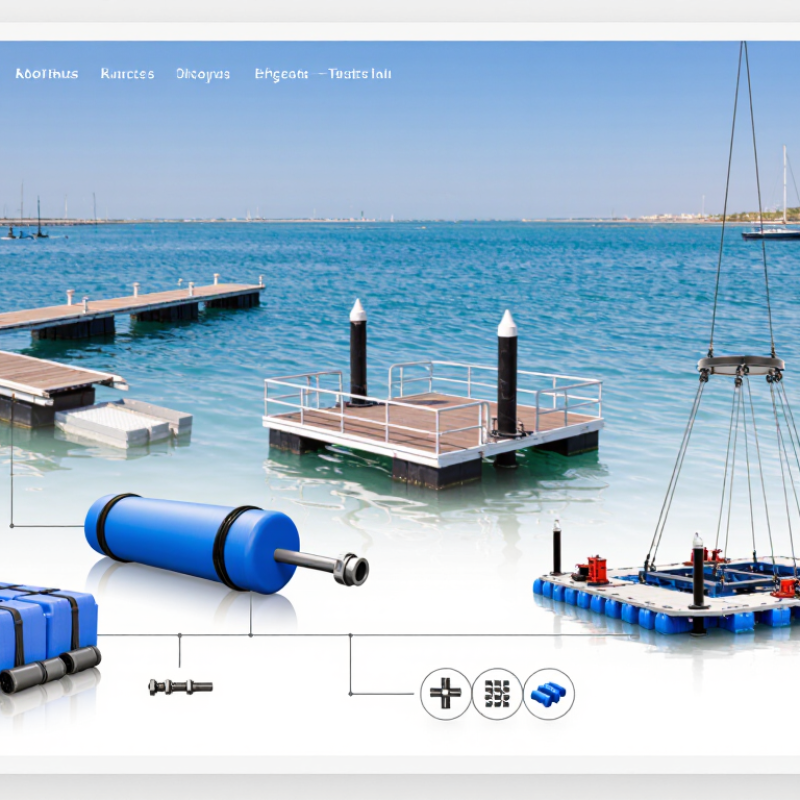
HDPE floaters come in several practical forms. Modular cube floaters suit docks, walkways, and temporary work platforms. Their interlocking edges allow flexible layouts and easier replacement. Cylindrical drum floaters provide stable buoyancy for pipes, cables, and small aquaculture structures. Pipe floaters are useful when long, continuous support is required. They often protect floating pipelines from direct contact with water.

Application conditions should guide the selection. A marina needs strong connectors and a comfortable walking surface. Aquaculture systems require smooth surfaces and easy cleaning. Floating solar platforms need higher stability, controlled spacing, and resistance to long-term sunlight exposure.

For maintenance platforms, consider handrails, access points, and equipment weight. Do not judge capacity by appearance alone.

Check buoyancy, freeboard, wall thickness, UV resistance, and operating temperature. Calculate the total load, including people, tools, waves, and possible water absorption. A safety margin is essential.

Field inspections often find damaged connectors before floater bodies fail. That detail matters. I have seen designs focus heavily on buoyancy while ignoring movement between modules. That mistake can increase wear and discomfort.

Also, no single floater type fits every project. Site measurements, wave conditions, and maintenance habits may change the final choice. A prototype section can reveal problems that drawings miss.

Assessing Buoyancy, Load Capacity, and Stability Requirements

How to Choose the Right HDPE Floater in 2026?

Choosing an HDPE floater starts with buoyancy, not appearance. HDPE has a density of roughly 0.94–0.97 g/cm³, according to PlasticsEurope material data. Water provides about 1,000 kg of buoyant force per cubic metre. However, the floater must support its own mass, frames, decking, equipment, and users. A useful field estimate is: net buoyancy equals displaced water weight minus total system weight. Keep reserve buoyancy available. PIANC Report No. 145 recommends evaluating operational loads, environmental actions, and service conditions together. This matters when waves lift one side of a platform. Uneven loading can reduce freeboard quickly.

Load capacity should include both permanent and temporary loads. Consider people gathering near edges, stored equipment, and maintenance tools. Apply a suitable safety factor after checking local engineering requirements. Stability also depends on width, connector stiffness, water depth, and wind exposure. The U.S. Army Corps of Engineers Coastal Engineering Manual highlights wave action, current, and wind as key floating-structure design factors. A narrow floater may pass a static test but feel unstable during boarding. That detail is easy to underestimate.

Tips: Measure the real load path, not only the floater’s advertised capacity. Test one loaded module before building a full system. Record freeboard at several points. If one corner sits low, the design needs review. Do not rely on buoyancy figures alone. Freshwater and seawater conditions also deserve separate checks. Research reports offer useful baselines, but site measurements remain essential.

Comparing HDPE Materials, Durability, and Environmental Resistance

How to Choose the Right HDPE Floater in 2026?

HDPE floaters should be judged by material quality, not appearance alone. Virgin HDPE usually offers consistent density, strength, and weld performance. Recycled HDPE can reduce environmental impact, but its quality may vary between suppliers. Ask for material test data, melt flow information, and ultraviolet stabilizer details. A bright surface proves very little.

Durability depends on wall thickness, internal structure, connection points, and manufacturing control. Inspectors should check weld seams for uneven beads, pinholes, and weak corners. Abrasion resistance matters near rocky shores or busy docking areas. In cold conditions, HDPE can become less flexible. In extreme heat, expansion may stress bolts and fittings. Small design details matter.

Environmental resistance is equally important. HDPE resists saltwater, moisture, and many common chemicals, making it suitable for marinas and aquaculture environments. However, prolonged sunlight can degrade untreated material. UV protection is essential. Temperature cycling, floating debris, and repeated impact also deserve attention. I would not choose a floater from a brochure alone. Request buoyancy calculations, load testing, and maintenance guidance. Some specifications may look impressive but omit connection strength. That omission should raise questions. A practical inspection plan should include seasonal checks, surface wear measurements, and prompt repair of damaged fittings.

How to Choose the Right HDPE Floater in 2026? - Comparing HDPE Materials, Durability, and Environmental Resistance

Comparison Dimension Standard UV-Stabilized HDPE High-Performance PE100 HDPE Rotomolded HDPE Floater Foam-Filled HDPE Floater Practical Selection Guidance
Typical Material Structure Single-wall or double-wall polyethylene shell with UV stabilizers. High-density polyethylene formulated for higher stress-crack resistance and pressure performance. Seamless hollow shell produced by rotational molding, normally with consistent wall thickness. HDPE outer shell combined with closed-cell foam filling for additional buoyancy security. Choose the construction according to load, impact exposure, maintenance access, and consequences of puncture.
Density Approximately 0.94–0.97 g/cm³. Approximately 0.94–0.97 g/cm³. Approximately 0.94–0.97 g/cm³ for the polyethylene shell. Approximately 0.94–0.97 g/cm³ for the shell; the complete unit is lighter than water because of the foam core. All listed HDPE shells are less dense than water and can provide positive buoyancy when properly designed.
Typical Tensile Strength at Yield Approximately 20–30 MPa, depending on grade and processing. Approximately 20–30 MPa, depending on the specified PE100 compound. Approximately 20–30 MPa for the molded material, subject to wall thickness and molding quality. Approximately 20–30 MPa for the shell; foam properties must be evaluated separately. Do not select by tensile strength alone. Wall thickness, ribs, welds, fittings, and load distribution are equally important.
Impact Resistance Good
Resists ordinary handling and moderate contact with floating structures.
Very Good
Suitable for demanding service when the grade and design are correctly specified.
Very Good
Seamless construction reduces the number of potential weak points.
Very Good
The foam can limit water ingress and preserve shape after localized shell damage.
For wave action, vessel contact, or frequent handling, prioritize impact-tested designs and protected connection points.
Resistance to Stress Cracking Good
Performance depends strongly on resin quality, residual stress, and chemical exposure.
Excellent
PE100 materials are designed for high resistance to slow crack growth in pressure applications.
Good
Rotational molding can produce durable parts, but sharp corners and uneven walls should be avoided.
Good
Shell formulation and manufacturing quality remain the primary factors.
For long-term marine service, request slow-crack-growth data or an applicable material standard from the supplier.
UV and Solar Resistance Good
Requires carbon black or another verified UV-stabilization system for outdoor exposure.
Excellent
When the compound includes proven UV stabilization and is intended for outdoor use.
Good
Color and stabilizer selection are important because the entire shell is exposed to sunlight.
Good
HDPE shell needs UV protection; foam performance should also be verified after prolonged exposure.
For permanent outdoor use, specify UV-stabilized material and avoid unprotected natural or translucent polyethylene.
Saltwater and Freshwater Resistance Excellent
HDPE generally has very low water absorption and good resistance to saltwater.
Excellent
Suitable for continuous contact with freshwater and seawater under normal conditions.
Excellent
Seamless shells help reduce pathways for water penetration.
Excellent
Closed-cell foam can provide additional protection against waterlogging if the shell remains intact.
Check fasteners, inserts, hinges, and welds separately because these components may corrode even when HDPE does not.
Chemical Resistance Good
Resistant to many dilute acids, alkalis, salts, and water-based chemicals.
Very Good
Generally suitable for a broad range of aqueous environments.
Good
Depends on the specific chemical, temperature, concentration, and exposure duration.
Moderate to Good
The shell may resist chemicals while the foam, adhesive, or fittings may have different limits.
Confirm compatibility before exposure to aromatic hydrocarbons, chlorinated solvents, strong oxidizers, or high temperatures.
Water Absorption Very Low
HDPE typically absorbs less than 0.01% water by weight in standard short-term tests.
Very Low
Comparable to other well-processed HDPE compounds.
Very Low
Seamless construction helps maintain low water uptake.
Low
Closed-cell foam reduces water absorption, but damaged shells and joints must be repaired.
Low water absorption helps preserve buoyancy and dimensional stability, but it does not replace inspection of cracks and fittings.
Operating Temperature Commonly suitable for approximately −40°C to +60°C, subject to design and load. Commonly suitable for approximately −40°C to +60°C, subject to the compound and application. Usually suitable within a similar range, but wall thickness and molded-in stresses affect performance. Shell may tolerate similar temperatures; foam and adhesive limits must be checked separately. Reduce mechanical loads at elevated temperatures and verify the lowest service temperature for cold regions.
Buoyancy Security After Local Damage Moderate
A hollow chamber can lose buoyancy if punctured or flooded.
Moderate
Material strength does not prevent buoyancy loss after a large breach.
Moderate
Seamless construction lowers leak risk but does not eliminate puncture risk.
High
Closed-cell foam can maintain residual buoyancy after limited shell damage.
Use multiple independent chambers or foam filling where safety, rescue access, or critical equipment support is involved.
Maintenance Requirements Low; inspect for UV embrittlement, abrasion, cracks, loose fittings, and water ingress. Low; periodic inspection remains necessary despite the higher crack-growth resistance. Low; inspect molded surfaces, connection points, and any drilled or welded areas. Low to Moderate; inspect shell integrity and confirm that foam has not become waterlogged. Establish a documented inspection schedule based on wave conditions, impact frequency, and operating criticality.
Recyclability at End of Life High
Clean, single-material HDPE is widely recyclable where suitable collection exists.
High
Recycling is simplest when additives and inserts are clearly identified.
High
Single-material shells are relatively straightforward to process.
Limited
Foam, adhesives, metal fittings, and HDPE must usually be separated before recycling.
Request material identification, disassembly instructions, and an end-of-life plan before purchase.
Best-Fit Applications General floating walkways, light-duty pontoons, markers, and protected-water applications. Heavy-duty pontoons, marine infrastructure, industrial floats, and applications requiring improved crack resistance. High-impact environments, custom shapes, modular floats, and products requiring a seamless shell. Safety-critical flotation, high-value equipment support, and areas where residual buoyancy is important. Match the floater to design load, freeboard, wave climate, impact risk, temperature, and inspection capability.

Technical note: Property ranges shown are typical values for HDPE materials and common floater constructions. Actual performance varies with resin grade, additives, wall thickness, molding method, welding quality, geometry, temperature, loading, and exposure conditions.

Selection rule: For 2026 projects, prioritize certified material data, calculated reserve buoyancy, UV stabilization, impact performance, connection design, inspection access, and end-of-life recyclability rather than comparing material names alone.

Selecting the Right Size, Shape, and Connection Configuration

How to Choose the Right HDPE Floater in 2026?

Choosing an HDPE floater should begin with load calculations, not appearance. Measure users, equipment, wave action, and reserve buoyancy separately. The NOAA 2022 Sea Level Rise Technical Report projects 0.25–0.30 meters of rise along U.S. coasts by 2050. That projection makes additional freeboard a practical design choice, even for calm sites. A smaller float may look efficient. Field conditions often punish optimistic calculations.

Size controls stability and usable deck area. Longer rectangular modules suit straight walkways and work platforms. Rounded or tapered shapes can reduce corner snagging around curved shorelines. Shape also affects wave response, so compare the float’s width, draft, and center of buoyancy. The U.S. Army Corps of Engineers Coastal Engineering Manual recommends evaluating wind, current, and wave conditions together. Do not size from average weather alone.

Connection configuration deserves equal attention. Hinged links allow movement between modules, while rigid connectors limit flexing but transfer higher loads. Use corrosion-resistant pins, visible locking features, and replaceable wear components. ASTM D3350 classification helps verify HDPE material properties, but it does not validate the complete assembly. I would not trust a connector merely because it feels heavy. Inspect alignment, bolt access, and seasonal movement on site. A perfect drawing can still fail in muddy water.

How to Choose the Right HDPE Floater in 2026?

Selecting the right size, shape, and connection configuration for floating platforms and marine access systems.

Size

The chart compares 1 m long cylindrical HDPE floaters with different outer diameters. Larger diameter increases displacement rapidly because buoyancy is proportional to submerged volume.

Shape

Cylindrical floats provide predictable displacement and smooth load distribution. Rectangular floats can use deck space efficiently, while rounded ends generally reduce impact concentration.

Connection

Use hinged or pinned connectors where articulation is needed, and through-bolted or reinforced connection points for fixed modules. Hardware and reinforcement must match wave, current, and access loads.

Indicative gross displacement is calculated from cylindrical volume using seawater density of 1,025 kg/m³. Actual usable capacity must be reduced for HDPE wall weight, frame weight, live load, freeboard, wave action, and a project-specific safety factor.

Evaluating Safety Standards, Maintenance Needs, and Total Cost

How to Choose the Right HDPE Floater in 2026?

Safety should guide every HDPE floater decision, not only the purchase price. Check buoyancy calculations, maximum load, freeboard, slip resistance, and UV stability. Ask for test reports and material certificates from qualified suppliers. The design should include a sensible safety margin for waves, users, equipment, and unexpected water-level changes. Verify applicable marine and workplace requirements before installation. A neat specification sheet is not enough.

Maintenance needs are easy to underestimate. Inspect joints, anchor points, connecting pins, and walking surfaces during every scheduled review. Look for cracks, distortion, loose hardware, algae buildup, and fading caused by sunlight. Rinse salt and mud from exposed components, especially around metal connections. Keep inspection photographs and load records. Small defects rarely stay small. However, inspection intervals may need adjustment after storms or heavy use, and rigid schedules can create false confidence.

Total cost includes transport, assembly, anchoring, inspections, repairs, storage, and eventual replacement. A lower initial quote may become expensive when parts are difficult to access or replace. Compare expected service life and warranty conditions carefully. Ask whether individual modules can be replaced without dismantling the entire platform. That detail matters. My own preference would not always be the most economical choice; thicker components can add durability, but they also increase handling costs. A careful lifecycle estimate should reflect local labor, weather, and operating conditions.

Article Source:

Any Questions? We Are Here for You

Contact Us

Contact Us

Request information

Ask us a question
Service Support

Service Support

Available 24 hours a day, 7 days a week.

Get in Touch
Find a representative

Find a representative

Contact your local representative

View Locations