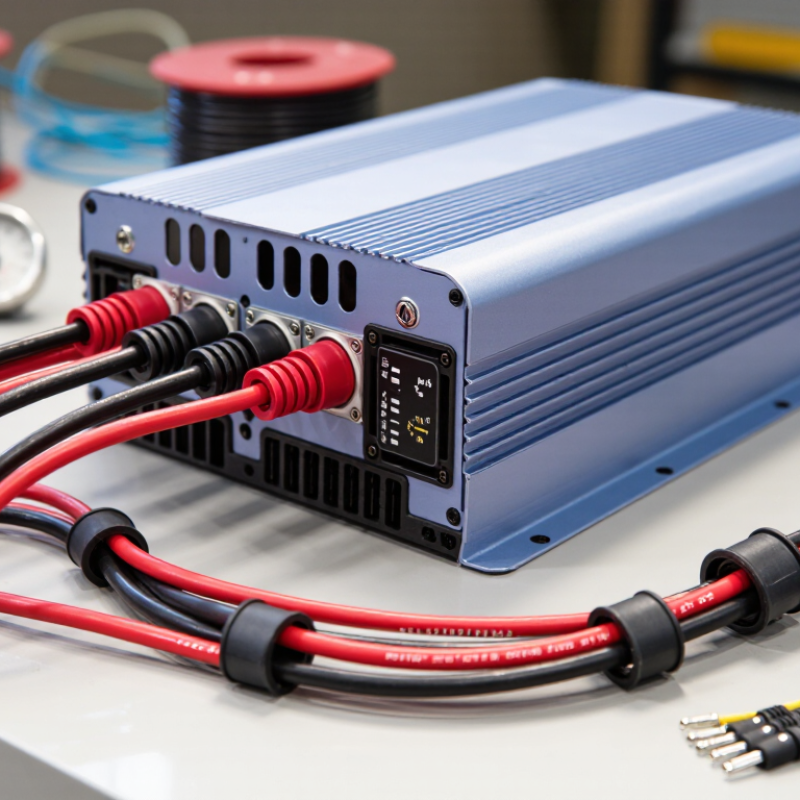
| Harness function | Identify whether the harness carries battery power, AC output, control signals, or communications. | Confirm the inverter’s wiring diagram and connector pinout before selecting or installing a harness. | Power and signal circuits have different conductor, insulation, connector, and routing requirements. |
| Current capacity | Check the inverter’s maximum continuous and peak current, along with the applicable installation requirements. | For a DC input, estimate current using I = P ÷ (V × efficiency). For example, a 5,000 W inverter operating at 48 V and 90% efficiency draws about 116 A at full output. | Undersized conductors can overheat and create excessive voltage drop. Final sizing must account for cable length, installation conditions, and applicable standards. |
| Conductor size and material | Verify conductor cross-sectional area or AWG, conductor material, and the cable’s rated ampacity. | Use the inverter manufacturer’s recommendations and applicable electrical codes. Do not choose a wire size based on current alone. | Ampacity depends on factors such as insulation temperature rating, ambient temperature, bundling, and installation method. |
| Harness length and voltage drop | Measure the complete electrical path, including both the outgoing and return conductors in a DC circuit. | Keep high-current runs as short as practical and check voltage drop at the expected operating current. | Long or undersized runs increase resistance, reduce voltage at the inverter, and generate heat. |
| Voltage and insulation rating | Match the conductor and insulation ratings to the circuit’s operating voltage and expected transients. | Check the rating for each circuit in the harness; DC battery wiring and AC output wiring may have different requirements. | Correct voltage-rated insulation helps prevent breakdown and maintains safe separation between circuits. |
| Temperature and flexibility | Review the cable’s temperature rating and whether it must flex or tolerate vibration. | Choose a construction suitable for the equipment location, movement, and surrounding temperatures. | Heat and repeated movement can accelerate insulation damage or conductor fatigue. |
| Connectors and terminals | Confirm connector type, pin assignment, current rating, wire-size range, and mating compatibility. | Use terminals designed for the conductor material and size, and make connections with the specified crimping or termination method. | Poorly matched or improperly terminated connections can cause high resistance, heating, intermittent faults, or disconnection. |
| Protection and routing | Check required overcurrent protection, strain relief, bend radius, abrasion protection, and separation from hot or moving parts. | Install fuses or circuit breakers as required by the system design and applicable codes; secure the harness without pinching it. | Protection and careful routing reduce the risk of short circuits, mechanical damage, and fire. |
| Shielding and signal integrity | Determine whether control or communication circuits require shielding, twisted pairs, or a specific grounding arrangement. | Follow the inverter documentation for cable type, shield termination, and separation from high-current conductors. | Correct routing and shielding can help reduce electrical noise that may interfere with monitoring or control signals. |
| Environment and compliance | Consider moisture, dust, chemicals, UV exposure, salt, and indoor or outdoor installation conditions. | Select harness materials and protective features suitable for the site, and verify applicable safety and installation standards. | Environmental suitability helps preserve insulation, connector performance, and service life. |
| Inspection and documentation | Check wire labels, circuit identification, pinout documentation, and inspection requirements. | Before energizing, inspect connections for correct polarity, secure terminations, and visible damage; use qualified personnel where required. | Clear identification and inspection make installation, troubleshooting, and maintenance safer and more reliable. |

.svg)