| Hand-Crank Cable Machine | A manually rotated flexible cable passes through the drain and breaks through or hooks soft blockages. | 1/4–3/8 in. cable | Approximately 1–2 in. | Usually up to about 25 ft, depending on the cable assembly | Lavatory, bathtub, shower, and other short residential branch lines | Provides limited torque and reach. It is generally intended for light obstructions rather than heavy grease, roots, or deep main-line blockages. |
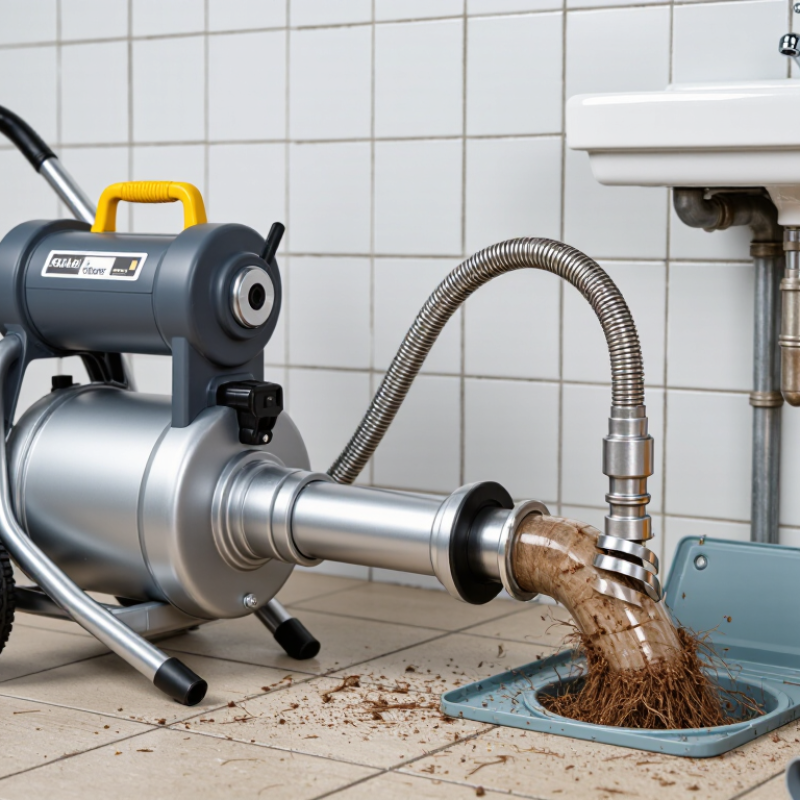
| Drum-Style Electric Cable Machine | An electric motor rotates a cable stored inside a drum. The rotating cable carries a cutter or auger into the blockage. | 1/4–3/8 in. cable | Approximately 1–3 in. | Commonly 50–75 ft, depending on cable diameter and machine configuration | Residential sinks, showers, tubs, and small branch drains | Offers more consistent rotation than a hand crank. The operator must control feed pressure to reduce the risk of cable kinking or binding. |
| Compact Sectional Cable Machine | A motor rotates separate cable sections that are fed into the line one section at a time. | 3/8–1/2 in. cable | Approximately 1–3 in. | Often 50–100 ft, based on the number of sections used | Longer residential branch lines and moderate stoppages | Separate sections can be added or removed as needed. Proper gloves, guarding, and cable control are essential during operation. |
| Heavy-Duty Drum or Sectional Machine | A higher-torque motor drives a larger cable equipped with cutting, boring, or retrieval attachments. | 1/2–3/4 in. cable | Approximately 3–6 in. | Commonly 75–100 ft or more, depending on equipment and cable selection | Building drains, larger branch lines, and tougher obstructions | Designed for greater resistance and longer runs. Cable size and cutting head should match the pipe diameter to avoid damaging the line. |
| Electric or Gasoline Jetter | A high-pressure water pump sends water through a specialized nozzle. Rear-facing jets propel the hose while forward jets scour the pipe wall and obstruction. | 1,500–4,000 PSI | Approximately 2–6 in., depending on flow, hose, and nozzle | Often 50–200 ft, depending on hose length and system capacity | Grease, sludge, sediment, soap residue, and recurring buildup in branch or building drains | Cleaning performance depends on both pressure and water flow. The pipe condition, nozzle design, hose size, and blockage type must be evaluated before jetting. |
| Trailer or Truck-Mounted Jetter | A high-capacity pump delivers pressurized water through a long hose and specialized nozzle to clean larger or longer drain lines. | Approximately 2,000–4,000 PSI | Approximately 4–12 in. or larger, subject to equipment capacity | Often 200 ft or more, depending on the hose and pump system | Commercial laterals, municipal lines, long building drains, and heavy deposits | Requires access planning, adequate water supply, proper nozzle selection, and controlled pressure. A camera inspection can help verify pipe condition before cleaning. |

.svg)