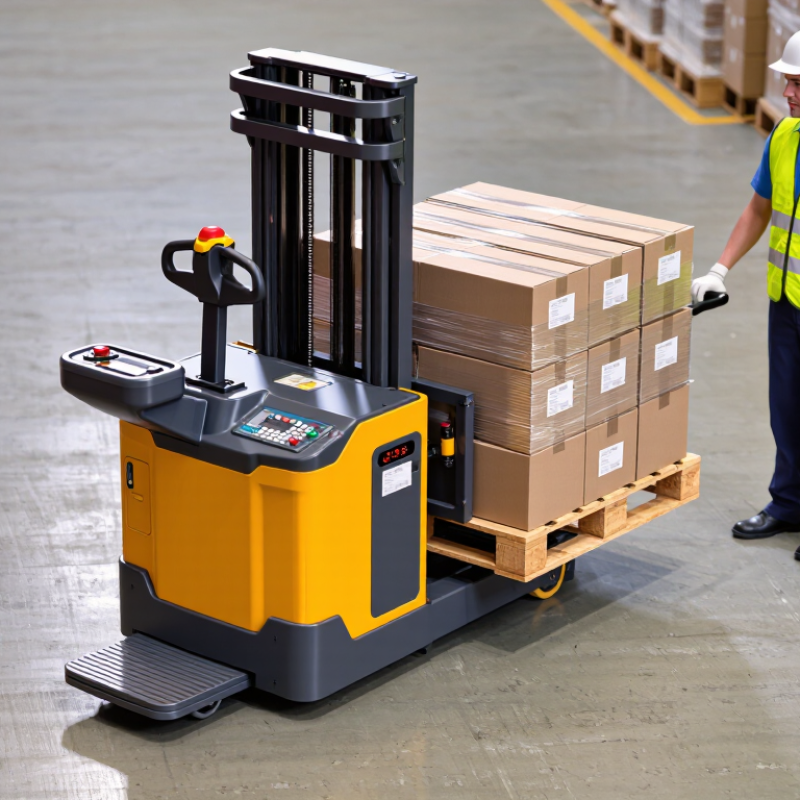
Electric pallet jacks are powered industrial trucks designed to move palletized loads across warehouses, docks, and short travel routes.An electric motor drives the wheels, while the tiller controls travel, steering, lifting, and braking. Their compact shape reduces manual pushing and can improve productivity in busy aisles. However, power does not remove risk. OSHA reports about 35,000 serious forklift-related injuries annually, although this figure covers powered industrial trucks broadly, not pallet jacks alone.The lesson is uncomfortable: small equipment still demands disciplined operation.
Common safety features include emergency reverse buttons, horns, automatic braking, speed controls, tiller guards, and battery indicators. Operators must check the capacity plate, forks, wheels, controls, and battery before use. The load should remain stable, centered, and within the rated capacity. Never carry people unless the equipment is specifically designed for that purpose.
Operating limits also matter. Wet floors, steep ramps, damaged dockboards, poor visibility, and crowded pedestrian areas can quickly defeat electronic safeguards. OSHA’s 29 CFR 1910.178 requires operator training and performance evaluation at least every three years, with refresher training after unsafe events or workplace changes.
Tips: Keep both feet clear of the wheels and travel with the load low. Sound the horn near blind corners. Do not assume a quiet motor means a safe machine. A practical improvement is marking pedestrian lanes, although markings alone cannot control careless behavior. Battery charging areas need ventilation, inspection, and controlled access. When uncertain, stop and ask a supervisor. Hesitation is safer than guessing.

.svg)