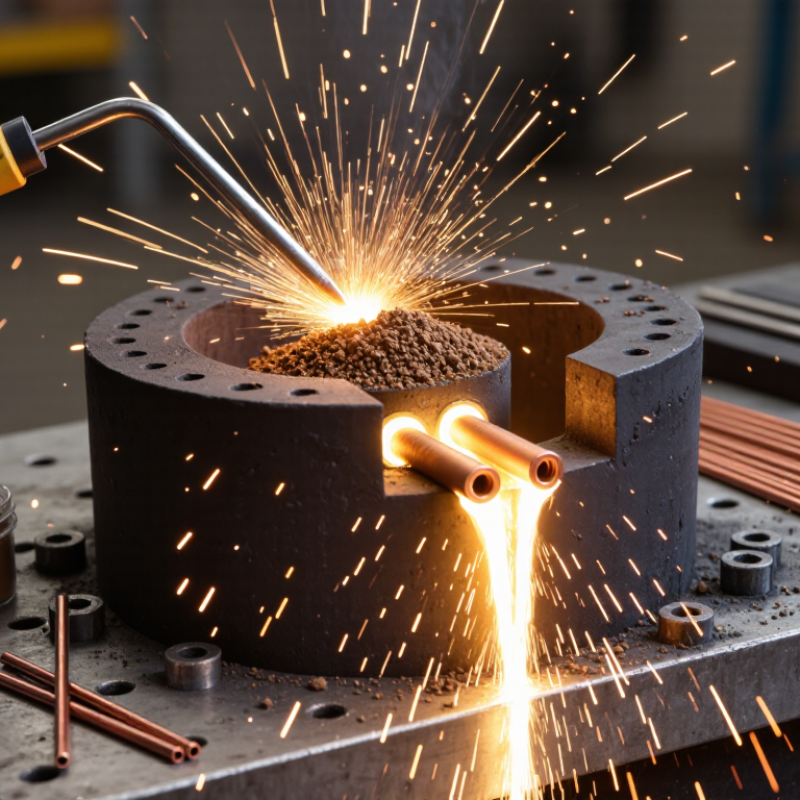
Exothermic welding powder creates heat through a rapid chemical reduction, not an external flame. A common copper-producing reaction is
3CuO + 2Al → 3Cu + Al₂O₃.
Aluminum takes oxygen from copper oxide, forming aluminum oxide and releasing energy. NIST-JANAF thermochemical data gives standard formation enthalpies of about −155 kJ/mol for copper oxide and −1,676 kJ/mol for aluminum oxide. Using those values, the reaction releases roughly 1.21 megajoules per reaction as written. That is substantial. The molten copper can then flow into a prepared mold and form a solid electrical connection.
The calculation describes ideal conditions, not every weld. Real powder composition, particle size, moisture, mold condition, and heat loss affect the reaction and the finished joint. Copper melts at about 1,085°C, so the reaction must supply enough localized heat to melt it; the NIST value alone does not predict a joint’s actual temperature. That distinction matters.
On site, a dry charge and intact mold help make the reaction more repeatable, while contamination or poor fit can change how heat and metal move. The chemistry is clear, but field results still deserve careful inspection.

.svg)