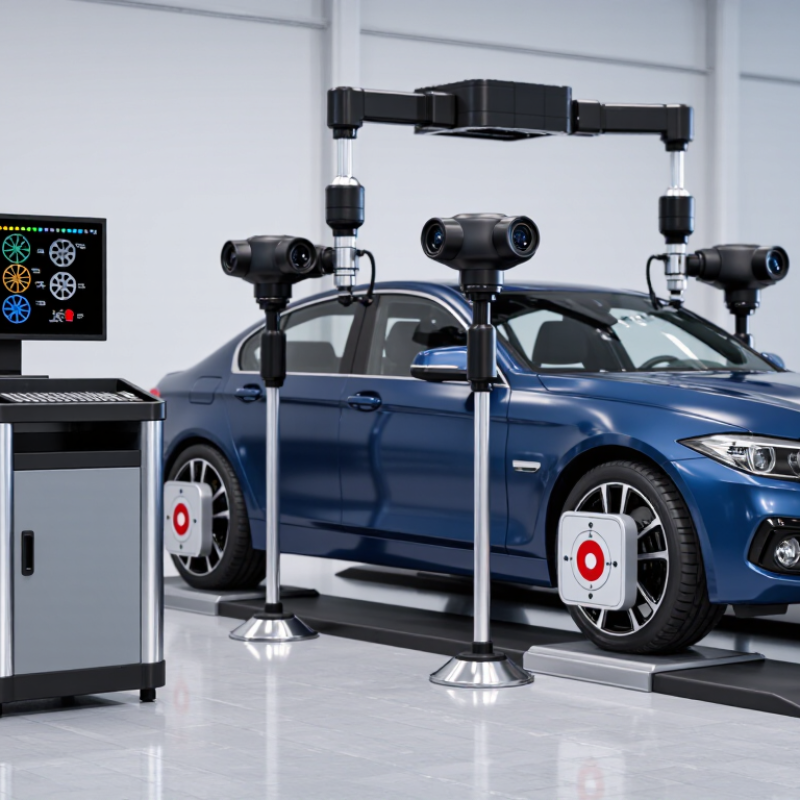
| Purpose of the machine | A front wheel alignment machine measures wheel and steering geometry so it can be compared with the vehicle manufacturer’s specifications. | Sensors or targets attached to the wheels provide measurements that alignment software displays and records. | The technician uses the readings to identify out-of-spec angles and guide adjustments where the vehicle design allows them. |
| Camber | The inward or outward tilt of a wheel when viewed from the front of the vehicle. | Camber is measured in degrees and compared with the specified range for that vehicle and axle. | Excessive or uneven camber can contribute to uneven tire wear or altered handling. Adjustment options depend on the suspension design. |
| Caster | The forward or rearward tilt of the steering axis when viewed from the side of the vehicle. | The machine calculates caster from measurements taken as the wheels are turned through a specified sweep. | Left-to-right differences may help explain steering pull or a steering wheel that does not return to center. Some vehicles have no routine caster adjustment. |
| Toe | The direction the wheels point relative to each other when viewed from above. Toe-in means the fronts of the wheels point closer together; toe-out means they point farther apart. | The machine reports individual wheel toe and, where applicable, total toe in degrees or linear units. | Toe is commonly adjusted at the steering linkage. Incorrect toe can cause rapid or uneven tire wear and affect straight-line tracking. |
| Steering wheel and thrust direction | The steering wheel position and the direction in which the rear axle pushes the vehicle, when rear measurements are included. | A full-vehicle check can show whether the steering wheel is centered and whether the rear wheels’ thrust line is aligned with the vehicle centerline. | These results help the technician center the steering wheel and determine whether rear alignment or further diagnosis is needed. |
| Signs alignment may be needed | Symptoms can include a vehicle pulling to one side on a reasonably level road, an off-center steering wheel while driving straight, or uneven tire wear. | The technician confirms symptoms and checks tires, tire pressures, suspension, steering parts, and ride height before interpreting alignment readings. | Alignment is considered when measurements are outside vehicle specifications or when inspection and symptoms indicate a geometry issue. |
| Common reasons to request a check | Alignment may be checked after a significant impact, suspension or steering repair, or installation of replacement parts that affect wheel position. | The technician inspects for bent, worn, loose, or damaged parts that could prevent accurate measurement or adjustment. | Any underlying damage or looseness should be addressed before final alignment settings are made. |
| Typical measurement process | The vehicle is positioned on an alignment lift, and measurement targets or sensors are fitted to the wheels. | Equipment is calibrated or compensated as required; the vehicle is prepared according to the machine and vehicle procedures, then readings are taken. | Consistent setup helps produce useful before-and-after measurements. Procedures vary with the equipment and vehicle. |
| Before-and-after readings | The alignment report records initial measurements and the values after any adjustments. | Readings are compared with the applicable specification range for the vehicle, including the correct model configuration. | The report shows which values were out of specification and whether the final measured values fall within the specified ranges. |
| Limits of a front-only alignment | A front-wheel alignment focuses on front wheel angles; it does not necessarily measure or adjust rear alignment. | Rear geometry and thrust direction may not be included unless a four-wheel measurement is performed. | If the vehicle has adjustable rear geometry, or symptoms suggest a rear issue, a four-wheel alignment may be appropriate. |

.svg)