| 1. Seaweed Collection | Seaweed is collected from marine environments and selected for processing. The raw material may include kelp, rockweed, or other brown seaweeds. | To provide organic matter, minerals, and naturally occurring seaweed compounds. | Fresh seaweed contains a high proportion of water and may contain sand, shells, salts, and other marine debris. | Raw-material quality influences nutrient content, cleanliness, colour, and final fertiliser consistency. |
| 2. Washing and Cleaning | The seaweed is rinsed or mechanically cleaned to remove sand, stones, excess surface salts, and other contaminants. | To improve material purity and protect drying and milling equipment. | Moist, cleaned biomass with reduced surface contamination. | Produces a cleaner granule and helps reduce unwanted physical impurities. |
| 3. Drying | Cleaned seaweed is dried using controlled air or thermal drying systems until it becomes suitable for milling. | To reduce moisture, limit microbial deterioration, and improve storage stability. | Commercially dried seaweed commonly has substantially less moisture than fresh seaweed; the exact target depends on the process and product specification. | Correct moisture is essential for efficient grinding and reliable granule formation. |
| 4. Milling and Size Reduction | The dried seaweed is crushed or milled into a relatively uniform powder or meal. | To increase surface area and create particles that can be blended and compacted. | Dry, free-flowing seaweed meal with a controlled particle-size distribution. | Finer, more uniform particles generally improve mixing, binding, and granule strength. |
| 5. Formulation and Conditioning | The seaweed meal may be blended with permitted fertiliser ingredients, binders, or moisture, depending on the intended nutrient analysis and granulation method. | To adjust nutrient content, flow properties, density, and binding behaviour. | Conditioned blend with moisture and composition adjusted for the granulator. | Determines the nutrient profile, hardness, dust level, and release characteristics of the granules. |
| 6. Granulation | The conditioned material is formed into rounded particles using methods such as pan granulation, drum granulation, extrusion, or compaction. | To convert loose powder into easier-to-handle, lower-dust particles. | Wet-formed or compacted particles, depending on the equipment used. | Granules are easier to spread, store, transport, and apply than loose seaweed meal. |
| 7. Drying and Cooling | Freshly formed granules are dried and then cooled to remove excess moisture and stabilise their structure. | To prevent caking and improve storage performance. | Stable granules with moisture controlled to the product specification. | Improves hardness, reduces sticking, and helps preserve particle shape during handling. |
| 8. Screening and Recycling | Granules are screened by size. Oversized particles may be crushed and returned to the process, while undersized material may be recycled. | To achieve a consistent particle-size range and minimise waste. | Separated fractions containing undersized, in-specification, and oversized particles. | Creates a more uniform product for accurate spreading and predictable application rates. |
| 9. Quality Control | Finished granules may be checked for moisture, particle-size distribution, bulk density, crushing strength, nutrient content, and contaminant levels. | To verify consistency, safety, and compliance with applicable fertiliser requirements. | Test results vary according to seaweed species, processing conditions, and added ingredients. | Confirms that the product matches its declared specification and intended use. |
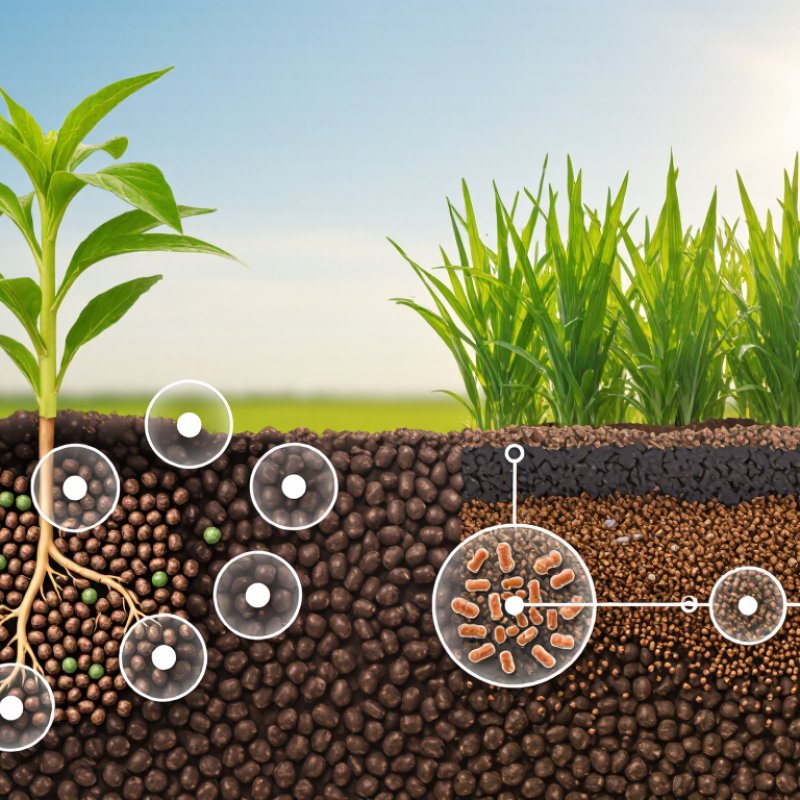
| 10. Application in Soil | Granules are distributed around plants or incorporated into soil according to the product label and crop requirements. | To supply organic material and plant nutrients while gradually releasing soluble and decomposable components. | Release rate depends on granule size, moisture, temperature, microbial activity, and soil conditions. | Supports soil amendment and plant nutrition; it does not replace a soil test or a balanced fertiliser programme. |
| Important Product Note | Seaweed fertiliser composition is highly variable. Nutrient values, moisture limits, application rates, and permitted claims should always be taken from the specific product analysis and the fertiliser regulations applicable in the country of use. |

.svg)