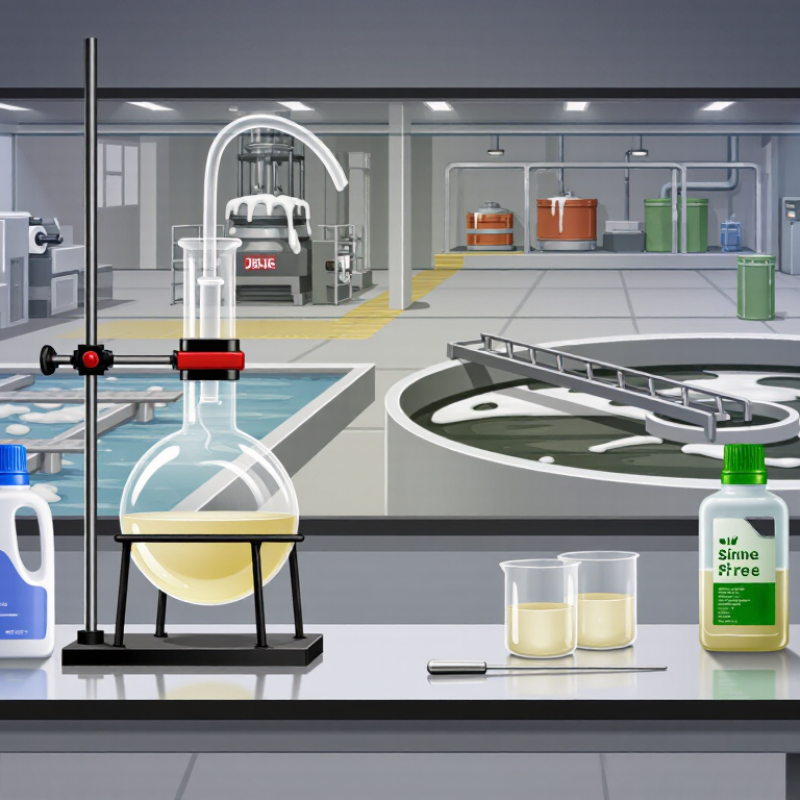
| Wastewater Treatment | Persistent foam caused by surfactants, biological activity, aeration, or high organic loading. | Silicone emulsion for rapid knockdown; mineral-oil or polyether defoamer where silicone transfer must be minimized. | Water-dispersible emulsion or liquid concentrate. | 10–100 ppm | 5–50 ppm | Foam-prone tank, aeration basin inlet, or recirculation line. | Check oxygen-transfer impact, biological compatibility, discharge requirements, and dispersion in the process water. |
| Water-Based Paints and Coatings | Microfoam and surface foam generated during high-speed dispersion, pumping, filling, or tinting. | Silicone-free polyether or polymeric defoamer for good recoating and surface appearance; silicone-based products for difficult surface foam. | Low-viscosity liquid or water-compatible emulsion. | 0.05–0.50% on total formulation | 0.02–0.20% | Split addition: part during grind or let-down, with a small post-addition if needed. | Evaluate gloss, craters, recoatability, color acceptance, storage stability, and compatibility with the binder and pigment package. |
| Adhesives and Sealants | Entrained air and foam from mixing, vacuum release, filling, or reactive components. | Polyether-modified or silicone-polyether defoamer selected for the adhesive chemistry. | Concentrated liquid with controlled compatibility. | 0.05–0.50% on total formulation | 0.02–0.20% | Add during mixing after wetting of fillers; use a final polishing addition only when necessary. | Confirm bond strength, cure speed, viscosity, surface wetting, transparency, and long-term storage stability. |
| Pulp and Paper | Foam in stock preparation, white water, coating, sizing, or wastewater systems. | Mineral-oil, fatty-alcohol, or silicone-based defoamer according to paper grade and downstream coating needs. | Water-dispersible liquid or emulsion. | 20–300 ppm | 10–150 ppm | High-shear circulation points, approach flow, white-water loop, or foam collection zone. | Monitor sheet defects, deposits, sizing response, drainage, formation, and impact on coating or printing performance. |
| Textile Processing | Foam during scouring, bleaching, dyeing, washing, or high-speed jet and overflow processing. | Low-yellowing silicone emulsion or silicone-free polyether defoamer compatible with dyes and auxiliaries. | Water-dilutable emulsion or self-dispersing liquid. | 10–200 ppm | 5–100 ppm | Add to the bath before the foam peak or meter into the circulation line. | Check shade consistency, absorbency, whiteness, residual spots, bath stability, and compatibility with wetting agents. |
| Metalworking Fluids | Foam caused by tramp oil, surfactants, high-pressure circulation, or soft make-up water. | Silicone-free polymeric defoamer or low-foam polyether; use silicone only after confirming surface and coating requirements. | Water-soluble or water-dispersible liquid. | 50–500 ppm | 25–250 ppm | Add to the sump near the return flow or at the highest foam-generation point. | Verify corrosion protection, lubricity, emulsion stability, tool cleanliness, residue, and compatibility with filtration systems. |
| Fermentation and Bioprocessing | Foam generated by proteins, nutrients, cell growth, aeration, and agitation. | Food- or process-compatible silicone emulsion, polyether, or vegetable-oil-based defoamer, subject to regulatory requirements. | Sterilizable emulsion or qualified liquid concentrate. | 10–200 ppm | 5–100 ppm | Use controlled pulse additions or an automated foam-probe dosing loop. | Confirm sterility, cell viability, oxygen transfer, downstream filtration, extraction behavior, and applicable regulatory status. |
| Chemical Manufacturing | Foam from reaction gases, surfactants, solvents, agitation, or gas-liquid transfer. | Select silicone, polyether, mineral-oil, or specialty polymer defoamer based on solvent polarity, temperature, and product purity. | Solvent-compatible liquid or water-dispersible concentrate. | 20–500 ppm | 10–250 ppm | Add upstream of the agitator, gas inlet, recirculation pump, or other high-shear zone. | Test chemical stability, flash point, phase separation, filtration, distillation behavior, contamination risk, and final-product specifications. |
| Dosage guidance: ppm means parts of commercial defoamer per million parts of process material by mass; percentages are based on total formulation mass. Start at the low end, run a controlled laboratory or pilot trial, and increase in small steps only when foam remains unacceptable. Always confirm performance under actual temperature, pH, shear, residence time, and downstream processing conditions. |

.svg)